

Anthrax is a serious infectious disease that, when it progresses, can cause shock, multiple organ failure, meningitis, and even death.
Over the past three weeks, the Dien Bien Department of Health has recorded 14 patients with anthrax, including one case with an unknown source of infection. All are being monitored and given prophylactic antibiotics; there have been no deaths. Authorities have identified and are monitoring 132 people who had contact with the patients.
On June 6th, Dr. Than Manh Hung, Deputy Head of the Emergency Department at the Central Hospital for Tropical Diseases, stated that anthrax is a re-emerging infectious disease, commonly found in livestock, wild animals, and humans.
The primary causative agent is the bacterium Bacillus anthracis, which is capable of producing spores. These bacterial spores... This They last a very long time, acting like "armor" in the natural environment, capable of withstanding heat and resisting certain disinfectants.
"However, anthrax is caused by bacteria, not a virus, so it's unlikely to develop into a pandemic; it will only be sporadic outbreaks and is difficult to spread," the doctor said.
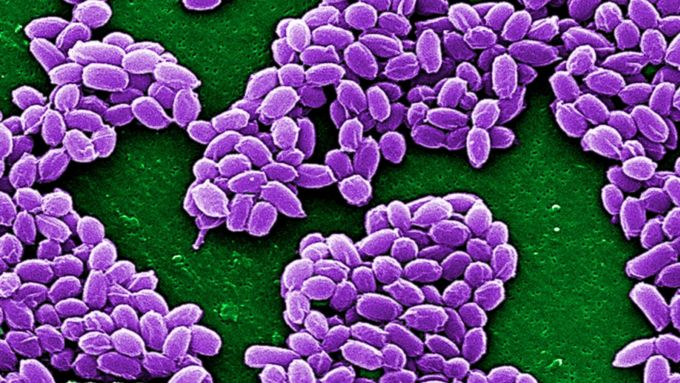
Anthrax bacteria. Photo: ABC
According to the Ministry of Health , anthrax is classified as Group B in the Law on Prevention and Control of Infectious Diseases. The disease is transmitted through the skin, and is the most common and least dangerous form. When in contact with infected animals and their waste, or directly handling animals that have died (from anthrax), anthrax bacterial spores can enter the human body through scratches or open wounds on the skin.
The disease is transmitted through the digestive tract by eating raw or undercooked meat from infected livestock. It can also be transmitted through the respiratory tract.
The characteristic signs are subcutaneous lesions, itching, and infection similar to an insect bite. Subsequently, the wound swells, blisters form, and develop into a black ulcer. The ulcer is usually painless; if pain occurs, it is due to edema or secondary infection. The head, arms, and hands are the most commonly affected areas. The ulcer can be mistaken for dermatitis.
After the incubation period, patients begin to exhibit dangerous symptoms such as high fever accompanied by chills, cyanosis, shortness of breath, profuse sweating, headache, and in more severe cases, sepsis, nephritis, meningitis, systemic toxicity, and even death. Patients with anthrax are usually treated with prophylactic antibiotics orally or intravenously.
Doctors advise people to avoid contact with, slaughtering, and eating meat from sick livestock. Those who frequently come into contact with sick or dead animals (of unknown cause) should wear boots, rubber gloves, long pants, and long-sleeved shirts to avoid contact with exposed or damaged skin. After contact with animals, everyone must wash their hands and any exposed skin with soap under running water.
At livestock slaughterhouses, people need to maintain hygiene and ensure good ventilation. Workers should undergo regular health checks. Use protective work clothing, and use appropriate toilets for showering and changing clothes after work. Regularly check water and waste from animal processing plants to prevent disease.
Animals that die from anthrax need to be disposed of properly. After burying the carcasses deep, lime powder should be spread to seal them and disinfect the area, preventing the spread of bacteria.
If a family member shows symptoms of anthrax, they should be taken to the nearest medical facility for prompt treatment.
Minh An
Source link
![[Image] National Assembly discusses the implementation of the socio-economic development plan.](https://vphoto.vietnam.vn/thumb/1200x675/vietnam/resource/IMAGE/2026/04/20/1776696707422_ndo_br_img-20260420-185419-jpg.webp)




![[Photo] General Secretary and President To Lam meets with National Assembly delegates from ethnic minorities.](https://vphoto.vietnam.vn/thumb/1200x675/vietnam/resource/IMAGE/2026/04/20/1776696701056_a1-bnd-8331-3342-jpg.webp)

































































































Comment (0)