


Obese women have a higher risk of developing polycystic ovary syndrome (PCOS) - Illustration.
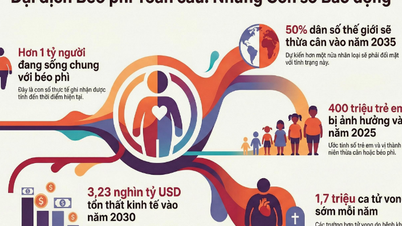
Overweight and obesity are increasing rapidly.
In Vietnam, according to the World Health Organization (WHO), approximately 19.5% of the population, equivalent to nearly 20 million people, are overweight or obese (BMI of 25 kg/m² or higher). The obesity rate has also increased rapidly in recent years, from 2.6% in 2010 to 3.6% in 2014, equivalent to a 38% increase, among the highest in Southeast Asia.
It is projected that by 2035, the obesity rate among adults in Vietnam could increase at a rate of 6.3% per year, while that of children could reach 9.8% per year.
Obesity not only affects individual health by increasing the risk of non-communicable diseases such as diabetes, cancer, cardiovascular disease, and respiratory diseases, but it also reduces quality of life and impacts the psychology and social relationships of those affected.
Speaking at an online program organized by the Department of Medical Examination and Treatment Management, Ministry of Health , to raise awareness about obesity in Vietnam, MSc. Dr. Truong Le Van Ngoc - Head of Professional Department, Department of Medical Examination and Treatment Management (Ministry of Health) - said that obesity is becoming a worrying health problem, especially in large cities.
She cited examples in some urban areas where the rate of overweight and obesity is already very high. "For instance, in Ho Chi Minh City, the rate has exceeded 50%, while in Hanoi it is around 41%. In localities with such high rates, stronger and more decisive intervention measures are needed," Ms. Ngoc said.
According to her, the common belief that obesity is solely due to overeating and lack of exercise is a simplistic view of a complex medical issue. In reality, obesity is influenced by many factors such as genetics, hormones, living environment, diet, lifestyle habits, and even social factors.
"Every child deserves a fair start and the same opportunities for development as everyone else. However, the rise in obesity is negatively impacting children's physical and mental health, and increasing the incidence of non-communicable chronic diseases throughout their development," Ms. Ngoc emphasized.
To support treatment, in 2022, for the first time in Vietnam, the Ministry of Health issued official guidelines on the diagnosis and treatment of obesity. These guidelines include lifestyle changes, dietary adjustments, increased physical activity, medication, and in some cases, surgical intervention.
The Ministry of Health is currently collaborating with professional associations to update guidelines for treating obesity in adults, as well as developing separate guidelines for children and adolescents.
It's not just a matter of "eating too much - exercising too little".
Associate Professor Dr. Ho Thi Kim Thanh - Director of the Center for Family Medicine and Community Healthcare, Hanoi Medical University Hospital - stated that one of the major obstacles in preventing obesity is the incorrect perception of the community.
"Most overweight and obese people in Vietnam believe it's just a matter of body image and can manage it themselves. Many seek treatment methods based on word-of-mouth or recommendations from others, while the effectiveness and safety of these methods are not verified," Ms. Thanh said.
Another misconception is that simply dieting and exercising rigorously will solve obesity problems.
In fact, when energy intake is drastically reduced, the body may activate adaptive mechanisms to conserve energy. When returning to a normal diet, weight can easily increase again, a phenomenon often referred to as the "pendulum effect".
Statistics show that about half of the weight lost can be regained within two years, and over 80% can be regained within five years.
"Lifestyle changes usually only help with modest weight loss, around 3-5% of body weight. Therefore, to sustainably control weight and improve health, many cases require additional supportive therapies such as medication," Ms. Thanh said.
She also warned that many slimming methods at spas primarily target peripheral fat, which may help reduce waist size quickly but do not reduce visceral fat, a factor closely linked to disease risk.
According to the World Obesity Federation, obesity is defined as a chronic disease that is recurrent and progressive. Therefore, the goal of treatment is not only weight loss, but also the prevention of long-term complications.
"Obesity is a disease, and like any disease, it needs treatment. Patients need a comprehensive assessment by healthcare professionals to balance the risks and benefits, and then receive individualized treatment recommendations, including lifestyle changes, medication, or surgery," Ms. Thanh emphasized.
According to experts, early detection and treatment not only help control weight but also reduce the risk of developing chronic diseases such as diabetes, hypertension, or cardiovascular disease, which pose a significant burden on public health in the future.
Source: https://tuoitre.vn/beo-phi-khong-chi-do-an-nhieu-it-van-dong-20260307084003222.htm







































































































Comment (0)