According to the WHO, obesity is a complex chronic disease - Illustration image
A new study conducted by Novo Nordisk in collaboration with Decision Lab shows that while most people now recognize obesity as a chronic disease, interventions and behavioral changes remain very limited.
In particular, prejudice against obese people remains quite strong.
83% understand obesity as a disease, but over 50% still stigmatize it.
According to an online survey of 1,004 adults in five major cities ( Hanoi , Ho Chi Minh City, Da Nang, Hai Phong, and Can Tho), 83% of participants said they understood obesity to be a disease that can lead to many dangerous chronic illnesses.
Specifically, obesity is believed to be linked to dyslipidemia, cardiovascular disease, and diabetes; 72% also perceived an increased risk of cancer and infertility.
Beyond physical effects, respondents were also acutely aware of the consequences in their daily lives: 82% reported that obese people often feel insecure and self-conscious; approximately 80% noticed a decline in mental health and work performance; and 60% believed that this condition also affected personal relationships.
However, this scientific understanding is still accompanied by social prejudice. More than half of those surveyed believe that obesity stems from laziness or a lack of willpower.
Nearly 8 out of 10 people believe that obese individuals are at a disadvantage in jobs that prioritize appearance. These perceptions cause many obese people to hesitate and delay seeking medical help.



According to experts, this reality highlights the urgent need to raise awareness and change perspectives, viewing obesity as a chronic disease requiring early intervention and coordinated efforts from healthcare, policy, and the community.
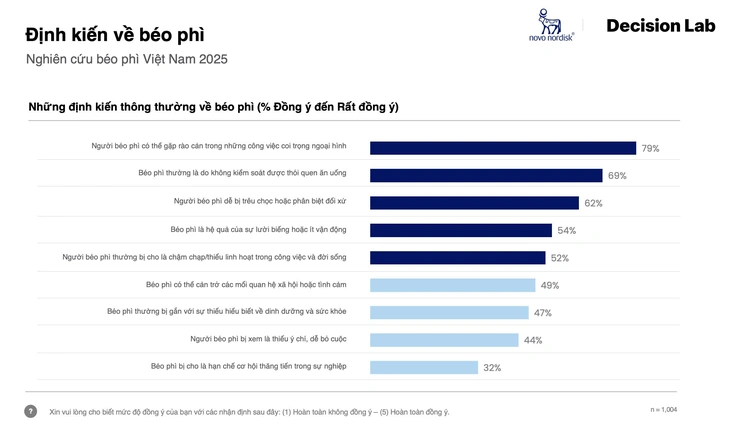
A survey of 1,004 people revealed prejudices about obesity in Vietnam.
Obesity is becoming a healthcare burden.
The World Health Organization (WHO) warns that obesity is a complex chronic disease that progresses silently but has far-reaching consequences, ranging from individual health to pressure on the national economy.
According to the World Obesity Atlas 2025, Vietnam currently has one of the lowest obesity rates in Southeast Asia, but also the fastest rate of increase in the region.
Forecasts indicate that the total economic cost of obesity in Vietnam could increase from approximately US$4 billion in 2020 to over US$16 billion in 2035. Healthcare costs alone are estimated to triple, from US$372 million to approximately US$1.27 billion.
Notably, Vietnam currently ranks only 108th out of 183 countries in terms of readiness for obesity treatment, reflecting significant gaps in the healthcare system and a lack of comprehensive, coordinated solutions.
The report identifies three main reasons why the gap between awareness and action remains large.
Firstly, the modern lifestyle with its lack of physical activity and unhealthy diet has become widespread. Nearly two-thirds of those surveyed reported spending more than six hours a day sitting, while over a third regularly consume processed foods.
Secondly, the health consequences of obesity often appear late and develop silently, leading many people to underestimate the problem. The ACTION-Vietnam study showed that 30% of obese people are still satisfied with their current weight, and 36% believe that obesity is less concerning than other diseases.



Thirdly, there are misconceptions about nutrition, especially in child-rearing practices. Surveys show that 55% of parents are more worried about their children being picky eaters than overeating; 42% believe that being "chubby" means being healthy; and 37% believe that eating a lot will help children grow faster.

Daily lifestyle habits affect health and increase the risk of obesity.
In light of this situation, the study calls for collaboration among policymakers, healthcare professionals, businesses, and the media to change societal perceptions, viewing obesity as a chronic disease requiring early intervention and systematic treatment.
Source: https://tuoitre.vn/hon-nua-nguoi-viet-van-nghi-beo-phi-do-luoi-20260225104801484.htm