On August 26th, Dr. Duong Bich Thuy, from the Infectious Diseases Department at FV Hospital, stated that upon arrival at the hospital, patient N. showed signs of shock, rapid pulse, low blood pressure, rapid breathing, etc., and was immediately transferred to the Intensive Care Unit (ICU).
According to the medical history, the family reported that the insect bite was initially not serious. However, after it rained, the wound came into contact with water, causing swelling and inflammation. Within 4 days, the insect bite became swollen and spread from the left ankle to the lower leg, up to the knee, then the left thigh, and even to the groin. Mr. N. has a history of diabetes.
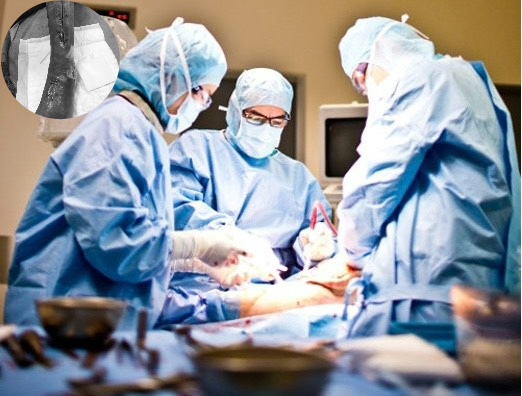
The man's foot, which had become gangrenous (small image), was surgically treated by doctors who removed the tissue.
Approximately one day after hospitalization, the Laboratory Department reported that a culture of Mr. N.'s wound pus showed the presence of two types of bacteria: Streptococcus pyogenes and Stenotrophomonas maltophilia. Of these, Streptococcus pyogenes is the dangerous type of bacteria because it can release toxins into the bloodstream, causing toxic shock syndrome, as initially predicted by the doctors.


Dr. Thuy stated that this is a dangerous condition with a high mortality rate, potentially reaching 70%. In Mr. N.'s case, toxic shock syndrome led to necrotizing fasciitis of the left lower leg and kidney failure. Without timely diagnosis and treatment, the patient might have had to undergo amputation (leg loss) to have any hope of survival. According to world medical literature, necrotizing fasciitis of the lower leg is also the condition most commonly resulting in limb amputation.
She underwent three surgeries to remove dead tissue.
Following a multidisciplinary consultation, the doctors unanimously agreed on a surgical procedure to remove the necrotic tissue in the left leg, along with the use of appropriate antibiotics (effective both in killing bacteria and neutralizing toxins secreted by bacteria). Simultaneously, the patient requires intensive care to have any hope of survival and minimize the risk of limb loss.
Dr. Truong Hoang Vinh Khiem, from the Orthopedics Department, and his team promptly performed surgery on patient PNN. The patient had to undergo three surgeries to remove dead tissue.
After three weeks of treatment for infection and intensive post-operative care, the wound healed, and Mr. N. was discharged from the hospital. Follow-up examinations showed his health was stable, and he was able to return to the United States.



According to Dr. Thuy, people with underlying conditions such as diabetes, chronic liver disease, nephrotic syndrome, those who have to use immunosuppressant drugs like corticosteroids, and people with HIV/AIDS are at a higher risk of severe infections from even small wounds and skin lesions.
"Therefore, folk remedies such as applying herbal poultices, hot compresses, acupuncture, etc., should not be used. Instead, one must go to a medical facility for proper care and timely treatment. If not properly managed, the wound is very susceptible to bacterial superinfection, which can lead to complications such as cellulitis, sepsis, septic shock, toxic shock, with a high risk of death within a few days or even a few hours," Dr. Thuy warned.
Source link




























































































![[Infographic] Which types of behaviors are strictly prohibited in digital transformation from July 1, 2026?](https://vphoto.vietnam.vn/thumb/402x226/vietnam/resource/IMAGE/2026/07/02/1783004068098_thumb_5_hanh_vi_nghiem_cam_20260702184923.jpeg)