At 40 years old, Luka Modric remains the heart of Croatia's midfield at the 2026 World Cup. For a central midfielder – a position demanding high levels of physical activity, tackling ability, playmaking, and constant decision-making under pressure – this is almost a reversal of the rules of modern football.
No Croatian player has made more passes or created more chances than Modric in this year's tournament. Even more astonishing, he has covered 770 meters more per game and maintained a higher average speed than he did at the 2022 World Cup . It's a rare paradox. At an age when many midfielders begin to slow down, Modric is moving more and more effectively than he did four years ago.
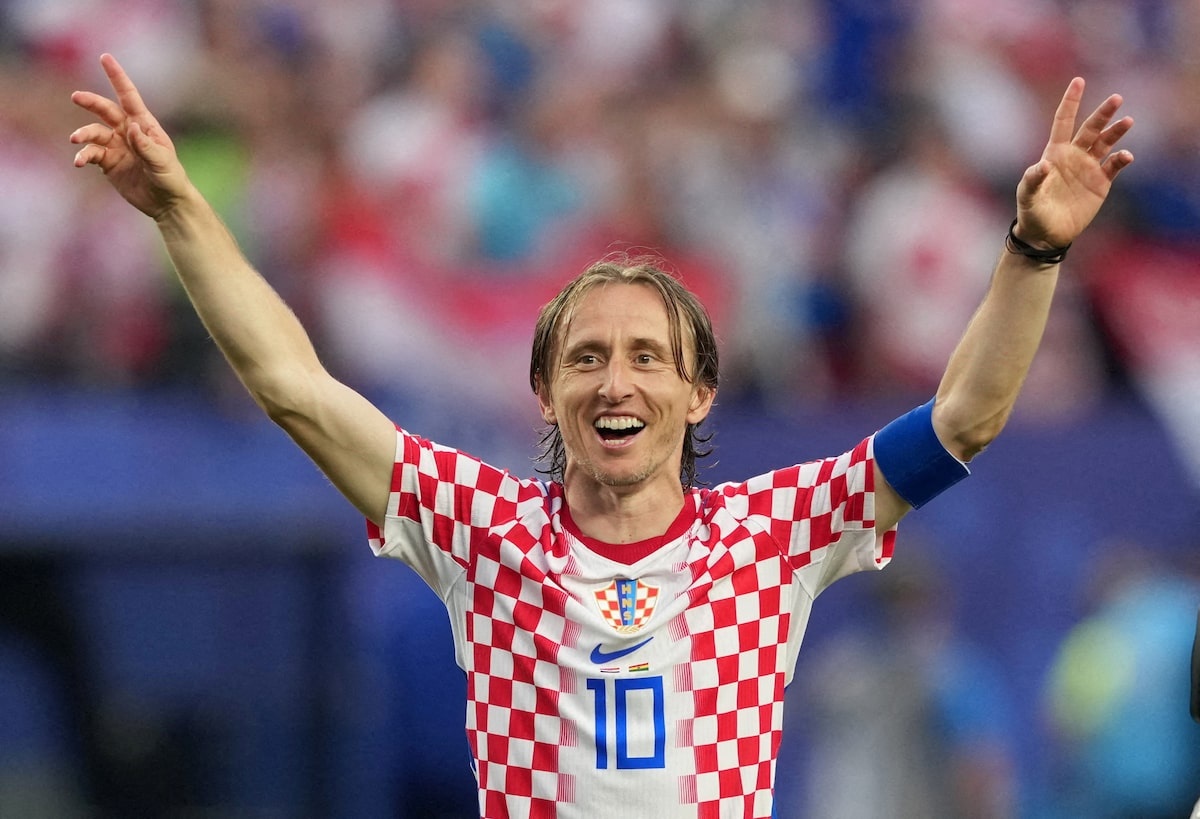 |
Modric possesses a rare level of fitness for someone in their 40s. (Photo: Reuters ) |
Play with your brain before playing with your feet.
In the final group stage match against Ghana, Modric played the full 90 minutes and provided an assist for Nikola Vlašić's winning goal, becoming the oldest player in World Cup history to have an assist since FIFA began compiling statistics in 1966. That performance further solidified the irreplaceable role of the Croatian captain at the age of 40.
According to Dr. La Tich Tich, who works at the Department of Diagnostic Imaging, No. 2 Affiliated Hospital of Zhejiang University ( China ), what makes Modric special is not that he runs more than his teammates, but that he knows how to run at the right time.
Watching the Croatian midfielder play, you rarely see him making pointless sprints or constantly chasing opponents. Instead, Modric is always in the right position, knowing when to press, when to drop back to cover, and when to accelerate to create space.
Before the ball even reaches his feet, Modric usually observes the space, adjusts his posture, and prepares a plan of action. Therefore, every step he takes serves a tactical purpose rather than wasting energy.
According to experts, this is also the difference between a young player and a seasoned player. When young, speed and agility can compensate for limitations in tactical thinking.
But as one gets older, the ability to maintain performance depends more on proper energy distribution, body control, and accurate decision-making. Modric didn't prolong his career by fighting age, but by adapting his playing style to suit his age.



Small in stature but possessing exceptional physical prowess.
Once considered too thin and small to succeed at the highest level of football, Modric has turned that very physique into an advantage.
Weighing only around 66 kg, he possesses a low center of gravity, which helps him maintain better balance, turn quickly in tight spaces, and effectively shield the ball against opponents with superior physiques. His lightweight build also reduces pressure on muscles and joints during high-intensity exercise.
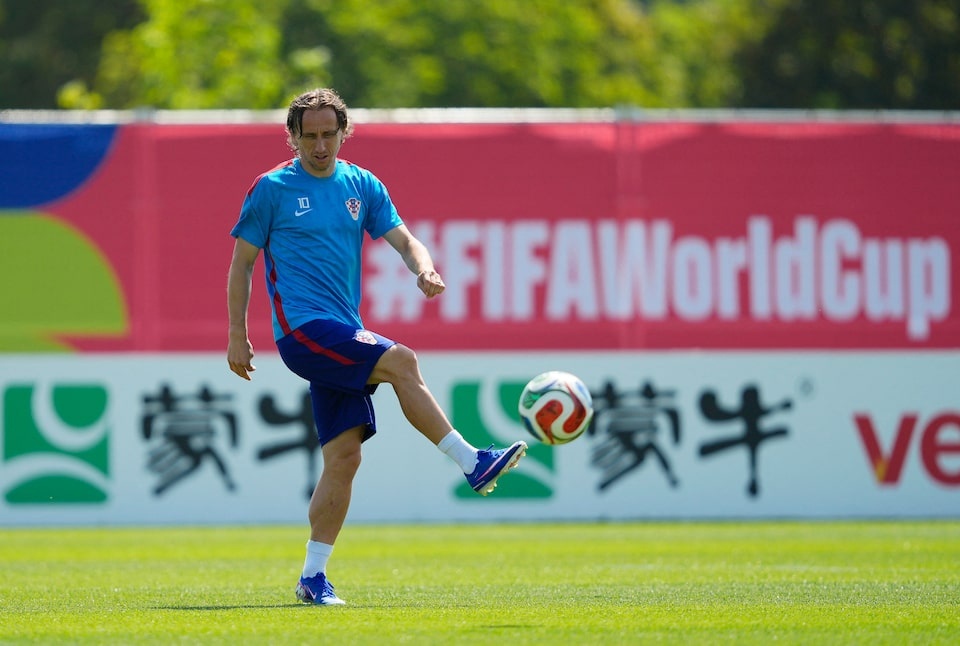 |
Luka Modric adheres to a rigorous training regimen. Photo: Reuters . |
According to Doctor La Tich Tich, "thin" should not be equated with "weak." Modric still possesses a low body fat percentage, well-maintained muscle mass, a strong core, and endurance accumulated over many years of training. These are the factors that determine the sustained competitive ability of a professional athlete.
Few people know that Modric's childhood was far from smooth. Born near the city of Zadar, he grew up during the Croatian War, lost his grandfather to the conflict, and had to live in a refugee camp with his family.
According to Dr. La Tich Tich, childhood traumas can leave lasting effects on mental health, but with a stable living environment, clear goals, and consistent physical activity, individuals can still develop adaptability and psychological resilience. Modric's story is a case in point.
350 days of training per year to prolong a career.
According to Vlatko Vučetić, Associate Professor of the Faculty of Movement Sciences at the University of Zagreb and Modric's personal fitness coach since 2012, their goals always revolve around three elements: maintaining fitness, preventing injuries, and prolonging their careers.
Before each team training session, Modric dedicates approximately 45 minutes to a personal training program using resistance bands, focusing on strengthening his shoulders, arms, core muscles, and legs. He maintains this routine for about 350 days a year. Even at age 39, Modric's metabolic rate is still considered below 30 thanks to his rigorous training, rest, and exercise load management regimen.
The effectiveness of that process is reflected in his rare resilience. In over 20 years of professional play, Modric has appeared in more than 1,150 matches for club and national team but has only missed about 250 days due to injury, equivalent to less than 4% of his nearly 7,000-day career.



Ahead of the knockout round clash with Portugal at the 2026 World Cup, Modric once again faces the challenge of age. However, what he has shown over the years is not due to luck. It is the result of thousands of hours of training, excellent game reading ability, and a body that has been cared for to adapt to the changes of age.
Source: https://znews.vn/nghich-ly-luka-modric-post1665417.html