

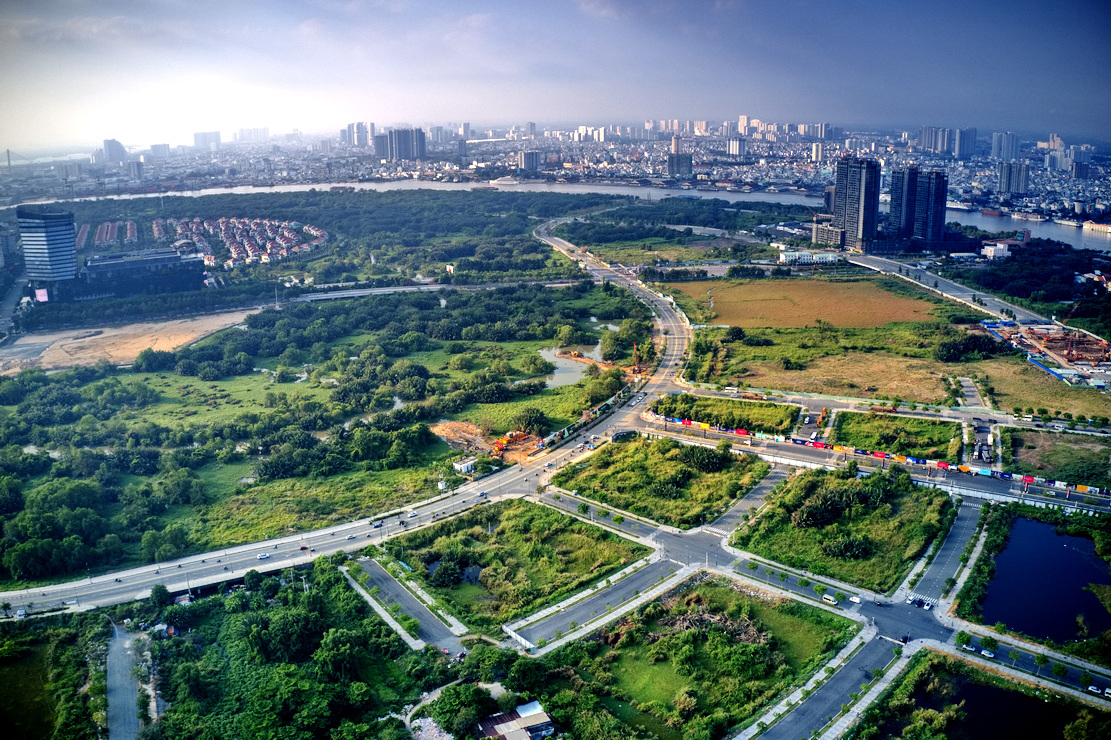
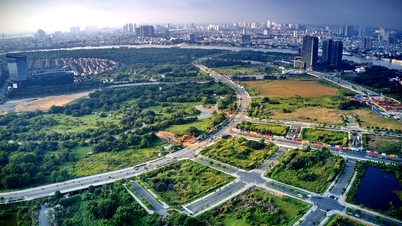
Land plots in Thu Thiem have been included by Ho Chi Minh City in the list of land funds intended to be used as payment to investors implementing build-transfer (BT) projects - Photo: QUANG DINH
Each locality and ministry is seeking ways to achieve double-digit growth targets, and the story of Ho Chi Minh City is a prime example.
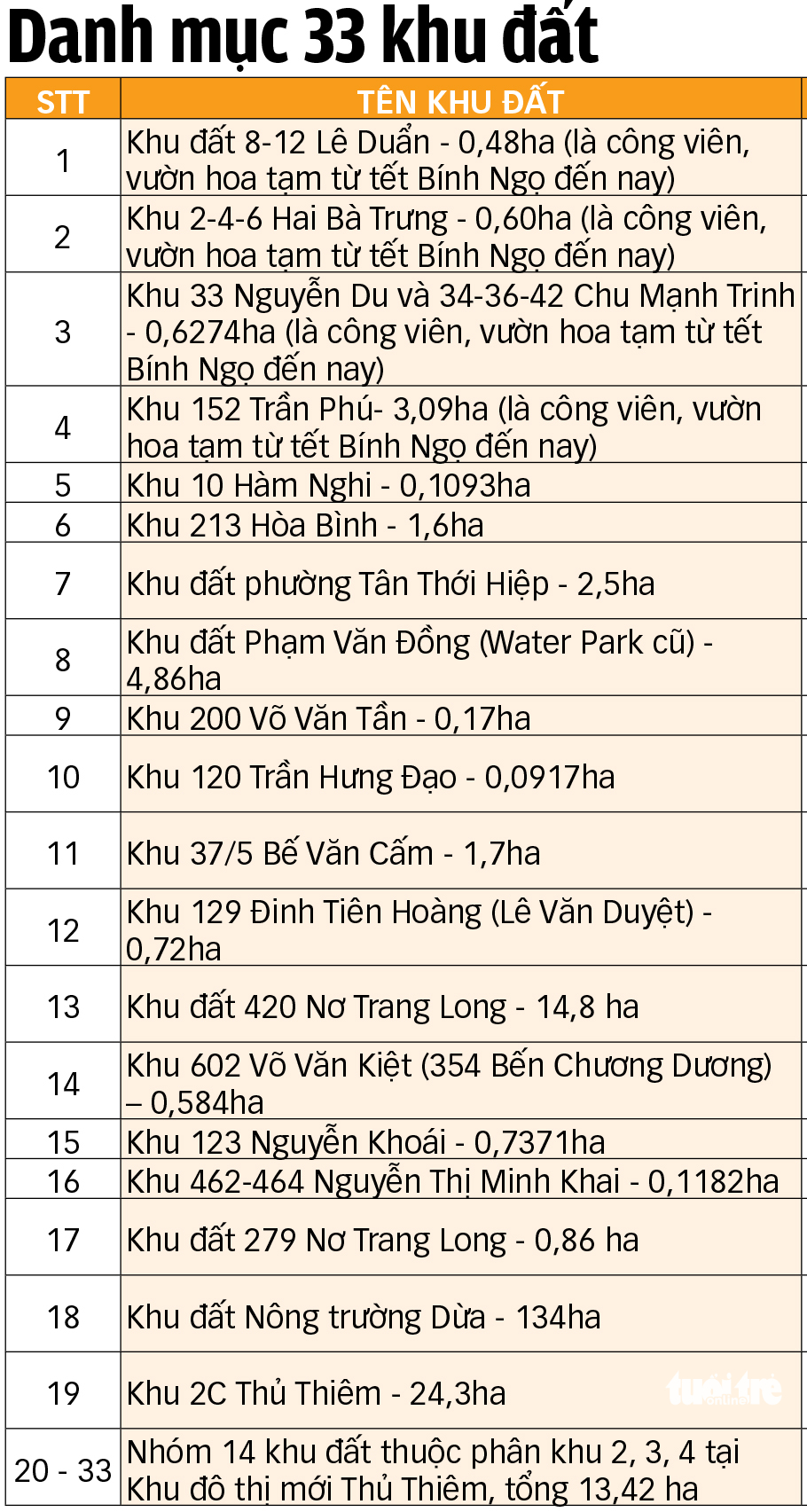
Based on a proposal from the Ho Chi Minh City People's Committee, the Ho Chi Minh City People's Council has just approved a list of 33 land plots (Phase 1) expected to be used to pay investors implementing BT (build-transfer) projects, aiming to transform land resources into strategic infrastructure projects and key projects necessary for the city's new development.
Notably, the list of 33 land plots approved by the City People's Council in this round mostly consists of familiar plots of land known for their prime locations, but which have not been able to realize their full potential due to various obstacles.
The expectation is that "prime land" will turn into "gold".
The list of 33 land plots included in the BT payment scheme comprises many plots in the city center and the Thu Thiem new urban area.
Among them, some "prime land" areas have long been familiar to the people of Ho Chi Minh City, such as the land at 2-4-6 Hai Ba Trung, 8-12 Le Duan, 33 Nguyen Du, 34-36-42 Chu Manh Trinh (Saigon Ward), and 152 Tran Phu (Cho Quan Ward)...
These plots of land, entangled in ongoing investigations and legal cases, remained abandoned for decades in the heart of the city, enclosed by corrugated iron fences. However, during the recent Lunar New Year (Year of the Horse), under the direction of the City Party Secretary, the Ho Chi Minh City People's Committee transformed the area, turning parts of these plots into temporary parks and gardens to serve the city's residents during the spring festival and New Year celebrations.
The Thu Thiem New Urban Area also contributes to the list of 15 land plots in subdivisions 2, 3, and 4 intended for payment to investors when implementing infrastructure projects for the city. Among them is land plot 2C (over 24 hectares), which has a prime location near the Sala urban area and is surrounded by Nguyen Thien Thanh and Tran Bach Dang roads. This land plot has been approved for mixed-use development including services, green spaces, and sports facilities.
In addition, the list also includes several large and valuable land plots. A typical example is the 420 No Trang Long land plot (14.8 hectares, Binh Loi Trung ward). This land was used by Vissan Company for a livestock slaughterhouse, but the surrounding area is a modern, developed urban area, so it needs to be redeveloped to match. The Ho Chi Minh City People's Committee decided to reclaim the land in 2019 and assigned it to the City's Land Fund Development Center for management until now.
This nearly 5-hectare plot of land has a prime location, facing Pham Van Dong Street, next to Go Dua Canal and the Saigon River, in Thu Duc Ward. Previously, it was the site of a large-scale and modern water park project (Saigon Water Park).
However, the project has been stalled for many years and has become abandoned. In 2014, the Ho Chi Minh City People's Committee terminated the land lease and assigned the City's Fund Development Center to take over its management. Meanwhile, the coconut plantation land (134 hectares, located in Long Truong ward) was allocated many years ago for an urban development/golf course project.
However, due to inefficient use and investment, the People's Committee of the city has reclaimed the land, and Long Truong ward is currently managing the area.
In general, most of the land plots recently approved for BT (Build-Transfer) payments are public land, located in prime locations, and already have 1/2000 scale planning, but due to various legal obstacles, they have been used inefficiently in the past.
Currently, by including these land plots in the list of planned payments for BT contracts, they will no longer be just "prime land" but will truly realize their value as they are converted into a series of strategic and key infrastructure projects of the city that are being and will be implemented in the near future.
Speaking to Tuoi Tre newspaper , Mr. Le Ngoc Dung, Chairman of the Long Truong Ward People's Committee, said that the local authorities are strictly managing the land to ensure its efficient use in accordance with the city's requirements. This land currently has an access road to the Nhon Trach bridge from Dong Nai province to the elevated section of the Ho Chi Minh City Ring Road 3.
The Thu Duc ward authorities also stated that they are still coordinating the management of the Saigon Water Park land area within their jurisdiction and are waiting for an opportunity for changes to occur regarding this land.
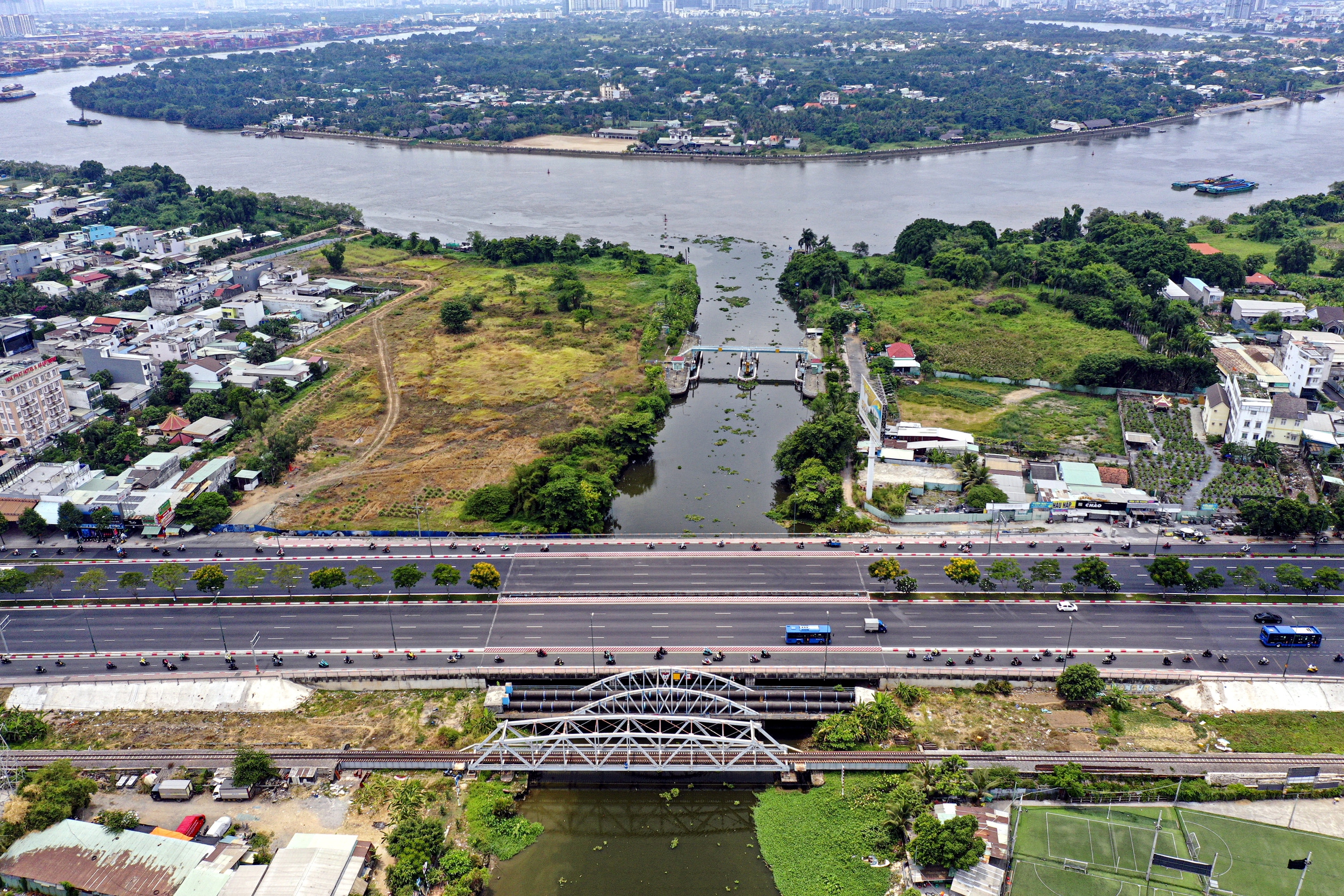
The vacant plot of land on the left (Thu Duc ward) was once the site of Saigon Water Park, but it has been abandoned for many years - Photo: TR.DUC
Valuation of land resources
The resolution of the Ho Chi Minh City Party Congress (late October 2025) has set out key, breakthrough programs for the 2025-2030 term, focusing on infrastructure development and identifying one of the tasks of the City Party Committee and the political system as the efficient use of the city's resources.
Following the resolution of the City Party Congress and the removal of many land-related legal obstacles, a bustling and urgent atmosphere can be observed in Ho Chi Minh City with numerous investment projects. In particular, strategic and key infrastructure projects (such as urban railways and bridges) are being proposed by investors.
Given the current urban context, the demand for investment capital for projects is enormous and concentrated within the same period, with increasingly urgent deadlines. This requires many projects to be implemented early to alleviate infrastructure overload, avoid delays, and prevent slowdowns in development.
Simultaneously, there is pressure to develop urban areas in a synchronized and modern direction, especially in key areas. Meanwhile, limited budgetary capacity necessitates a mechanism for mobilizing and utilizing resources more flexibly and effectively.
More prime land plots in Ho Chi Minh City are getting a makeover, gradually transforming into parks and flower gardens to welcome Tet.
An overview of 9 prime real estate areas in the heart of Ho Chi Minh City awaiting transformation into parks and flower gardens for Tet (Lunar New Year).
The prime piece of land where the Hue Police headquarters is located was auctioned off for 538 billion VND.
Resolution 254 of the National Assembly on removing difficulties and obstacles related to land (effective from January 1, 2026) has allowed payment for BT contracts using land funds without auction or bidding. This is an important basis for the city to review land funds to include in the list of land to be used as counterpart payments to investors.
The city's preparation of the land fund for payment recently included areas with high commercial value and development potential, aiming to attract capable investors while ensuring sufficient funds for payment and minimizing additional budgetary obligations.
For example, the Ho Chi Minh City People's Council has currently approved the investment policies for three projects: the construction of Can Gio Bridge, Phu My 2 Bridge, and the Rach Chiec National Sports Complex project under a BT (Build-Transfer) contract with a total investment of approximately 182,016 billion VND and requiring reciprocal land allocation. These projects are currently undergoing the necessary procedures to commence construction soon.
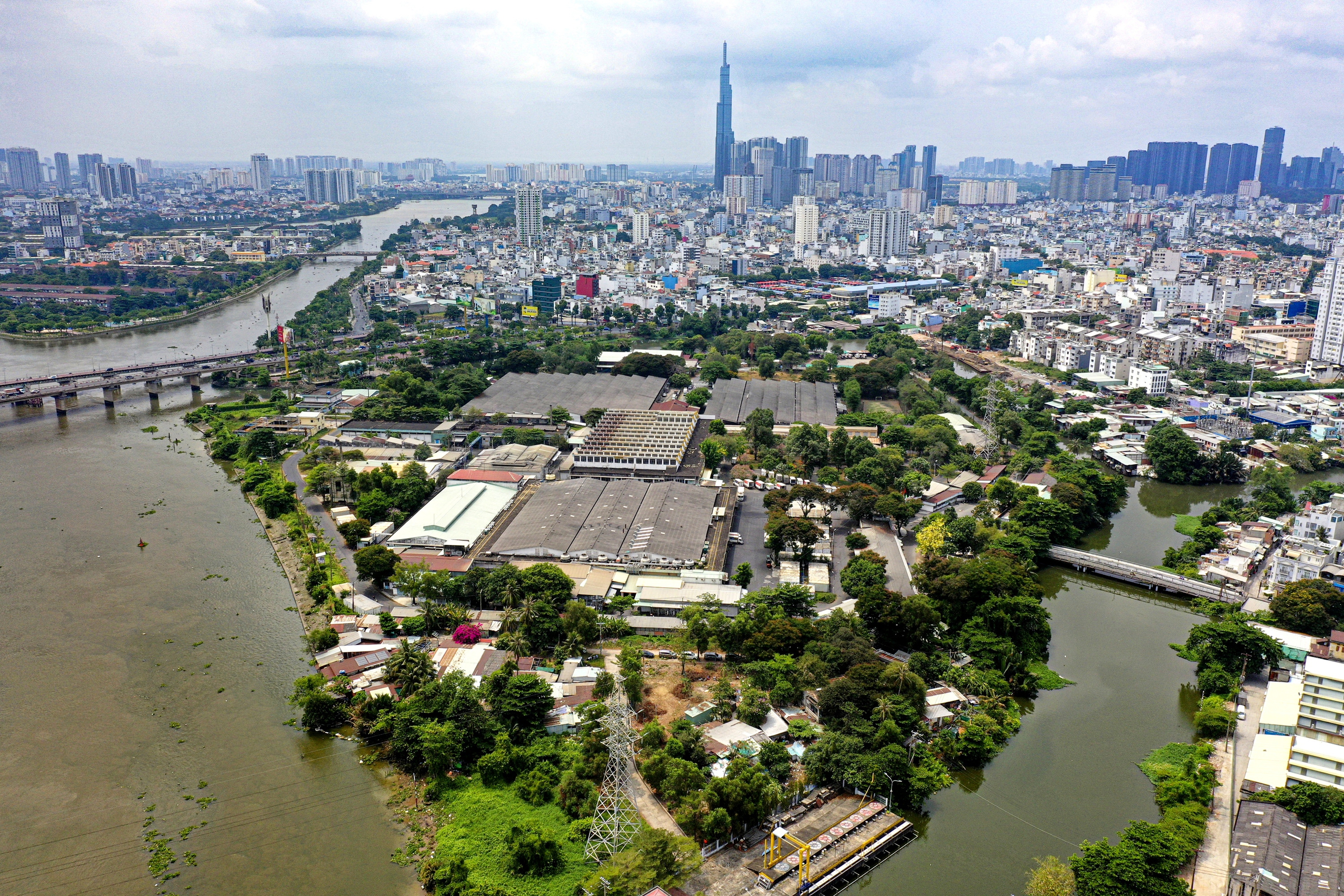
The plot of land at 420 No Trang Long Street, Binh Loi Trung Ward, has a prime location and is used by Vissan Company as a livestock slaughtering facility - Photo: TRI DUC
Land prices need to be determined precisely.
The Ho Chi Minh City People's Council's approval of the list of 33 land plots intended for payment under BT infrastructure contracts is essential to channel land resources into the economy, aligning with Ho Chi Minh City's practical conditions and meeting its new development requirements.
Regarding this move, in an interview with Tuoi Tre newspaper , Dr. Pham Viet Thuan, Director of the Institute of Resource and Environmental Economics in Ho Chi Minh City, said he strongly agrees because land resources will be used efficiently instead of being wasted as in the past.
According to Mr. Thuan, most of the land plots in the list are located in prime locations, have large areas, and are fully planned, making them very suitable for investing in valuable commercial and service projects that contribute to the socio-economic development of the city.
"However, it is regrettable that for many years, these land plots have not been used effectively and have been wasted due to various obstacles. Now that they are included in the land fund for planned payment, their specific value will be calculated. When these land plots are paid to investors, the city will gain infrastructure on one hand, and on the other hand, the city will also benefit from investors developing commercial and service facilities and urban areas. The important issue is that the city needs to calculate and determine the value of these land plots accurately and effectively...", Mr. Thuan said.
According to Mr. Thuan, compared to the past when land was a public asset and was put up for auction or bidding, the current regulations ensure transparency and maximize benefits in land valuation. However, those regulations also presented certain obstacles for the public-private partnership (PPP) model. The current regulations have removed these obstacles, allowing the use of public land to pay for Build-Transfer (BT) projects.
This requires the city to meticulously determine land values to ensure that land resources are used efficiently.
Concurring, lawyer Bui Quoc Tuan (Ho Chi Minh City Bar Association) also stated that land in prime locations used for BT (Build-Transfer) payments through designated allocation must ensure market value linked to the advantageous location that generates value, because "the city will not have many more prime land locations to pay investors, so careful calculations are necessary...", Mr. Tuan said.
Promptly issue the K coefficient for determining effective land prices.
The value of the land plots intended for reciprocal payment is currently determined according to the current land price list. According to this list, the land plots are priced quite low compared to the market. For example, the land price on Le Duan Street is less than 500 million VND/m2, which is quite low.
Currently, Ho Chi Minh City is developing a coefficient K to determine land prices according to regulations. Given the city's urgent implementation of numerous BT (Build-Transfer) infrastructure projects using land funds for payment, it is crucial to develop an effective coefficient K and issue it promptly. The coefficient K will ensure that land prices are adjusted closer to market value than the official land price list. This will help the city determine the land prices of the corresponding land funds more accurately and advantageously.
It is expected that the land will be allocated to the investor at its value at the time of payment (after the BT project is completed and the infrastructure is fully developed). However, depending on the contract signed with the investor, the land will be paid for according to the progress of the contract. Therefore, if the city does not soon develop a reasonable K coefficient, it will be difficult to calculate the land value effectively.
Lawyer Nguyen Hai Long (Ho Chi Minh City Bar Association)
Many projects are currently undergoing procedures.
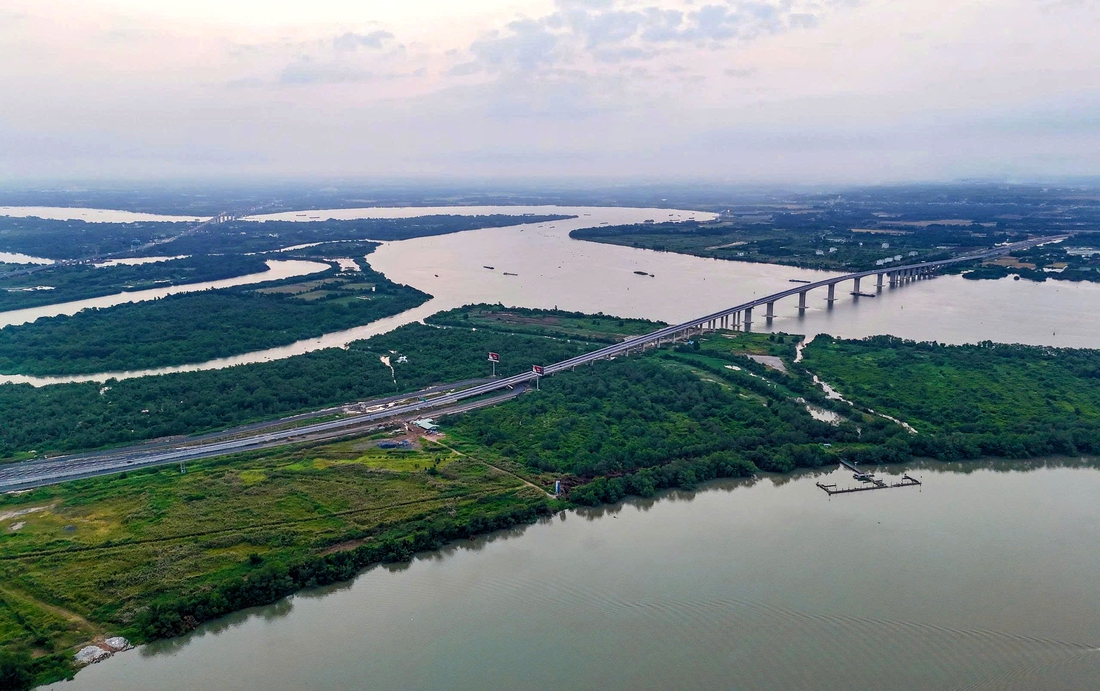
The coconut plantation area (Long Truong ward) has a Nhon Trach bridge project connecting to the elevated Ring Road 3 passing through the land - Photo: CHAU TUAN
In addition, many investors are currently proposing investment policies for projects under the BT (Build-Transfer) method with a total estimated investment of approximately VND 366,679 billion, such as the urban railway line No. 2 (Ben Thanh - Thu Thiem and Thu Thiem - Long Thanh sections); the road and bridge connecting Can Gio - Vung Tau; the Ho Tram - Long Thanh expressway; the West Saigon Wastewater Treatment Plant; the North Saigon Wastewater Treatment Plant 1; the North Saigon Wastewater Treatment Plant 2; the city center square and city administrative center; the Ben Nha Rong Khanh Hoi Cultural Park project; and public green spaces along the Saigon River...
Thus, considering only the 13 infrastructure projects under the BT (Build-Transfer) model that have received investment approval and those currently under proposal, the city will need valuable land to provide counterpart payments totaling over 548,000 billion VND in the coming years.
Attracting investment, unlocking resources.
Many prime real estate areas are now valued not only for their property value but also for infrastructure development, significantly contributing to the socio-economic development of the city in the new phase.
With the approval (phase 1) of 33 land plots slated for BT (Build-Transfer) payments, the city has channeled significant land resources to serve its development needs.
Presenting the list of land plots slated for BT (Build-Transfer) payments at the Ho Chi Minh City People's Council meeting, Vice Chairman of the Ho Chi Minh City People's Committee Nguyen Cong Vinh stated that the land funds allocated to investors under the Build-Transfer (BT) model are approved by the People's Council in a transparent and open manner. For projects requiring investor selection, strategic investors are also selected publicly in accordance with legal regulations.
Ho Chi Minh City is determined to mobilize social resources and allocate resources for public investment... After payment is made with land at the time of land allocation, the investor will invest on that very land, creating a new project product, generating resources, creating jobs, and continuing to create value for society.
Meanwhile, the Standing Vice Chairman of the Ho Chi Minh City People's Council, Nguyen Van Tho, also affirmed the high level of consensus among the City People's Council delegates in approving the list of land funds intended for payment to investors implementing BT projects. According to Mr. Tho, this is a very important legal and practical basis for the City People's Committee to direct, manage, and implement assigned policies and tasks, contributing to promoting socio-economic development and continuously improving the lives of the people.
The recently adopted resolutions are of particular importance in defining Ho Chi Minh City's special role. They promote administrative reform, strengthen regional linkages, facilitate the mobilization and efficient use of resources, and create significant changes in urban planning and development. This will boost economic growth, significantly contribute to achieving double-digit growth, improve the environment, and enhance the quality of services for citizens and businesses, in line with the city's development requirements in the new phase.
Source: https://tuoitre.vn/bien-dat-vang-thanh-con-so-tang-truong-20260420083652148.htm#content-1





![[Photo] “Red Journey” 2026: Vietnamese Youth Continue Building the Bridge of Friendship Between Vietnam and China](https://vphoto.vietnam.vn/thumb/1200x675/vietnam/resource/IMAGE/2026/04/20/1776629730866_4055880775670638308-9618-4200-jpg.webp)




























































Comment (0)