

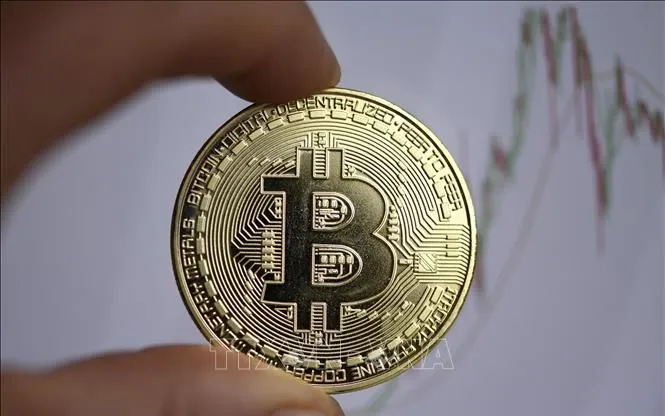
On February 23, the price of Bitcoin fell by more than 5% to below $65,000 after US President Donald Trump announced plans to increase global tariffs to 15%, shaking market sentiment. Ether also fell by more than 5%, to $1,861.
Bitcoin's drop below $65,000 in mid-February triggered automatic stop-loss orders, plunging the market into a negative spiral.
Bitcoin was once expected to be "digital gold," a safe haven during periods of inflation and geopolitical instability. However, the reality of the first two months of 2026 has proven otherwise. Bitcoin is reacting like a high-risk asset, sensitive to macroeconomic news no less than technology stocks.
Global trade tensions escalated following US President Donald Trump's announcement of a tariff increase from 10% to 15%, causing capital to flee highly volatile assets. According to a report from the Franklin Templeton Institute, uncertainty about interest rates and global liquidity is the biggest obstacle to the recovery of crypto.
Bloomberg Intelligence expert Mike McGlone believes that Bitcoin is facing a crisis as it fails to break through in line with gold. He argues that Bitcoin's inability to keep pace with gold's rise and its lag behind major stock indices is a warning sign of a fundamental shift in investor sentiment.
On the other hand, while Bitcoin prices fell, Asian stocks rose in early trading on February 23. This development highlights the divergence between cryptocurrencies and stock markets amid renewed uncertainty over tariffs.
Source: https://vtv.vn/bitcoin-thung-moc-65000-usd-100260223103757829.htm

![[Image] Expediting land clearance at Alley 310 Nghi Tam to facilitate the construction of Tu Lien Bridge](https://vphoto.vietnam.vn/thumb/1200x675/vietnam/resource/IMAGE/2026/04/14/1776160406551_ndo_br_z7724148990408-9e5d4777e3c4504998b4286178b2e66e-jpg.webp)

![[Photo] General Secretary and President To Lam visits and delivers a policy speech at Tsinghua University.](https://vphoto.vietnam.vn/thumb/1200x675/vietnam/resource/IMAGE/2026/04/14/1776164592318_vna-potal-tong-bi-thu-chu-tich-nuoc-tham-va-phat-bieu-chinh-sach-tai-dai-hoc-thanh-hoa-trung-quoc-8700658-5437-jpg.webp)



































































Comment (0)