

The K-shaped shopping model for the 2025 year-end holiday season.
Today is Black Friday – the kickoff to the year-end shopping season – with massive discounts at many stores and e-commerce sites. In the US, experts are talking about a spending pattern during the year-end shopping season this year: the K-shaped pattern. Here, the upward part of the K represents the wealthy – getting richer and richer – who continue to spend lavishly. The downward part of the K represents those with average or low incomes, who are struggling to cut back on spending during the holiday season. These two branches are moving in opposite directions, forming the shape of the K – a symbol of deepening consumer inequality.
At the largest supermarket in North Bergen, New Jersey, cashiers are incredibly busy. People pushing shopping carts weave through the crowded aisles.
Veronica Otero, 51, said: "I'll buy turkey, yams, rice, beans, everything related to our Spanish cuisine. Everything is available here."
Rosario Agudelo, 60, shared: "I like this supermarket because the prices aren't too expensive. Other places are too expensive now."
According to the National Retail Federation (NRF), this year 186.9 million Americans are expected to shop during the five days from Thanksgiving (November 27) to Cyber Monday (December 1) – the highest number in history. But the paradox lies here: more shoppers – but less spending. The NRF estimates that average holiday spending this year has slightly decreased from $902 to $890 per person, indicating a trend of tightening belts.
Dennis Hoffman, an economist at Arizona State University, commented: "Many economists today are talking about a K-shaped economy... When you look to the right, you have the top part of the K and then you have the bottom part of the K. And what they mean is that the rich are getting richer. Income taxes continue to stay low for another 4-5 years. The stock market is doing great. The value of their homes has increased significantly over the last 5 to 6 years. They'll go out and buy non-essential items, jewelry, a new car... some rich people travel, go to Paris. Then you see many people going to food banks for the first time. And what they're doing is trying to get a few select items that they simply can't afford at the grocery store."
This year, many retail chains have scaled back deep discounts, partly due to higher taxes on imported goods and partly because profit margins have narrowed over the past two years. According to this year's data, the high-income group (top 10%) still accounts for nearly half of total consumer spending in the US economy.
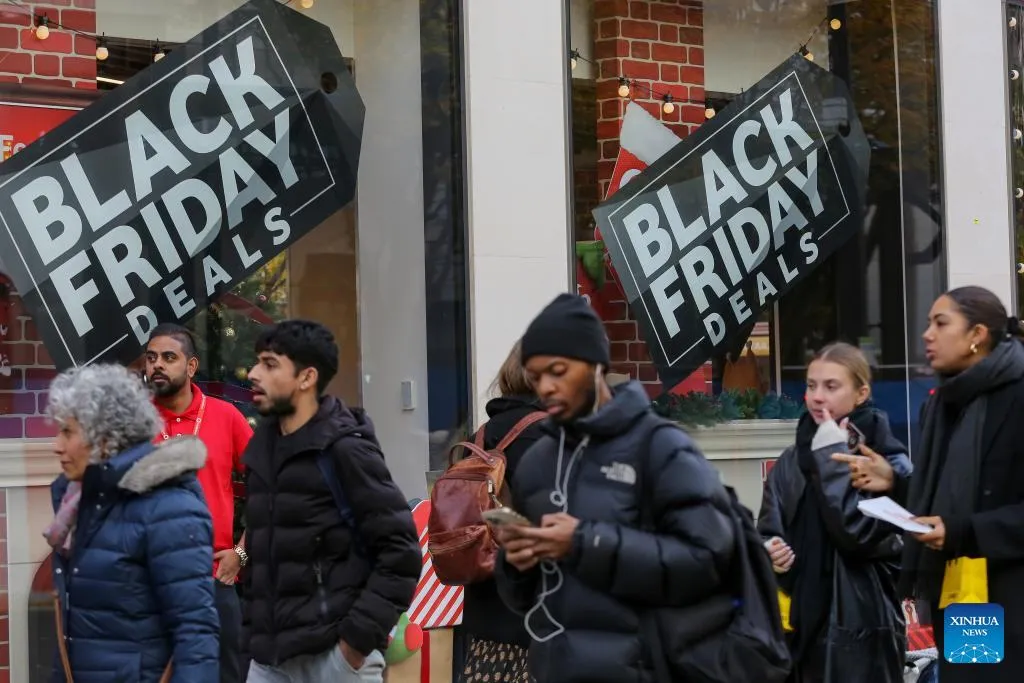
Consumer behavior in the US is currently undergoing a significant shift.
Trends in the emotional economy during the 2025 holiday season.
Amid persistent inflation, rising prices due to tariffs, and declining incomes, consumer behavior in the US is currently undergoing a dramatic shift: from "buying in bulk" to "buying in quality," from prioritizing material possessions to seeking experiences.
Experts say 2025 will continue to be a boom year for experiential gifts. This could be tickets to a concert, a weekend getaway, a cooking class, or even a wellness retreat.
The report shows that the demand for experiences is surging among young people aged 18-35 – those who want to "buy less but live more," viewing experiences as spiritual assets rather than fleeting expenses.
In 2025, the holiday season won't be about "burning money" on new, cheap goods, but rather about focusing on gifts that will leave a lasting impression and bring happiness.
When AI independently determines the selling price for each customer.
According to retail experts, high-income American consumers are likely to maintain or even increase their spending during this holiday season. This is why American retailers are turning to AI technology to boost sales during the holiday shopping season, creating a profound restructuring of consumer behavior. For example, the same shirt purchased online might be priced differently for you and your family members, as the AI algorithm determines the prices based on its understanding of each individual.
This year, the rise of chatbots like ChatGPT and Google Gemini is changing the way people engage with customers, as more and more people turn to AI for gift recommendations, price comparisons, or even direct purchasing assistance.
According to Professor Christopher Flathmann from Clemson University, a new era of valuation is emerging. This valuation model is tailored to each individual by AI, based on their shopping history, browsing behavior, AI-estimated financial capacity, brand loyalty, or demographic data.
Professor Christopher Flathmann, Director of the Centre for Human-AI Interaction and Collaboration at Clemson University, stated: "The biggest difference with surveillance pricing is that if both of you are accessing a website, you might see something different than the person sitting next to you. And that will differ based on your purchasing habits, your preferences, and how much they think you can afford for the item. So it's creating small price differences between people, and it's also creating different shopping experiences for each person."
Associate Professor Ying Zeng from the Leeds Business School, University of Colorado Boulder, stated: "AI can act as a personalized salesperson for our consumers and provide us with a wealth of information."
According to experts, with the widespread intervention of AI, consumers can protect their wallets by comparing prices across multiple platforms and avoiding excessive purchases of a single product, as AI will perceive it as highly sought after and drive up the price.
With the invisible influence of AI, such as product recommendations and pricing tailored to user preferences, this year's end-of-year shopping season promises many surprises. Shopping behavior may not even reflect actual supply and demand, but rather what AI algorithms determine – based on buyers' willingness to pay. A different shopping season is approaching: with the dominance of the emotional economy and the intervention of artificial intelligence, consumers will have a unique experience when participating in e-commerce this year.
Source: https://vtv.vn/black-friday-mot-mua-mua-sam-au-lo-1002511281209261.htm
![[Image] National Assembly discusses the implementation of the socio-economic development plan.](https://vphoto.vietnam.vn/thumb/1200x675/vietnam/resource/IMAGE/2026/04/20/1776696707422_ndo_br_img-20260420-185419-jpg.webp)


![[Photo] General Secretary and President To Lam meets with National Assembly delegates from ethnic minorities.](https://vphoto.vietnam.vn/thumb/1200x675/vietnam/resource/IMAGE/2026/04/20/1776696701056_a1-bnd-8331-3342-jpg.webp)




























































































Comment (0)