A century-long story under the banyan trees
Along with ancient architectural structures, moss-covered streets, and the rich history and culture of each village, the golden age of Hoi An 's development as an international trading port city is also reflected in the lush greenery of towering trees in each historical site and along every road.
Every root, deeply embedded in the earth, acts as a lifeline connecting layers of culture to nourish lush green foliage, symbolizing prosperity and the aspiration for longevity.
Visiting ancient temples and shrines such as Phuoc Lam Pagoda, Chuc Thanh Pagoda, Vien Giac Pagoda, Hai Tang Pagoda, Xuan My Temple, Ong Cam Nam Mausoleum, Nam Dieu Pottery Ancestor Shrine, etc., leaves a deep impression on many people not only because of the architectural beauty or the unique worship system but also because of the ancient trees casting their shade, their gnarled trunks bearing the marks of time.
Amidst the evening bells and the rustling wind through the leaves, it seems that centuries-old stories of virtuous founders and abbots are still being retold, enriching the history of this Buddhist monastery.
Walking along streets like Tran Hung Dao, Phan Chau Trinh, Tran Cao Van, Nguyen Truong To, Thai Phien, Hoang Dieu, etc., the towering mahogany trees and wide banyan canopies create a fresh and cool atmosphere.
Each ancient tree holds profound historical memories and cultural values associated with the development of the port city of Hoi An.
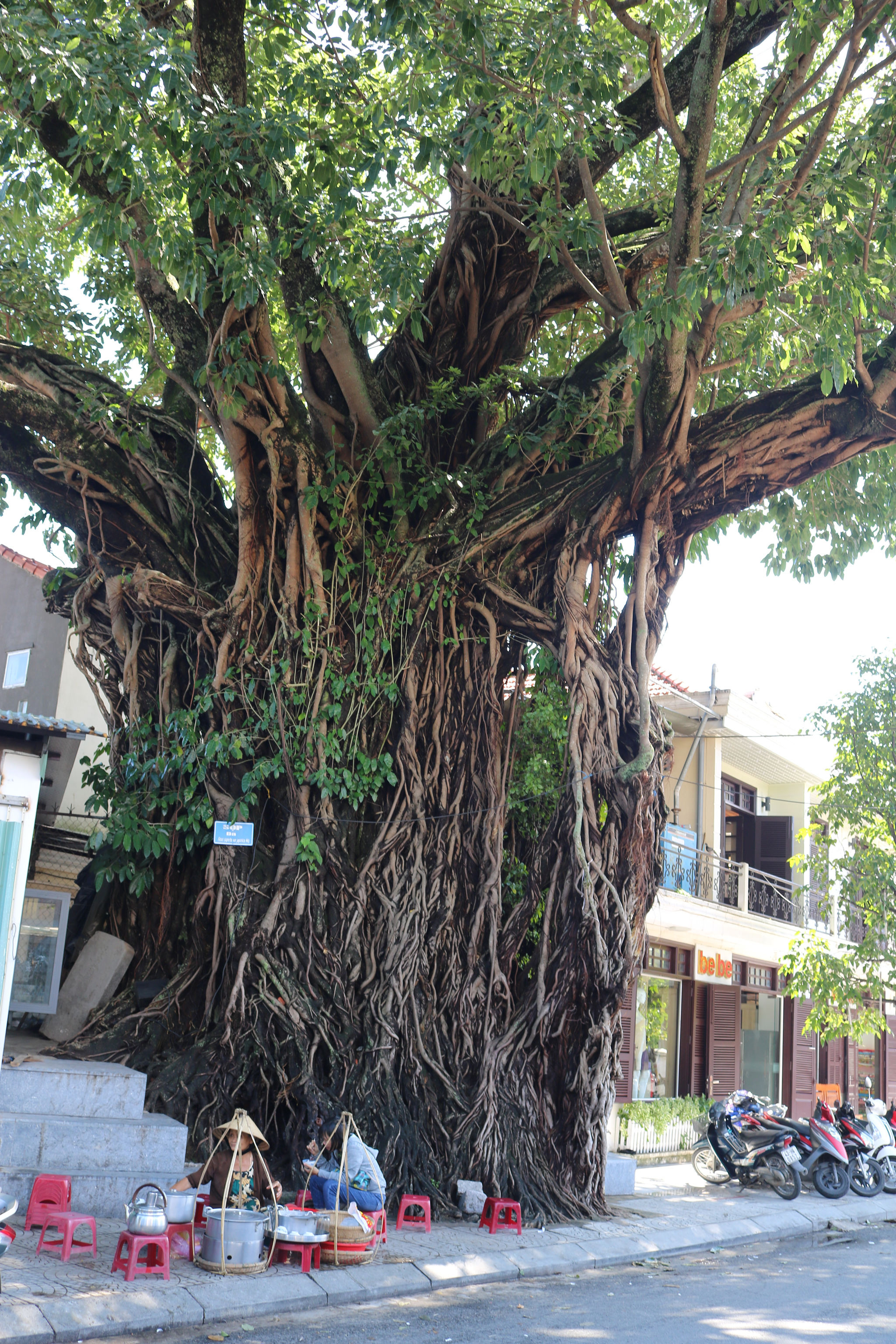
Among them, the trumpet-shaped fig tree on Tran Cao Van Street is associated with many memories of the people of Hoi An.
The name originates from the fact that during the French colonial period, conscripted soldiers often gathered under the banyan tree to practice their trumpets.
Researcher Truong Dinh Quang, in his article "Trees in Hoai Street - the Trumpet Banyan Tree," once wrote: "The green-uniformed soldiers, also known as conscripted soldiers... The soldiers used the base of the banyan tree as a place to blow their trumpets. That's how it got the name Trumpet Banyan Tree..."


About 200 meters west of the trumpet-shaped banyan tree is the banyan tree of the Five Elements Temple near Thong Dang prison. Its trunk encloses the ancient temple housing a set of Five Elements statues of high artistic value.
.jpg)
Not only is the banyan tree a long-standing cultural relic of Cam Pho village, it is also a historical witness, associated with the event of the night of April 30, 1954, when more than 1,200 compatriots and revolutionary soldiers who were imprisoned and tortured by the French here were freed.
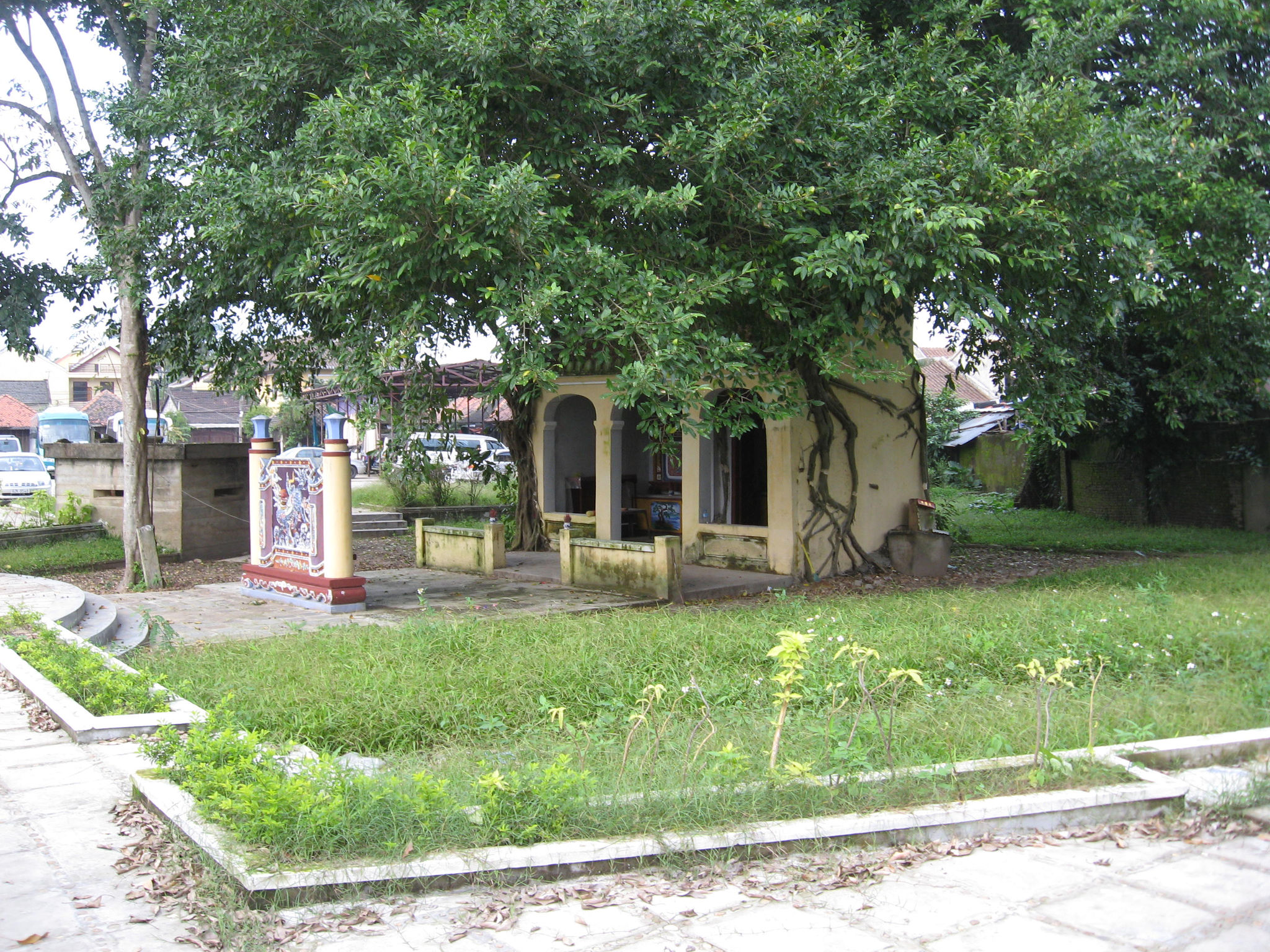
Another special banyan tree is the Bia Yểm Thủy Đạo banyan tree behind Cẩm Phô communal house, associated with many interesting stories passed down by the people of Hội An.
The Quang Nam Village Chronicle, compiled by the Far East Institute of Archaeology in 1941-1943, states in the section about Cam Pho village: "Behind the communal house there is a stele, which is said to be a talisman to ward off floods."
This unique stele is located in a small brick shrine surrounded by a large banyan tree. The stele faces north and is inscribed with constellations, amulets, and the central Chinese characters: "The Northern Emperor's decree establishes the supreme ruler to control the water flow."
According to historical documents and folk legends, the stele and the Bridge Pagoda were built by the Japanese to control the water flow and improve the unfavorable currents, creating a unique highlight in the cultural and spiritual space of Hoi An trading port.
Preserving the green charm of today's heritage city.
Trees and green spaces are essential components of urban areas, acting as "lungs" that regulate the microclimate, filter the air, and reduce dust and noise.
For modern cities, increasing green spaces and preserving old trees not only contributes to maintaining a clean environment but also plays a crucial role in conserving biodiversity, preserving urban spaces, and safeguarding historical and cultural values of the community.


In 2014, with the aim of developing an ecological, cultural, and tourist city, Hoi An city issued a decision to protect 46 ancient trees in the area, including banyan, fig, banyan, Bodhi, mahogany, pink acacia, tamarind, persimmon, tung tree, teak, and bird's foot trees.
All the ancient trees have nameplates attached, and the trumpet fig tree and the banyan tree at Bia Yểm Thủy Đạo have commemorative plaques introducing their historical and cultural value.
Like architectural relics, centuries-old trees are a valuable asset of Hoi An, contributing to the environmental landscape while also reflecting the depth of its culture.
To preserve and promote this value, it is necessary to create a digital map with QR codes introducing information about ancient trees and heritage trees; select and prepare dossiers for the recognition of heritage trees; and develop themed tours, contributing to enriching the experience of tourists visiting the Hoi An Ancient Town World Heritage Site.
Source: https://baodanang.vn/bong-da-noi-pho-hoi-3342951.html










![[Video] Weather forecast for July 5, 2026: Typhoon No. 1 causes strong sea disturbances, very heavy rain in the North, many areas warned of thunderstorms and tornadoes.](https://vphoto.vietnam.vn/thumb/402x226/vietnam/resource/IMAGE/2026/07/05/1783206051427_thum-sang-ok-png.webp)