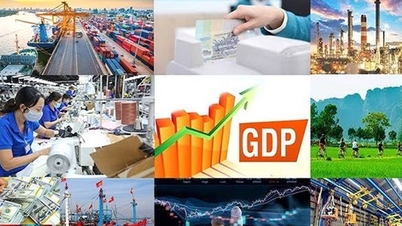
The economic landscape is overshadowed by conflict, followed by a series of shocks to energy, supply chains, and consumer confidence, which have had negative impacts on countries around the world. In its recently published Global Economic Prospects report, the World Bank forecasts global economic growth of only 2.5% this year, lower than the 2.9% of the previous year, while inflation is projected to be 4%.
The economic repercussions of the conflict are spreading to most regions, forcing the World Bank to revise down its growth forecasts for two-thirds of the world's countries. China's economy is projected to grow by only 4.2% this year, a sharp drop from 5% last year.
India is projected to grow by 6.6%, a sharp drop from last year's 7.7% but still maintaining its position as the world's fastest-growing major economy.
Meanwhile, the Eurozone achieved only a modest growth of 0.8%, a significant decrease from last year's 1.4%. The region is considered more vulnerable due to its heavy reliance on imported energy. Inflation in the Eurozone is not expected to cool down, and economic recovery is unlikely next year if the conflict in the Middle East continues and fuel prices remain high until the end of this year.
However, one bright spot is that the US economy is still projected to grow by 2.2% this year, a slight increase from the 2.1% forecast for 2025. As a major energy producer, the world's number one economy is more resilient than countries that import oil and natural gas, not to mention that the US economy is benefiting from large-scale tax cuts and a wave of investment in artificial intelligence (AI).

Disruptions in energy supply and soaring fuel prices have eroded confidence and economic activity across the board, severely impacting developing and emerging economies, forcing the World Bank to revise down its 2026 growth forecast for these economies by 0.4 percentage points, to 3.6%, the lowest level since the Covid-19 pandemic.
According to the World Bank's chief economist, Indermit Gill, Asia is currently the hardest-hit region in the world. West Asia, comprising 21 Arab nations, including the Gulf states, has suffered heavily from the energy shock combined with infrastructure damage and severe disruptions to oil production, trade, and tourism.
The countries that saw the largest downward revisions to their economic growth forecasts included the United Arab Emirates (UAE), Saudi Arabia, Turkey, and Bangladesh. High energy, fertilizer, and oil-related product prices will put significant pressure on developing economies, where spending on energy and food accounts for a large proportion of household consumption.
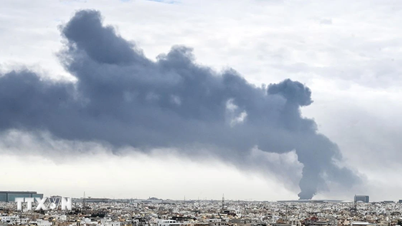
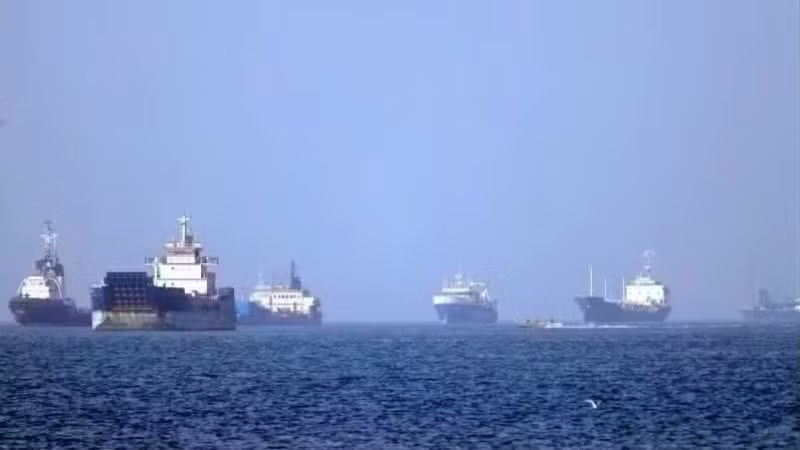
Since the US and Israel launched a war against Iran, leading to Tehran's retaliation and the blockade of the Strait of Hormuz, the global energy market has been severely impacted by scarce supply and soaring prices. Fertilizer supplies have also been severely disrupted, as much of it is exported through the Gulf region, raising concerns among experts that this could lead to serious food shortages. Rising fertilizer prices have increased production costs, consequently driving up food prices.
Current forecasts for global economic growth appear to be based on two main scenarios: a short-term disruption scenario, in which the impacts of conflict are controlled and energy prices gradually stabilize from mid-2026; and a prolonged disruption scenario, with more serious and long-lasting economic consequences. The longer the instability lasts, the greater the economic and social costs. Global investment risks declining, including in energy-intensive sectors like AI, which could lead to increased unemployment.
The global economic outlook is heavily influenced by the unpredictable developments in the Middle East conflict. While not yet at the point of recession, economic hardship is affecting the lives of billions of people. If the energy shock lasts longer than expected, inflation could continue to rise, while declining confidence or financial stress could weaken consumer demand, casting a shadow over the global economy.



Source: https://nhandan.vn/bong-may-bao-phu-kinh-te-toan-cau-post968886.html