Pepper prices have adjusted sharply.
On June 1st, pepper prices were around 130,000 - 131,000 VND/kg, but by June 13th, businesses and pepper growers recorded the highest price in over 8 years, climbing to over 180,000 VND/kg, an increase of 50,000 VND/kg compared to the beginning of June 2024.
However, just one day later (June 14th), the price of pepper adjusted downwards by 20,000 VND/kg, to around 160,000 - 162,000 VND/kg.
 |
| "Getting burned" by the price of pepper. |
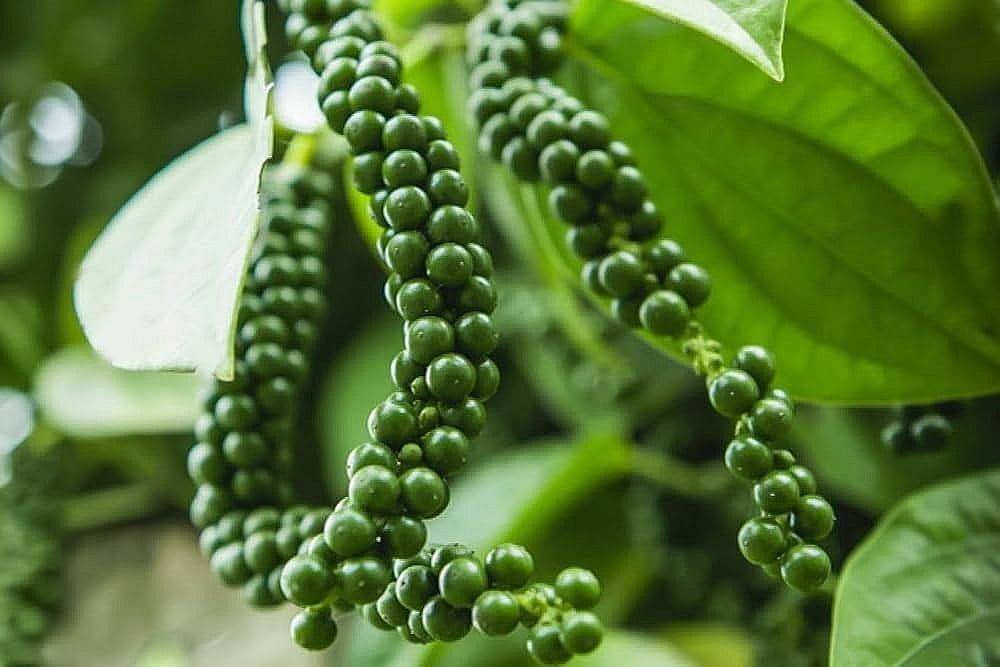
The downward adjustment continued throughout the following days, falling to around 157,000 – 160,000 VND/kg. Notably, on June 26th, pepper prices in the Southeast region dropped sharply to 145,000 VND/kg. Specifically, pepper prices in Dak Lak , Dak Nong, Gia Lai, and Binh Phuoc were purchased at 145,000 - 146,000 VND/kg.
Following this sharp drop, pepper prices in some localities have adjusted slightly upwards, with prices recorded on the last day of the month (June 30th) ranging from 153,000 to 157,000 VND/kg.
Across pepper forums, experts believe that the recent fluctuations in pepper prices are due to an invisible force causing prices to fall.
Paradoxically, when pepper prices reached 180,000 VND/kg, many pepper farmers were reluctant to sell their produce, hoping for further price increases. However, when pepper prices dropped to 145,000 VND/kg, many farmers became worried and pushed their pepper onto the market.
Overall, in June 2024, pepper prices increased by an average of 23,000 - 27,000 VND/kg. Although the market experienced two sharp downward adjustments during the month, the second quarter of 2024 still ended with prices exceeding farmers' expectations.


Previously, in May 2024, domestic pepper prices increased sharply, by an average of 33,000 VND/kg. In April 2024, domestic pepper prices increased by 5,000 VND/kg. Currently, supply is low, and farmers are holding onto their pepper, causing traders and businesses to sometimes sharply increase prices to buy up, then drastically decrease them for speculation. The dealers holding onto farmers' goods are now resorting to price manipulation to force farmers to sell their produce quickly.
According to the Vietnam Pepper and Spice Association (VPPA), the scarcity of supply has driven up pepper prices sharply recently. On the other hand, in June, global pepper supply still depends on shipments from Vietnam, while other countries have not yet begun their harvests. This has helped Vietnamese pepper prices maintain a strong upward trend month after month in the second quarter of 2024. Furthermore, speculative activities driving prices up in recent times cannot be overlooked.
Forecasts indicate that the upward trend in pepper prices will slow down, but will remain high due to limited supply and increased demand. In major pepper-producing countries such as Brazil, Indonesia , and Vietnam, this year's crop yield is projected to decrease. According to statistics from the Ministry of Agriculture and Rural Development, Vietnam's pepper cultivation area in 2023 reached 120,000 hectares, with a production of 190,000 tons. Estimated pepper production in 2024 is expected to further decrease to 170,000 tons, the lowest level in the last five years.
Experts advise that, in the medium and long term, the upward trend in Vietnamese pepper prices is clear; however, the market is heavily influenced by speculation, so farmers who still have pepper in storage should consider carefully and cautiously sell when necessary, avoiding selling based on rumors.
Still facing many difficulties
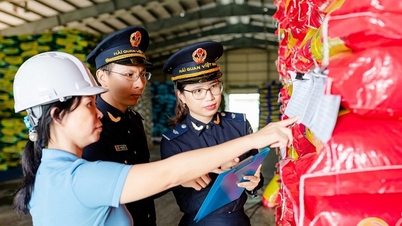
Rising pepper prices are causing difficulties for businesses in purchasing enough to fulfill previously signed export orders. In addition, there are transportation problems, with many containers stuck at ports, partly due to ships heading towards China to concentrate exports to the US before August 1st, in order to avoid US anti-dumping duties. This has led to congestion at ports in Singapore and China, causing a shortage of ships in many areas and driving up freight costs. Furthermore, conflicts in the Red Sea are also exacerbating transportation difficulties.
Export businesses report that the shipping situation to Vietnam's key export markets is very tense. The most serious situation is on the European route, where freight rates are both expensive and space is scarce. Currently, freight rates are 60-70% higher than at the beginning of the year.
High freight rates have driven up the price of Vietnamese pepper exports this month. Although export volume decreased compared to the same period last year, the value increased significantly, making it likely that the pepper industry will achieve its target of exporting over one billion USD this year. However, exporting businesses say that the net profit they earned was not substantial.
The sharp increase in pepper prices since the beginning of the year has brought joy to pepper farmers, but it has also put many dealers at risk of heavy losses. Typically, at the beginning of the pepper season, after harvesting, farmers often consign their pepper to dealers, believing that storing it themselves will result in losses. When they need money, they go to the dealer to finalize the sale and collect payment. Meanwhile, the dealers who hold the consigned pepper often use it to generate other income.



Mr. Le Duc Huy – General Director of Simexco, a subsidiary of 2/9 Dak Lak Import-Export Company Limited – stated that the recent sharp increase in pepper prices has caused difficulties for many businesses. Recently, the government and associations have positioned Vietnam as the world's kitchen. Accordingly, Vietnam will become a producer of consumer goods, packaged and bottled products ready for immediate use, instead of exporting raw materials as before. Therefore, by focusing on processing, we can import raw materials from other countries to produce consumer goods when domestic supply is insufficient.
To create a healthy and efficient pepper market, Mr. Le Duc Huy believes that it is crucial for all market participants (including farmers) to reduce speculative thinking. Producers should focus on supplying their products to the market, keeping only a portion for themselves. They should avoid borrowing money to speculate and hoard goods, as this goes against market principles.
For intermediary businesses, they should fulfill their role as connectors and facilitators, avoiding speculation and profiteering. When people need money, they should be able to buy at good prices, and when export businesses need goods, they should be able to supply them adequately. Export businesses need to effectively harmonize the interests of all parties, without forcing prices down on anyone. However, Mr. Le Duc Huy believes this is not easy. Because the market has many businesses participating in the supply chain. Each business has a different mindset and strategy, and they always believe they are right.
And the pepper market will continue to face unexpected developments as the supply of pepper remains in short supply.
Source: https://congthuong.vn/bong-tay-voi-gia-tieu-329287.html




![[Image] National conference summarizing one year of operation of the overall organizational model of the political system, the three-tiered government model.](https://vphoto.vietnam.vn/thumb/1200x675/vietnam/resource/IMAGE/2026/07/01/1782882811691_ndo_br_1-jpg.webp)