

 |
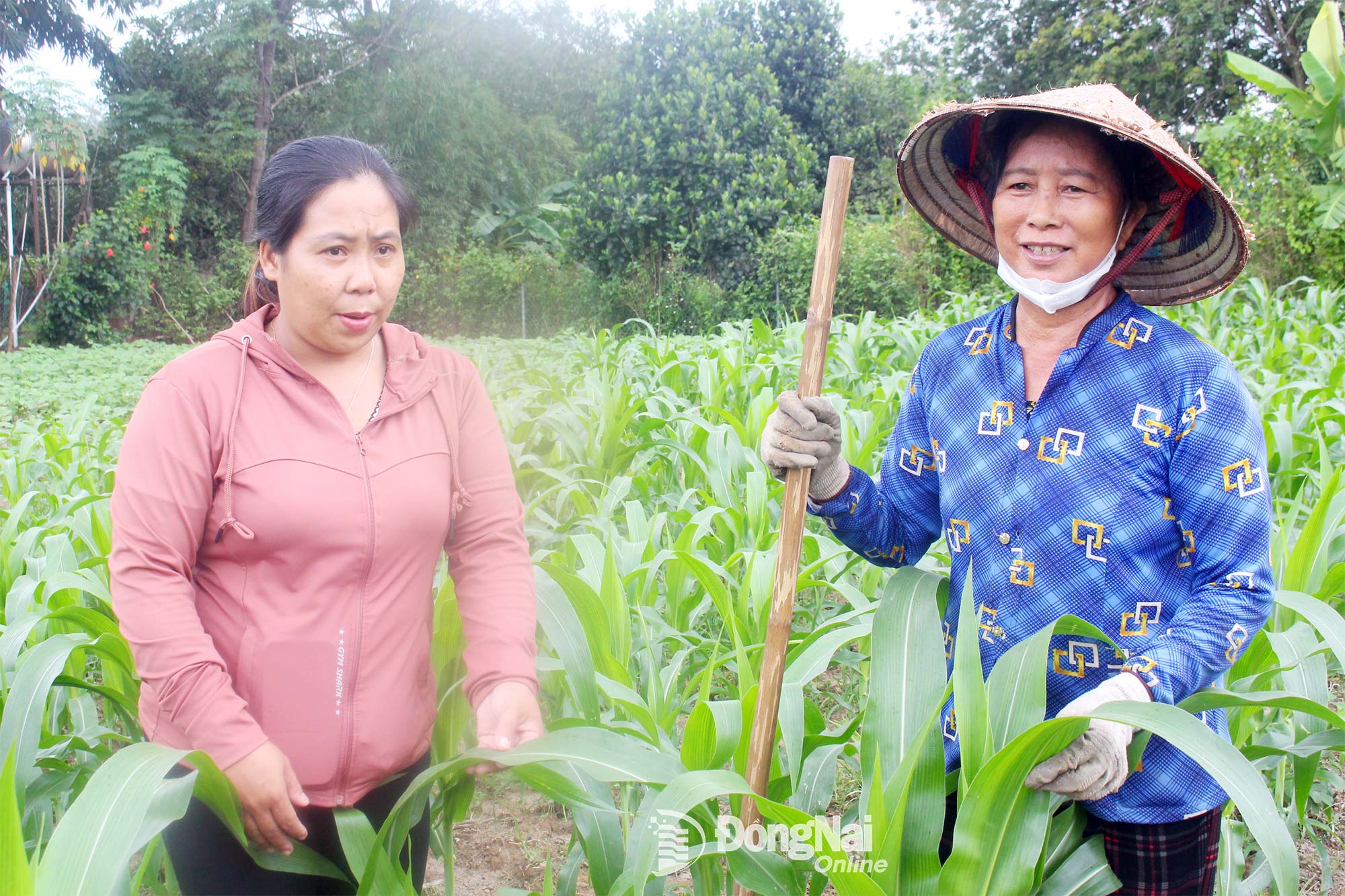
| Residents of Suoi Doi hamlet stand beside their lush green cornfields. Photo: D. Phu |
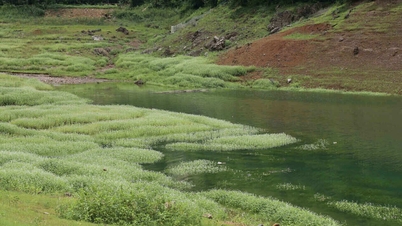
The image of children holding hands, the older ones carrying the younger ones, wading across the shallow stream to the private school in the 1990s and 2000s now only remains in the memories of the local people.
Starting a new life in a new land.
Mr. Hoang Thin Pau (80 years old, Tay ethnic group, from Cao Bang province) - who was instrumental in bringing Tay and Nung ethnic people from many localities in Cao Bang and Quang Ninh provinces to settle here - said: "The residential area of Team 5, Cau 2 hamlet, Dong Xoai commune, Dong Phu district, Song Be province, had 28 households when it was first established in 1986. Later, Tay and Nung people who were distant relatives of ours learned that this land could grow wet rice and upland rice without fertilizer or pesticides, yet still thrive and yield high productivity, so they came to live here."
The Tay and Nung people have a strong sense of community, so those who arrived first have a responsibility to help those who came later, such as showing them where to clear land, build houses, and sharing water, seeds, and food. With their production methods still deeply rooted in the highlands, they cultivate wet rice in the lower areas, while in the higher areas they sow upland rice, corn, beans, gourds, pumpkins, and melons, and raise chickens, ducks, pigs, buffaloes, and cows in confinement or free-range for food and draft power.
Being diligent and living in fertile land, after just one harvest of upland rice, upland rice, potatoes, and beans, the Tay and Nung people here became self-sufficient in food. Their meals no longer consisted of corn, potatoes, or bamboo shoots, but rather white rice with foods such as fish, shrimp, and crabs from nature; and chickens and ducks from their own farms. Children grew quickly, and young people gained strength to do heavy work.
Establishing a private school
To ensure that the children who had moved to their new homes wouldn't forget what they had learned, and that those who had never been to school wouldn't become illiterate, Mr. Hoang Thin Pau mobilized the Tay and Nung people in his village to clear a barren, overgrown plot of land on a high hill, within a 1km radius of their homes and farms, to build a school. Within just a few days, the simple, privately-run school, with its thatched roof and bamboo walls, resonated with the sounds of children spelling and doing arithmetic. Mr. Pau also called on households with children attending school to contribute 10-15kg of rice per household per year to support the teachers.
From this private school, Mr. Pau and the parents, who are from the Tay and Nung ethnic groups, proudly boast: Every household in Suoi Doi hamlet has children attending university, college, or vocational school. Many teachers were later officially employed by the education sector, continuing their work of "sowing the seeds of knowledge."
Teacher Nong Thi Nhoi (of the Tay ethnic group, residing in Suoi Doi hamlet) recounted: She was one of seven volunteer teachers who taught literacy to the children of local families in the hamlet from the 1990s to 2000s. Before being officially hired and appointed as teachers, Ms. Nhoi and the other teachers had to go to Mr. Hoang Thin Pau's house every month to receive rice contributed by parents. Even though they only received a few dozen kilograms of rice each month, the teachers happily stayed at the school to teach literacy to the children in the hamlet.
From 2000 to the present, the shallow and deep streams that once hindered the movement of the Tay and Nung people in the hamlet have received attention and investment from the local government in building bridges and culverts. The Tay and Nung people in Suoi Doi hamlet now have access to electricity from the state-funded grid for lighting and production. This is also a period when the people have made a strong economic leap forward by utilizing the state-funded canal system to grow rice three times a year, and switching to planting rubber, coffee, and fruit trees in the highlands.
Suoi Doi Hamlet, Dong Tam Commune, Dong Nai Province, covers an area of 500 hectares and is home to 360 households, of which the Tay and Nung ethnic groups account for up to 90%. Thanks to their diligence and astute adaptation to new crops and livestock, 100% of the Tay and Nung people here enjoy a relatively prosperous economic life and comfortable housing.
A life of abundance
The mindset and farming practices of the Tay and Nung ethnic groups in Suoi Doi hamlet have quickly adapted to local and central government programs and policies, such as: farming techniques, loan capital, land use right certificates, transportation infrastructure, and irrigation systems. Rice fields are gradually shrinking to make way for rubber trees, fruit trees, and cash crops with much higher yields and economic value.
Mr. Nong Van Dong, Head of Suoi Doi Hamlet, Dong Tam Commune, said: "Since settling here, no Tay or Nung people are still suffering from hunger or poverty. Although there was a lack of material resources in the beginning, thanks to diligence, mutual support in labor and production, and employment in companies, every household now has a stable life. In particular, the Tay and Nung people who chose Suoi Doi Hamlet to settle do not sell their land and move elsewhere, but instead have a habit of accumulating money to buy more land for production or business."
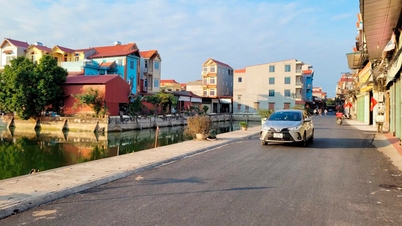
Dang Van Truyen, Secretary of the Party Branch of Suoi Doi Hamlet, said: “The Tay and Nung hamlets now no longer have makeshift houses or muddy, slippery roads. Everything looks like a painted picture with asphalt roads, spacious houses, and lush green gardens.”
Many children of the Tay and Nung ethnic groups go to university, college, vocational school, or work far from home. Many others stay in the locality to work as teachers, soldiers, police officers, or local and provincial officials. This is something we are proud of in educating the younger generation, demonstrating their eagerness to learn and their ability to overcome difficulties.
Secretary of the Party Branch of Suoi Doi Hamlet, Dong Tam Commune, DANG VAN TRUYEN
Doan Phu
Source: https://baodongnai.com.vn/xa-hoi/202510/buc-tranh-tuoi-sang-o-ap-suoi-doi-17f00f3/





















































Comment (0)