

Many major deals are predicted.
Over the past two years, the banking system has undergone many changes, most notably the restructuring of weak banks to serve the system's restructuring. Specifically, four weak banks – CBBank, OceanBank, GPBank, and DongA Bank – were compulsorily transferred to Vietcombank, MB, VPBank, and HDBank in 2024-2025.
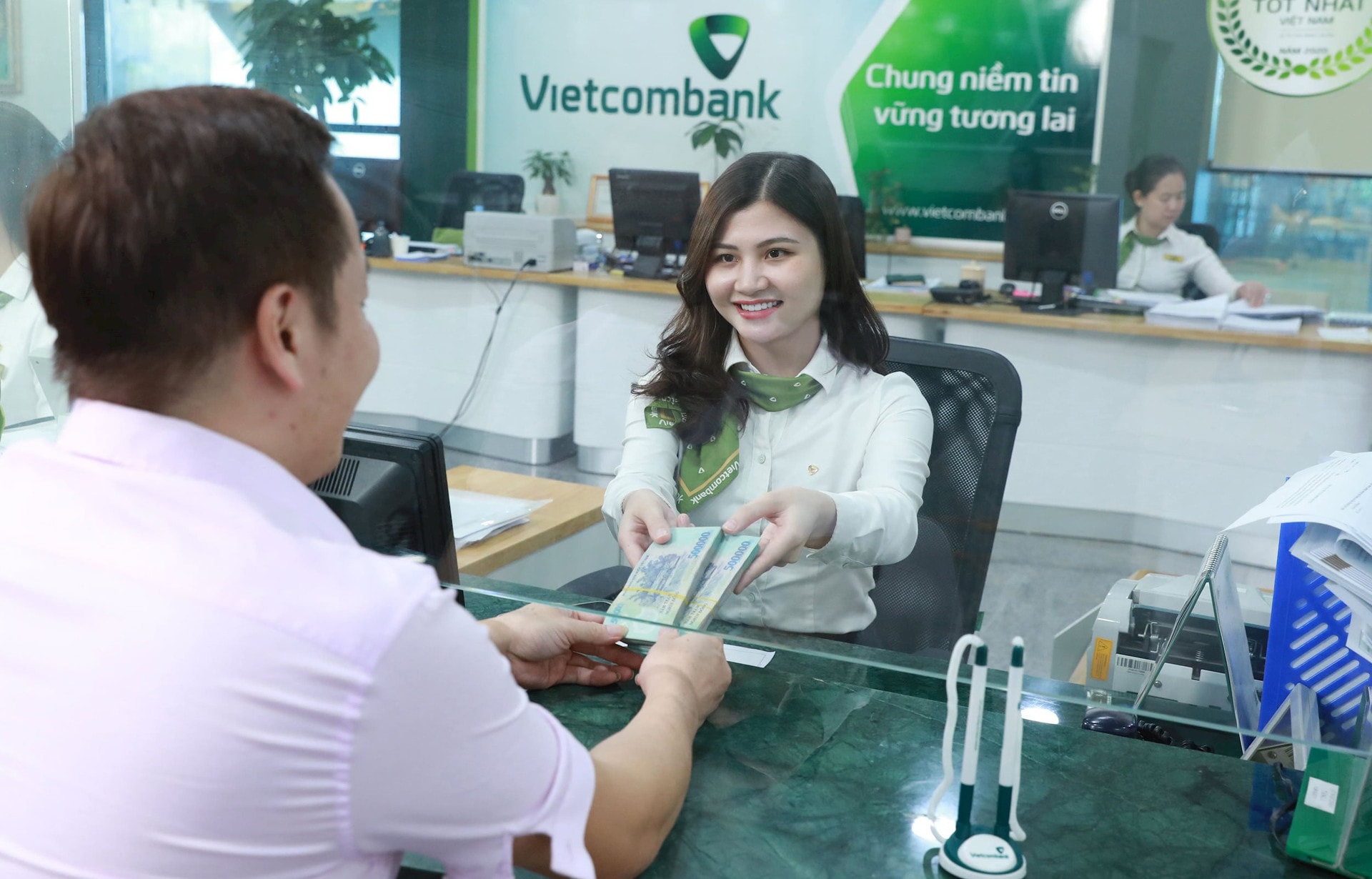
In 2026 and beyond, M&A activity will become more market-driven as banks seek foreign partners to strengthen their financial, technological, and management capabilities.
It can be said that the new regulation on "loosening" the foreign ownership ratio to 49% for banks undergoing mandatory transfers will also create new impetus for bank M&A, creating attractive opportunities to attract strategic investors.
Thanks to the benefits from the mandatory acquisition of weak banks, MB, HDBank, and VPBank will have the opportunity to increase their foreign ownership limit to 49%. If they choose the right partners, these banks will have the opportunity for strong growth.
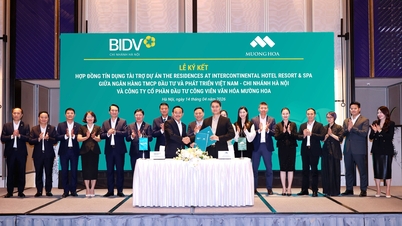
In 2026, several large transactions are anticipated. Specifically, in January, the Vietnam Investment and Development Bank ( BIDV ) announced a list of 33 investors participating in a private placement of over 264 million shares, valued at approximately VND 10,272 billion, expected to be completed in the first quarter. Many major investors are participating in this BIDV offering, including the State Capital Investment and Business Corporation (SCIC), SSI Fund Management Company Limited (SSIAM), and Manulife Vietnam.
As one of the Big 4 banks, Vietnam Foreign Trade Commercial Bank (Vietcombank) plans to offer 6.5% of its capital to a maximum of 55 investors, in one or more tranches during 2025-2026. Vietcombank has sent invitations to consulting firms to submit quotations for independent valuation services for the aforementioned private placement of shares.
Thus, after 6 years, Vietcombank has been able to implement its major plan for bank development. It is expected that this capital sale could bring Vietcombank 1.3-1.4 billion USD.
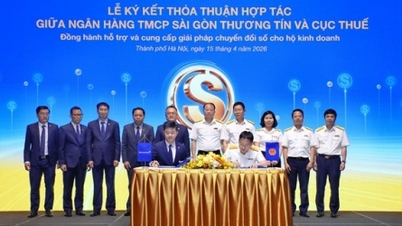
For the group of joint-stock commercial banks, Saigon Thuong Tin Commercial Joint Stock Bank (Sacombank) plans to sell 32.5% of its shares. These are the shares that Mr. Tram Be's group pledged to the Vietnam Asset Management Company (VAMC) to borrow 10,000 billion VND at preferential interest rates, aiming to help the bank resolve its liquidity crisis at the time of its merger with Phuong Nam Bank in 2015.
For example, at Loc Phat Commercial Joint Stock Bank (LPBank), by the end of 2025, the bank adjusted the maximum ownership ratio for foreign investors from 5% to 30%. Meanwhile, at Vietnam Technological and Commercial Bank (Techcombank), the bank's leadership stated that they would consider selling 15% to a foreign strategic investor.
For Vietnam International Commercial Bank (VIB), the divestment of its former foreign shareholders creates opportunities for new partners to participate in the bank. Saigon - Hanoi Commercial Joint Stock Bank (SHB) is also seeking a foreign strategic partner.
Attracting foreign investors
According to experts, more than a dozen banks have foreign ownership limits below 5%, creating opportunities for many foreign investors. Furthermore, in the context of fierce competition among domestic banks, smaller banks also need to seek additional foreign investors to supplement their financial resources and adopt modern management methods.
Besides selling equity directly to foreign investors, domestic banks are also seeking broader opportunities to attract foreign capital through the stock market. However, foreign investors are particularly interested in banks with strong digital transformation capabilities, ESG (Environmental, Social, and Governance) models, and robust risk management skills. Transparency is considered a key factor in closing deals and driving overall economic growth.
SHB's Vice Chairman of the Board, Do Quang Vinh, believes that the core factor that international investors care about is transparency. Once finances are transparent, the ability to access foreign capital will be higher, helping to enhance the potential and position of businesses in the market.
According to Mr. Do Quang Vinh, support from foreign partners goes beyond just registered capital; it involves strengthening operational processes, improving efficiency, and leveraging global networks. The collaboration is not merely an M&A deal, but a partnership for mutual development, joint business operations, and creating advantages for both parties.
A representative from Military Commercial Joint Stock Bank (MB) shared that foreign ownership limits are usually aimed at two main goals: attracting strategic investors and seeking higher share values. However, currently for MB, what matters most is the intrinsic value and strength of the business.
Recently, MB has attracted considerable interest from investment funds. These investors have relatively high demands for information transparency, and MB also has a greater responsibility in this regard. Currently, MB does not have any foreign strategic shareholders, and in its search for a foreign strategic partner, MB aims to quickly access advanced technology and management expertise, especially in areas where MB is still weak.
Representatives from other banks also stated that attracting foreign capital through M&A is a key strategy to elevate the Vietnamese banking system. The presence of foreign partners not only provides domestic banks with significant capital to meet medium- and long-term lending needs, but also opens up opportunities to access new technologies, modern business models, and advanced risk management expertise.
Source: https://hanoimoi.vn/bung-no-cac-thuong-vu-ma-ngan-hang-734161.html


![[Photo] National Assembly Chairman Tran Thanh Man attends the policy seminar to promote Vietnam-Türkiye cooperation.](https://vphoto.vietnam.vn/thumb/1200x675/vietnam/resource/IMAGE/2026/04/16/1776351415367_vna-potal-chu-tich-quoc-hoi-tran-thanh-man-du-toa-dam-chinh-sach-thuc-day-hop-tac-viet-nam-tho-nhi-ky-8705791-jpg.webp)
















![[Image] Bridges and roads connecting the eastern part of Ho Chi Minh City](https://vphoto.vietnam.vn/thumb/1200x675/vietnam/resource/IMAGE/2026/04/16/1776328595108_ndo_br_bh-vt5-jpg.webp)

























![[Infographic] Details of the Hanoi-Quang Ninh High-Speed Railway Project](https://vphoto.vietnam.vn/thumb/402x226/vietnam/resource/IMAGE/2026/04/16/1776338188424_anh-man-hinh-2026-04-16-luc-18-16-10.png)
![[Photo] National Assembly Chairman Tran Thanh Man meets with the Speaker of the Georgian Parliament](https://vphoto.vietnam.vn/thumb/402x226/vietnam/resource/IMAGE/2026/04/16/1776338494029_anh-man-hinh-2026-04-16-luc-18-21-21.png)

















Comment (0)