Digital logistics 'experts'
A decade ago, the image of a postman in Hai Phong was associated with an old motorbike, a full bag of mail, and a notebook meticulously recording recipient addresses. Now, however, they have become "digital postmen."
Amidst the strong wave of digital transformation from Vietnam Post Corporation, Hai Phong City Post Office is pioneering a comprehensive restructuring of its processes, placing technology at the core of its operations to enhance competitiveness.
According to Mr. Pham Ngoc Tu, Deputy Director of the Business Center, currently 100% of postal workers at post offices in the city are equipped with smart devices integrated with specialized route management applications.
Instead of manual record-keeping prone to errors, each postal worker is now a true data clerk. Every order status, from warehousing, delivery, successful delivery, return, or storage, is updated in real time on the application. This data is instantly transmitted to the central system, allowing both the operations unit and customers to monitor the parcel's journey minute by minute, second by second.
This change is not simply a change in tools, but a "revolution" in working mindset: Shifting from providing postal administrative services to high-tech logistics services.
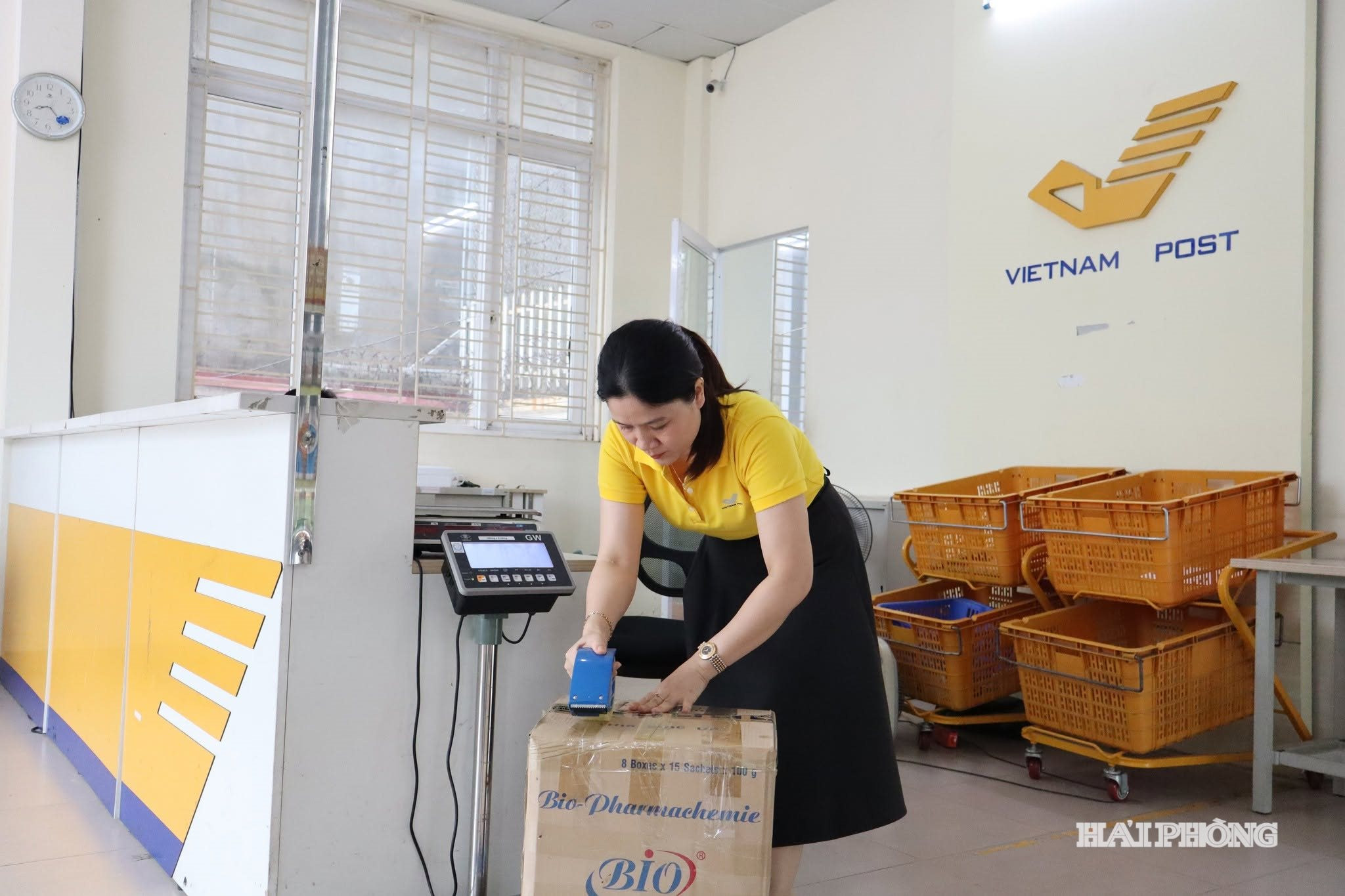
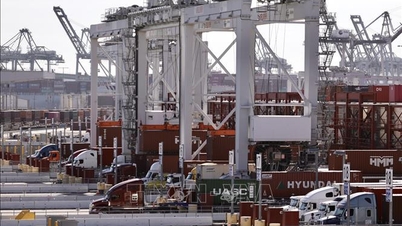
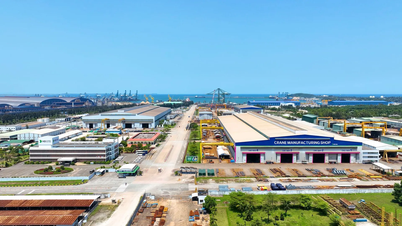
Hai Phong is a city with a unique structure, being both a major seaport center and a blend of old neighborhoods, long-standing residential areas, and the rapid expansion of new industrial and urban zones in Thuy Nguyen and An Duong. Therefore, the work of postal workers here requires maximum flexibility.
Currently, the city's Post Office has nearly 1,000 employees participating in the delivery of parcels to agencies, businesses, and citizens. Specifically for the KT1 service (public administrative postal service), nearly 250 dedicated staff are working continuously 24/7...



Nguyen Van Hung, a postal worker with 10 years of experience at the Central Post Office, shared: "Previously, our biggest pressure was the weather and long distances. Now, the biggest pressure is time and the accuracy of the data. I have to process nearly 100 packages a day, ranging from e-commerce goods and postal items to specialized import and export goods. Just one incorrect order code or a lack of timely information updates can affect the entire logistics process, and customers will immediately complain. We no longer just need to know the routes; we need to know the entire system."
Traditional local knowledge is now combined with optimized GPS positioning algorithms. Postal workers know the shortest route and are aware of frequently congested intersections, allowing them to proactively avoid them and thus improve delivery efficiency.
The final link in the logistics process.
Currently, Hai Phong Post Office has a widespread network comprising 109 ward and commune post offices and 493 service points. In the modern logistics process, postal workers are the final link in direct contact with the end consumer.
Digital transformation doesn't stop at the phone in the postal worker's hand; it's a synchronization with the entire operational system. When postal workers enter data at the field, the warehouse management system (WMS) and transportation system (TMS) at the city post office automatically calculate and adjust to optimize routes, reduce fuel costs, and increase delivery speed.
Ms. Tran Thi Lan, owner of a fashion store in Ngo Quyen ward, said: "I regularly send goods through the city's post office. Now, I no longer have to worry about whether the goods have reached the customers or not; I just open the app and see the order's location immediately. Especially, COD (cash on delivery) orders are managed very strictly by the system, and the money is transferred to my account very quickly. This professionalism makes me trust and become more loyal to the service."
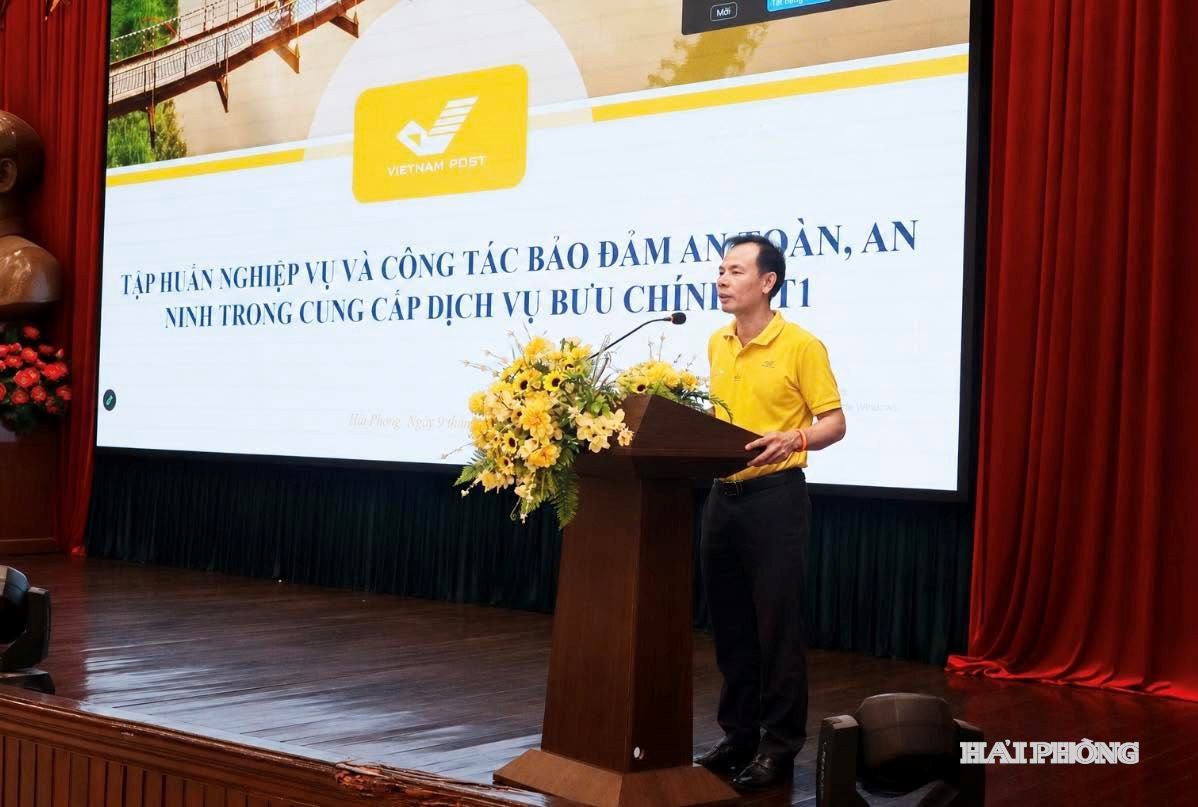
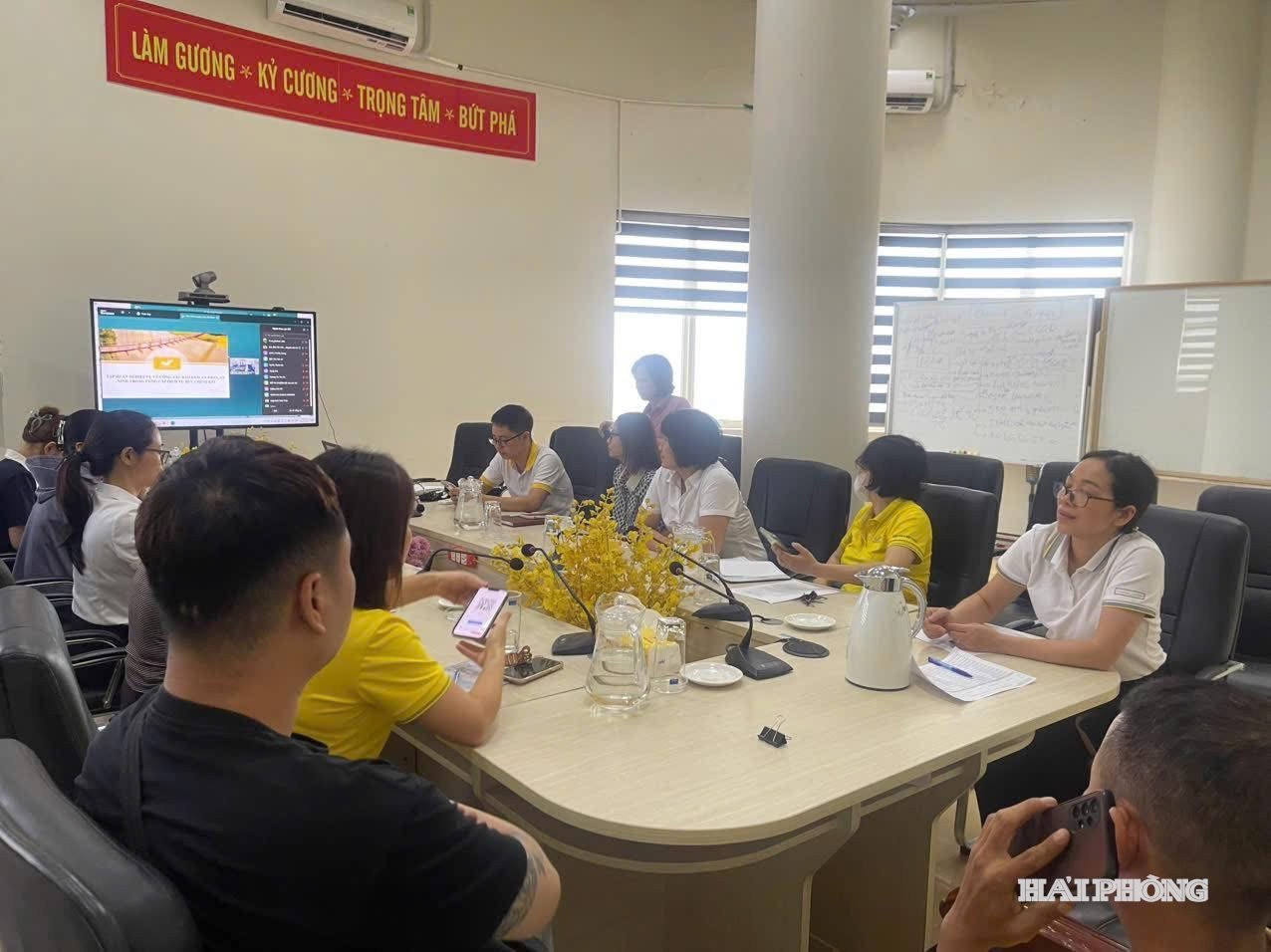
To keep pace with the rapid changes in technology, Hai Phong City Post Office is implementing many in-depth training programs. According to information from the City Post Office's leadership, from the beginning of 2026, the unit will focus on retraining its postal workers, not only in delivery skills but also in developing a mindset for digital customer service.
According to Deputy Director of the City Post Office, Doan Trung Tuyen, the training is organized in a hybrid format: online training via the Corporation's E-learning system and direct practical training at post offices on software usage skills, problem-solving skills, and communication skills in an e-commerce environment. In particular, the content on customer data security is given top priority.
The city's Post Office aims to significantly restructure its organizational model in 2026, streamline its operations, and increase labor productivity by at least 15% compared to 2025. Postal workers will no longer be mere delivery personnel but will become "mobile financial officers," handling the flow of goods and money with absolute safety and accuracy.



The challenges facing postal workers in Hai Phong in the digital age are immense. Fierce competition from private delivery companies forces postal workers to adapt and become more professional every day. However, with its dense network of post offices, long-standing reputation, and the wave of digital transformation, Hai Phong Post Office is affirming its indispensable role in the city's supply chain.
Digitalization is helping postal workers become more efficient, smarter, and better positioned in the value chain. These "extended arms" are contributing to the realization of the goal of making Hai Phong a smart and modern logistics center in the North. This transformation is not just a story for the postal industry alone, but a model for the flexible adaptation of the city's human resources to the wave of industrialization and modernization.
THU HANGSource: https://baohaiphong.vn/buu-ta-thoi-cong-nghe-546740.html




![[Photo] Strengthening character and expertise: Intense training for artillery soldiers.](https://vphoto.vietnam.vn/thumb/1200x675/vietnam/resource/IMAGE/2026/06/30/1782815602541_lu-368-1875-4571-jpg.webp)