

The "Little Elephant in Buon Don" version is causing a stir.
Recently, Phạm Hồng Tuyến, the daughter of composer Phạm Tuyên and a journalist, expressed her outrage over the fact that her father's song "The Little Elephant in Bản Đôn" has been altered in a way that deviates from the original version.
According to journalist Pham Hong Tuyen, a derivative version of the song "Little Elephant in Buon Don" is circulating on social media, featuring musical and lyrical variations that differ from the original. What's noteworthy is that these variations are being chosen by many people.
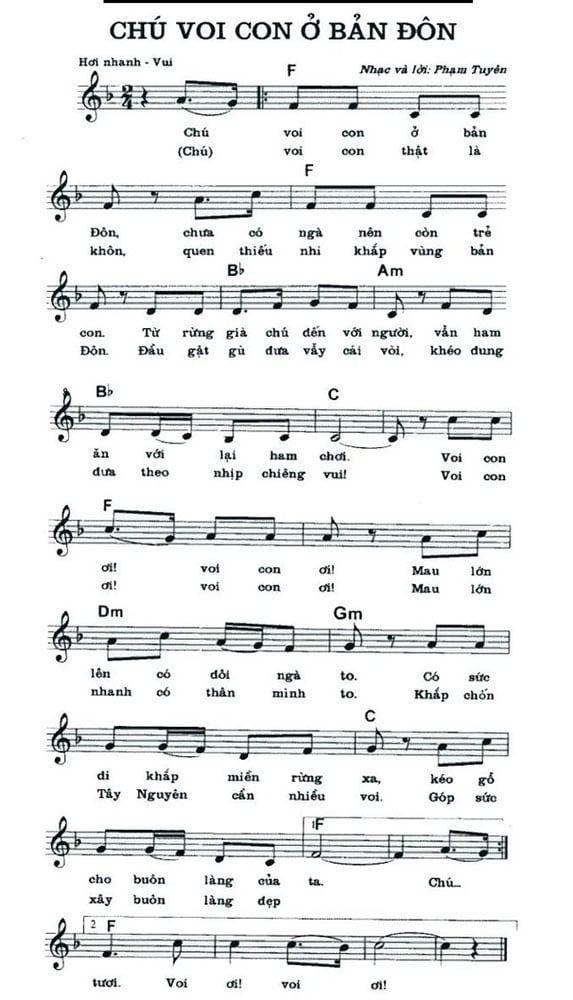
The children's song "Little Elephant in Buon Don," composed by musician Pham Tuyen, is causing a stir due to the appearance of numerous derivative versions. (Photo: ARCHIVE)
No one asked for permission.
The derivative version of "The Little Elephant in Buon Don" is currently mistakenly believed by many to be the original. Composer Pham Tuyen, upon hearing the derivative version, affirmed: "That is not my song."
Among the numerous derivative versions of "The Little Elephant in Buon Don" circulating online, many listeners are particularly interested in the version performed by Ahu. This version, released three months ago, currently has around 23,000 listens/views, with mixed reviews. Prior to that, the version performed by Hoai Long three years ago had over 300,000 views.
Furthermore, versions performed by Vu Nguyen Thao, Duyen Le, and Le Anh a year ago, or Bach Nguyen three months ago, all have tens of thousands of views. Compared to the original "Little Elephant in Buon Don" performed by children (the latest version uploaded to YouTube 9 months ago) which has nearly 30 million views/listens, these derivative versions are completely overshadowed in terms of popularity.
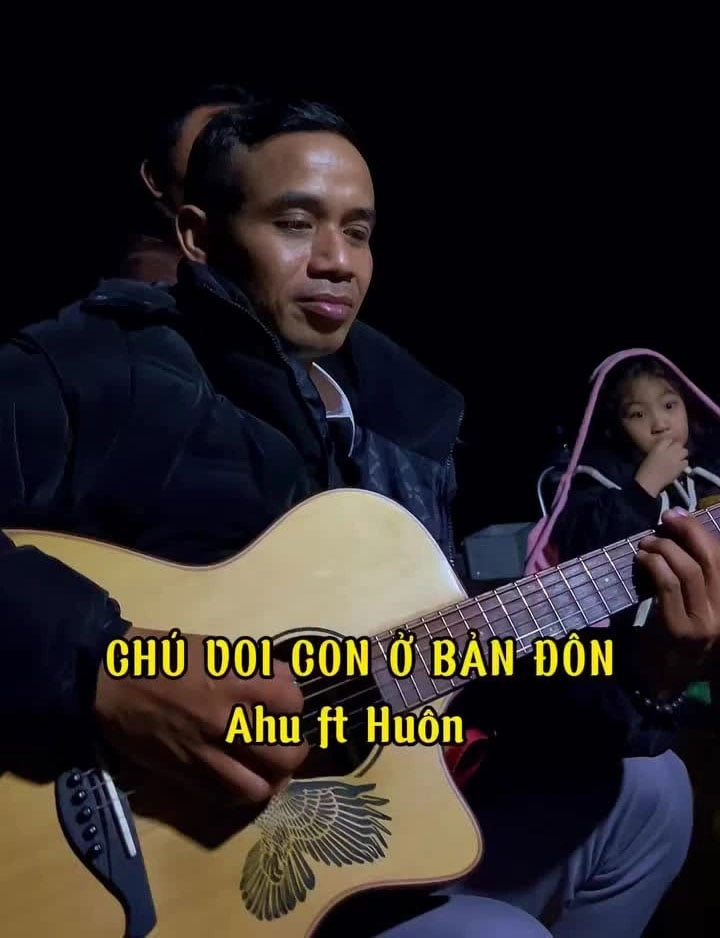
The children's song "Little Elephant in Buon Don," composed by musician Pham Tuyen, is causing a stir due to the appearance of numerous derivative versions. (Photo: ARCHIVE)
What concerns the family of composer Pham Tuyen is that no one has asked his permission to adapt the song "Little Elephant in Buon Don." This means they have "violated his copyright." Meanwhile, according to the family, in 2009, the producers of the "Tao Quan" (Kitchen Gods) program approached him to request permission to adapt the song "From a Street Intersection" into "Flooding from a Street Intersection."
Journalist Pham Hong Tuyen affirmed that composer Pham Tuyen strongly supported the exploration, creativity, and modernization of his works. However, that does not mean arbitrarily using or altering songs without the author's permission or losing the spirit of the original work. "We sincerely hope that anyone who has derived this song from another work will contact our family so that everything can be clarified," Ms. Tuyen expressed.
Finding a new path
Recently, singer Ha Le's innovative reinterpretation of several songs, specifically Trinh Cong Son's music, in her album "O Tro" (Living in a Rented Room) as part of the "Trinh Contemporary" project, has garnered attention. Ha Le has created an unexpectedly new and unique interpretation of Trinh Cong Son's music. Familiar songs have become distinctly different. This innovative approach has been recognized by music professionals and appreciated by the public.
Interestingly, Ha Le's project also received enthusiastic support from the family of the late musician Trinh Cong Son. At the launch events in various locations, and even at the appreciation party for clients and the media during the introduction of the "Trinh Contemporary" project, members of the late musician's family were always present, specifically singer Trinh Vinh Trinh.
Singer Trinh Vinh Trinh commented: "I'm surprised by what Ha Le has done. It's unique yet elegant, and still retains the spirit of Trinh Cong Son. The voices of Khanh Ly, Hong Nhung… are beautiful, but sometimes it's not easy to touch the hearts of the younger generation. Finding a new path while still preserving the spirit of the composer in his work is very difficult. I believe Mr. Son would also really like Ha Le's music. My family fully supports this endeavor of his."
Singer Ha Le's approach has received support from both professionals and audiences. While cover versions are a popular choice among many singers, reinventing and creating something new based on an existing work is commendable. Ha Le demonstrates a contemporary approach to Trinh Cong Son's music without losing its essence.
"Trinh Contemporary" is not just about new sounds and groundbreaking, contemporary interpretations, but also offers a fresh perspective on the cover format commonly seen in Vietnamese music. Ha Le cleverly uses the "golden" elements of Trinh Cong Son's music to create something new and distinctly his own.
Returning to the case of the derivative version of "The Little Elephant in Buon Don," according to experts, except for "folk" works (of unknown authorship), any "creative" song, regardless of its purpose, must still obtain permission from the original author; this is a necessary sign of respect. Even if the derivative version does not bring commercial benefits, it still has the potential to spread its image and lyrics.
"Getting permission from the author is not difficult. This move demonstrates the necessary and appropriate respect," musician Tien Luan commented.
By law, copyright comprises moral rights, ownership rights of the work, and derivative rights. Moral rights are the rights of the creator of the work (these rights are inviolable). Ownership rights are the right to dispose of the work. Sometimes, moral rights and ownership rights do not belong to one person but to multiple people (for example, with commissioned works, ownership rights belong to the individual or organization that commissioned the work according to the agreement). Meanwhile, derivative rights are the right to use that work to create another work without infringing on the moral rights and ownership rights stipulated in copyright.
According to the regulations above, writing new lyrics for a song or performing a cover version is permitted by law. It falls under derivative rights, provided that the original author agrees.
Many popular songs are re-written with new lyrics for promotional music videos broadcast on television channels and social media, falling into this category. The "Meeting at the End of the Year" (Tet Comedy Show) on VTV often uses popular songs with rewritten lyrics to serve the content of the play. Cover songs (reimagining old singing styles) are a way for singers to creatively reinterpret the original musical work. Singers have the right to create new arrangements and new singing styles without violating the intellectual property rights of the song as expressed in written form.
A single musical piece can have thousands of different arrangements and vocal styles. Listeners might dislike a later singer because they think the latter performs worse than previous ones, but that doesn't necessarily mean the singer has violated copyright. In fact, many cover versions are better than the original. Composer Huy Phuong once sued a record producer for using his song to create a traditional Vietnamese folk song without permission, not because the adaptation diminished the value of his original work.
Huu Than
(to be continued)
Source: https://nld.com.vn/ca-khuc-phai-sinh-sang-tao-hay-pha-nat-196240414211024759.htm

































































Comment (0)