The meeting was seen as an important step toward a comprehensive agreement on nuclear issues, regional security, and the lifting of sanctions.
The negotiations took place at the Burgenstock mountain resort (Switzerland) with the participation of mediators from Qatar and Pakistan.
US Vice President JD Vance, Iranian Foreign Minister Abbas Araghchi, and Iranian Parliament Speaker Mohammad Bagher Ghalibaf were all present at the meeting.
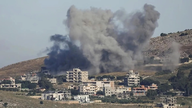
Ahead of negotiations, Iran emphasized that the issue of Lebanon is one of the key components in the process of reaching a final agreement with the United States.
Tehran continues to call for an end to military operations in Lebanon, considering it a crucial element in maintaining the negotiation process.
Tehran also said it would put the release of frozen Iranian assets abroad and the resumption of oil export licenses on the agenda. Tehran said the issue of frozen assets abroad was among the topics to be discussed.


Meanwhile, US Vice President JD Vance expressed hope that the talks would make progress on both Iran's nuclear program and maintaining the ceasefire in Lebanon. He said the two sides would have about 60 days to negotiate the terms of a final agreement.
On June 22, the first round of talks between the US and Iran in Switzerland concluded, with both sides agreeing to ensure safe passage for ships through the Strait of Hormuz.
"The High Committee has agreed on a roadmap to reach a final agreement within 60 days, laying the groundwork for the immediate commencement of further technical negotiations," the two mediating countries, Qatar and Pakistan, said in a joint statement early on June 22 (local time).
The US and Iran also agreed to establish a de-escalation coordination group between the parties and Lebanon, with the support of mediators, to ensure compliance with the agreement to end military operations in Lebanon.
Technical negotiations will continue this week at Burgenstock.
While negotiations were underway, US President Donald Trump continued to issue stern warnings to Iran, including the possibility of resuming airstrikes if the talks failed. He also stated that the US could take over the Strait of Hormuz if necessary.



In response to these threats, the Iranian delegation refused to return to the negotiating room, although messages continued to be exchanged through Qatar and Pakistan as intermediaries.
Last week, the United States and Iran agreed on a framework memorandum of understanding (MoU) to lay the groundwork for a 60-day negotiation process on outstanding issues, including the nuclear program, regional security, and sanctions.
Source: https://baophapluat.vn/cac-dien-bien-moi-cua-xung-dot-trung-dong.html
![[Image] National conference summarizing one year of operation of the overall organizational model of the political system, the three-tiered government model.](https://vphoto.vietnam.vn/thumb/1200x675/vietnam/resource/IMAGE/2026/07/01/1782882811691_ndo_br_1-jpg.webp)