

Common types of cough
Coughing in fits
Frequent, short bouts of dry cough occur. These coughs increase chest pressure, causing congestion in the superior vena cava, resulting in facial redness, prominent veins in the neck, tearing, and even vomiting. The most typical example of this type of cough is whooping cough – the patient experiences dull pain in the chest, back, and abdomen due to excessive contraction of the respiratory muscles.
Persistent dry cough
A dry cough, often without phlegm, can be frequent and severe. A persistent dry cough is usually associated with laryngeal diseases, ear infections, chronic mastoiditis, bronchial cancer, pulmonary fibrosis, subacute pulmonary edema, lung cancer, miliary tuberculosis, or chronic pleural effusion.
Persistent dry cough can also occur due to the body's allergic immune system (asthma) being stimulated, or due to long-term use of medications for high blood pressure (coversyl).
Coughing that lasts at night
During the day, you only have a dry cough, with no signs of a cold or sore throat, but at night or during naps, you cough, have a sore throat, and experience persistent coughing that causes insomnia and fatigue. This condition is often caused by asthma, sinusitis, acid reflux in the stomach and esophagus, etc.
What should you do when you have a persistent cough?
Coughing is often a natural reflex of the body in response to bacterial infections, foreign objects, or bodily disorders caused by illness, especially in young children and the elderly. You should see a doctor immediately if a persistent dry cough is accompanied by fever, shortness of breath, cyanosis, or exhaustion.
If you have a cough that lasts more than 3 weeks, doesn't improve with medication, is accompanied by fever, or has green, rusty brown, or yellow phlegm, coughs up blood, has shallow breathing, or chest pain when coughing, you should inform your doctor to find the cause.
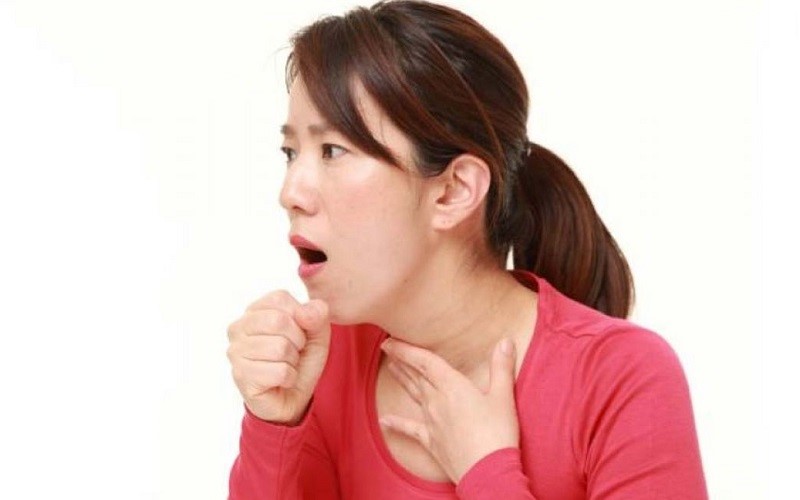
Coughing is often the body's natural reflex to attack by bacteria, foreign objects, etc.
What should you pay attention to in order to effectively reduce coughing?
Regardless of the cause, whether it's a dry cough or a cough with phlegm, the discomfort and fatigue that follow coughing fits can affect meals, sleep, and daily activities. Here are some suggestions that might be helpful:
- Drinking at least 2 liters of warm water daily can help reduce coughing, as it's essential for both dry and productive coughs. For dry coughs, water moisturizes the throat, reducing irritation and limiting coughing fits. For productive coughs, warm water helps loosen phlegm, making it easier to expel.
- Keep your body warm, especially your neck, hands, and feet. Staying warm and avoiding contact with cold water or cold wind will help prevent your cough from worsening. When going out in cold weather, remember to wear a scarf and hat to protect yourself from the cold wind... this will effectively reduce and prevent coughing.
- You should take a warm bath, maintain good oral hygiene, and gargle with saline solution. Gargling with salt water is the most common and practical method used when you have a cough. Gargling with warm salt water several times a day will help thin the phlegm, flush out cough-causing bacteria from the body, and reduce throat inflammation.
- Exercise regularly. Increasing physical activity, relaxing, and reducing stress to boost the body's resistance will also help reduce coughing.
- Avoid cold foods, ice, tobacco, alcohol, spicy foods like chili peppers and mustard, fried foods, and hard foods that are difficult to swallow and can easily irritate a cough.
- Boost your immunity with foods rich in zinc, vitamins A, C, E… such as oranges, grapefruits, green vegetables, beef, yogurt…
- Apply some folk remedies in the early stages of the disease such as honey steamed with chives; lemon balm steamed with kumquats and rock sugar; honey-soaked peach lemons/papaya flowers… or more simply, use herbal cough medicine in combination with the treatment regimen as directed by a healthcare professional.
Measures to help prevent coughs
- Wash your hands frequently with soap or hand sanitizer to reduce the risk of infection.
- Maintain personal hygiene and avoid contact with sick people and wild animals.
- Eating a nutritious diet and exercising regularly will boost your body's immunity.
- Wear a mask when in contact with sick people or in polluted environments.
- Limit exposure to allergens such as dust, pollen, and animal dander.
- Avoid smoking and reduce your exposure to secondhand smoke.
- Keep your body warm and avoid exposure to cold wind and cold water.
Dr. Tran Tuan Anh
Source: https://giadinh.suckhoedoisong.vn/cach-chua-ho-tai-nha-hieu-qua-172241008082622288.htm

![[Photo] National Assembly Chairman Tran Thanh Man attends the policy seminar to promote Vietnam-Türkiye cooperation.](https://vphoto.vietnam.vn/thumb/1200x675/vietnam/resource/IMAGE/2026/04/16/1776351415367_vna-potal-chu-tich-quoc-hoi-tran-thanh-man-du-toa-dam-chinh-sach-thuc-day-hop-tac-viet-nam-tho-nhi-ky-8705791-jpg.webp)























![[Image] Bridges and roads connecting the eastern part of Ho Chi Minh City](https://vphoto.vietnam.vn/thumb/1200x675/vietnam/resource/IMAGE/2026/04/16/1776328595108_ndo_br_bh-vt5-jpg.webp)





































![[Infographic] Details of the Hanoi-Quang Ninh High-Speed Railway Project](https://vphoto.vietnam.vn/thumb/402x226/vietnam/resource/IMAGE/2026/04/16/1776338188424_anh-man-hinh-2026-04-16-luc-18-16-10.png)

![[Photo] National Assembly Chairman Tran Thanh Man meets with the Speaker of the Georgian Parliament](https://vphoto.vietnam.vn/thumb/402x226/vietnam/resource/IMAGE/2026/04/16/1776338494029_anh-man-hinh-2026-04-16-luc-18-21-21.png)




























Comment (0)