The National Eye Hospital has recorded dozens of children admitted with eye injuries caused by firecrackers, many of them severe, with the risk of permanent vision loss.
During the Lunar New Year of 2026 (Year of the Horse), the hospital received many cases of children aged 4-12 years old suffering serious injuries from homemade firecrackers. One child from Phu Tho was admitted with severe corneal damage, eyelid burns, and limited vision, only able to distinguish between light and dark. Doctors performed corneal repair surgery, administered intraocular antibiotics, and provided intensive treatment, but long-term monitoring is still necessary due to the risk of complications.
According to doctors, eye injuries from fireworks often cause corneal tears, ruptured eyeballs, and thermal or chemical burns. Many cases, even after surgery, leave severe sequelae such as corneal scarring, retinal detachment, or eyeball atrophy, leading to blindness.
Besides eye injuries, some cases also involve serious trauma such as jaw fractures and internal organ damage. In addition to firecrackers, children are also susceptible to accidents from sharp objects in daily life, but firecracker explosions remain a prominent cause during Tet.

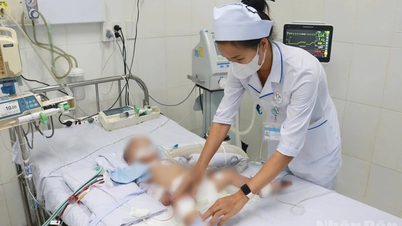
A child patient admitted to the Central Eye Hospital due to a firework accident - Photo: BSCC
Experts warn that the use of homemade fireworks and a lack of adult supervision increases the risk of accidents for children. In case of eye injury, the eye should be covered with a clean gauze and the child should be taken to a medical facility immediately; do not attempt to treat it yourself.
Doctors advise against using homemade fireworks in any form, to adhere to safety regulations when using fireworks, and to keep children away from or near areas where fireworks are present. Raising awareness within families and communities is crucial in preventing unfortunate accidents.
Proper first aid for eye injuries

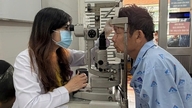
Before taking a patient with an eye injury to the hospital, proper first aid is essential to prevent many risks that could endanger their vision.
According to doctors, the first aid method varies depending on the type of eye injury.
- For injuries to the adnexa of the eye: eyelids, eye socket, lacrimal duct
If it's a blunt trauma injury such as bruising of the eyelid, swelling, or hematoma around the eye socket, cover the eye with a bandage and go to the nearest ophthalmology specialist for examination and treatment.
If it's a penetrating injury causing tearing and bleeding, immediate hemostasis is necessary. Common antibiotic eye drops such as chloramphenicol can be used. Apply the antibiotic eye drops and bandage the eye, then go immediately to an ophthalmology specialist for wound suturing.
- For eye injuries: Cornea (the black part of the eye) and conjunctiva (the white part of the eye)
For foreign bodies in the conjunctiva (dust, metal shavings), avoid rubbing your eyes as this can cause the foreign body to become more deeply embedded or scratch the cornea. Blink your eyes into a glass of clean water to help flush the foreign body out. If this doesn't work, go to a specialized eye clinic to have it removed.
For cases involving penetrating eye wounds with viscous discharge mixed with blood: Immediately bandage the eye and transfer the patient to the nearest ophthalmology specialist. Do not rinse the eye with water and absolutely do not attempt to remove any foreign objects such as soil, stones, or twigs embedded in the eye.
- For cases of eye burns



Regardless of the cause, rinse the eyes immediately with any available clean water, rinsing as much as possible (you can rinse your eyes under running tap water or immerse your face in a large basin of water for 5-10 minutes).
Except in cases of quicklime burns, all the quicklime must be removed before rinsing the eye because quicklime will boil upon contact with tears, causing further thermal burns. Afterwards, the eye should be bandaged and the patient transferred to a specialized eye hospital without delay for any reason.
Note: Bandage the eye gently; do not press tightly as this may cause the intraocular tissues to protrude. A protective eye shield with a hole is more convenient.
Source: https://suckhoedoisong.vn/cach-so-cuu-dung-khi-bi-chan-thuong-mat-169260226073950084.htm