

"I DON'T REALLY WANT TO DELEGATE POWERS"
On the morning of November 8th, the National Assembly continued its questioning session during the 6th session of the 15th National Assembly. In their direct questioning of Prime Minister Pham Minh Chinh, many delegates raised concerns about the policy of promoting decentralization and delegation of power, coupled with resource allocation, improving the capacity of the apparatus, and strengthening inspection, supervision, and control of power, which has not yielded the expected results.

Continuing institutional reforms and implementing rational decentralization will help localities achieve breakthroughs in infrastructure development and socio-economic development. (In the photo: Saigon Bridge area - Metro Line 1 in Ho Chi Minh City)
Representative Ly Tiet Hanh (Binh Dinh delegation) pointed out that Decree 42 from 2017 strongly decentralized authority by allowing localities to appraise projects and design construction cost estimates for some Group A projects, but Resolution 15 of 2021 no longer allows this delegation. "There are tourism projects worth over 800 billion VND, but the buildings are low-rise and do not require high technical expertise; the localities are perfectly capable of appraising them," Representative Hanh stated.
Responding to the National Assembly deputies, Prime Minister Pham Minh Chinh acknowledged that the decentralization and delegation of authority in implementation has not met the requirements and expectations. The Prime Minister stated that the main reason is the failure to thoroughly implement existing policies and guidelines. In addition, some agencies and units have not genuinely wanted to be decentralized and delegated authority.
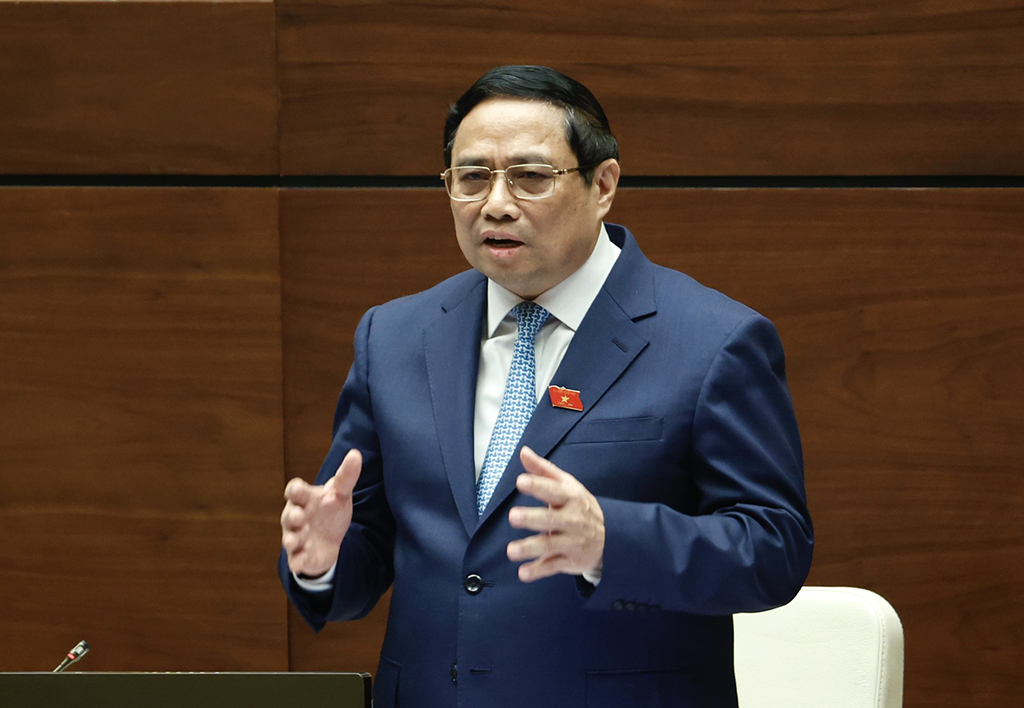
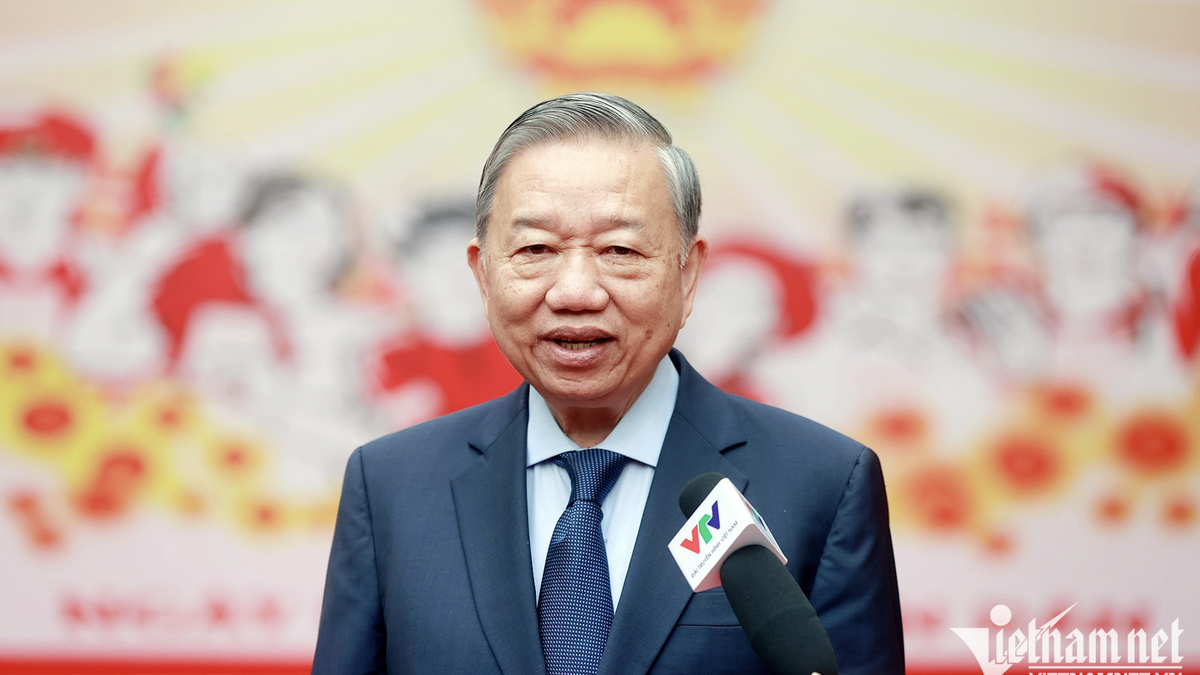
Prime Minister Pham Minh Chinh answers questions on November 8th.
Prime Minister Pham Minh Chinh
Regarding solutions, the Prime Minister emphasized strengthening leadership and guidance in decentralization and delegation of power, coupled with resource allocation, enhanced supervision and inspection, improved implementation capacity at lower levels, and institutional reform. "All levels must also boldly implement decentralization and delegation of power, avoiding evasion and shirking responsibility," the Prime Minister stated. In his report to the National Assembly, the Prime Minister affirmed that regulations will continue to be refined to encourage and protect dynamic, creative officials who dare to think and act for the common good; while strictly addressing cases of evasion, lack of cooperation, shirking responsibility, and inefficiency.
Regarding the issue of project decentralization raised by National Assembly Deputy Ly Tiet Hanh, the Prime Minister said he would review and reassess what is appropriate for the practical situation. However, the Prime Minister reiterated that decentralization and delegation of power must improve implementation capacity and increase supervision and inspection. "Decentralization and delegation of power do not mean handing over responsibility to localities or lower levels. We must strengthen supervision, inspection, urging, and support when difficulties arise," the Prime Minister noted.
Administrative procedures remain cumbersome.
The issue of institutional reform, administrative procedures, and removing obstacles to production and business was also raised by many National Assembly deputies in their questions to the Prime Minister. Deputy Mai Thi Phuong Hoa (from Nam Dinh province) argued that the reform still lacks a clear focus and priorities; at the same time, administrative procedures remain cumbersome, and the inertia of some officials and civil servants continues to hinder development. Ms. Hoa requested the Prime Minister to outline three priority options to address this situation.
Representative Tran Thi Kim Nhung (Quang Ninh delegation) expressed strong agreement with the Prime Minister's emphasis on resolutely cutting and simplifying administrative procedures and business conditions that create difficulties and increase costs for citizens and businesses. However, quoting Minister of Public Security To Lam during the questioning session regarding "specific regulations and strong sanctions to sever 'backroom business relationships'," Ms. Nhung argued that the Government and the Prime Minister need fundamental solutions to accurately and promptly identify what constitutes "backroom business relationships," in order to have a basis for designing legal regulations and increasing sanctions to address this issue.
Responding to the National Assembly deputies, Prime Minister Pham Minh Chinh said that the issue of institutional reform had been discussed over the past few days. According to the Prime Minister, the Resolution of the 13th National Congress identified three strategic breakthroughs: institutions, infrastructure, and human resources. Removing institutional obstacles will mobilize resources; developing the infrastructure system will create competitiveness for goods and reduce logistics costs; and human resources also play a crucial role. Therefore, the Prime Minister believes that depending on the circumstances and conditions of each stage, priority should be given according to the principle of rationality and harmony.
The Prime Minister frankly acknowledged that cumbersome administrative procedures are the main cause of increased costs for businesses. In addition, some officials and civil servants shirk their responsibilities and fear accountability. According to the Prime Minister, it is necessary to strengthen propaganda and education to raise the awareness of officials. At the same time, material and spiritual benefits must be ensured so that officials can confidently fulfill their assigned responsibilities. Simultaneously, ministries and agencies need to review procedures in their respective fields to drastically reduce them. "The fundamental solution still lies in addressing the sense of responsibility and capacity of officials in reducing administrative procedures," the Prime Minister stated.
Regarding the issue raised by Deputy Tran Thi Kim Nhung, the Prime Minister stated that there are already resolutions and conclusions from the Party and the Politburo. "The current issue is the need to concretize these resolutions for effective implementation, based on emphasizing the responsibility of the leaders as well as the officials assigned to carry out the tasks," the Prime Minister concluded.
"THIS TERM IS A PILOT PROGRAM"
Earlier, on the morning of November 7th, when submitting a question to the Prime Minister, National Assembly Deputy Nguyen Phuong Thuy (Hanoi delegation) reflected that "many voters and National Assembly deputies jokingly say that this term is a term of pilot programs." According to Ms. Thuy, while pilot programs have positive aspects such as helping to promptly resolve difficulties and obstacles, they also create a lack of uniformity, causing instability and inequality in law enforcement.
Ms. Thuy asked the Prime Minister whether the excessive number of pilot programs implemented recently constitutes a shortcoming, lacking proactive vision and the capacity of the Government and ministries to propose policy development. "If the policies currently being piloted are effective, why doesn't the Government submit amendments to the National Assembly to apply them uniformly, instead of only proposing expansion to specific projects and localities? Wouldn't this create loopholes for policy corruption and foster a system of 'request and grant'?" Ms. Thuy questioned.
Responding to Deputy Thuy yesterday morning, the Prime Minister stated that Vietnam is a developing country with a transitional economy. Meanwhile, the global situation and the country's realities are changing very rapidly. "Some regulations and documents keep pace with reality, while others do not, and the process of drafting legislation still takes a lot of time and effort," the Prime Minister said.
Regarding pilot programs, the Prime Minister clarified that there is a political basis in the Central Committee's resolutions. Accordingly, what is clear, mature, proven correct in practice, effective in implementation, and supported by the majority should be codified into law; what is unclear or not yet mature should be boldly piloted, learning from experience as it goes, and gradually expanding. Furthermore, regarding the legal basis, the Prime Minister stated that the Law on the Promulgation of Legal Normative Documents also allows for this. Practice has also shown that the National Assembly has issued many effective pilot resolutions in the past.
"Therefore, we have a political, practical, and legal basis," the Prime Minister said. However, the head of government also affirmed that this issue needs to be adjusted accordingly. "In the near future, we will conduct more thorough research and impact assessments, listen to the opinions of experts and scientists to make appropriate adjustments, and move towards a synchronized, consistent, and unified legal system," the Prime Minister emphasized.
Address shortcomings and weaknesses in each area promptly.
In his closing remarks at the interpellation session, National Assembly Chairman Vuong Dinh Hue assessed that during the more than two days of questioning, National Assembly deputies demonstrated a high sense of responsibility, carefully studied the reports, asked concise questions, and went straight to the point. Government members and heads of ministries demonstrated a firm grasp of the current situation in their respective sectors, and generally answered frankly, provided serious explanations, clarified many issues, and proposed solutions to address them.
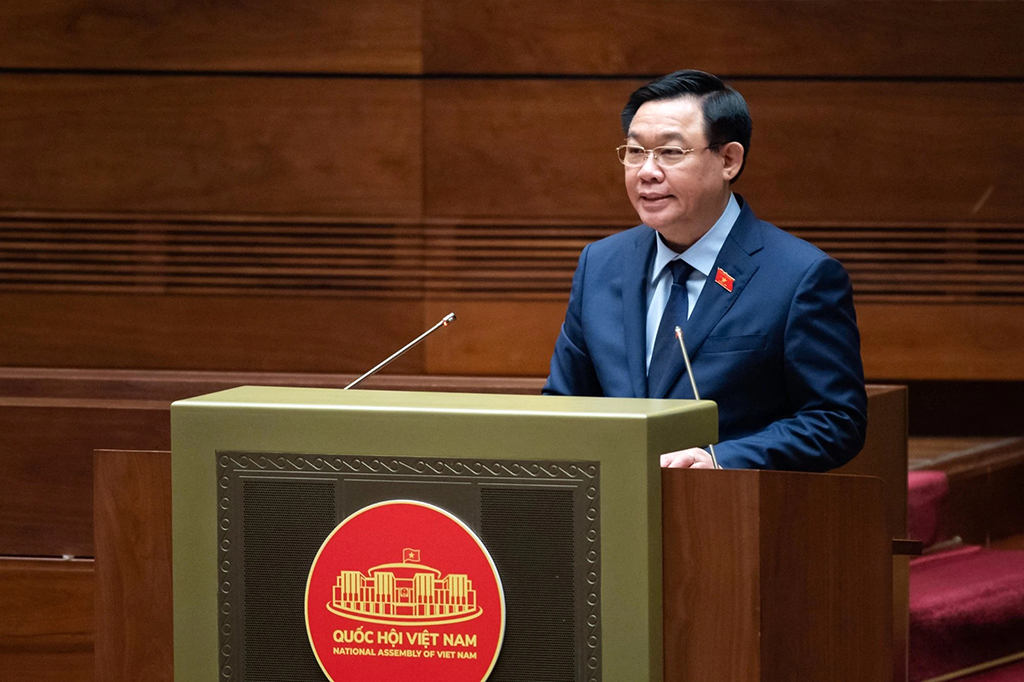
National Assembly Chairman Vuong Dinh Hue delivered the closing remarks at the interpellation session of the 6th session of the 15th National Assembly.
Appreciating the seriousness and willingness to learn shown by members of the Government and heads of ministries, the Chairman of the National Assembly also pointed out that the questioning session revealed that the implementation of some resolutions and tasks was slow, some contents and targets in the resolutions had not been completed, had not met requirements, had been slow to change, had not been definitively resolved, or still faced difficulties and obstacles that needed to be resolved definitively in the coming time.
The Chairman of the National Assembly stated that, based on the results of the interpellation session, the National Assembly will issue a resolution on the interpellation at the end of the session. The Chairman requested that members of the Government and heads of ministries fully consider the opinions of the National Assembly deputies, and continue to implement the National Assembly's resolutions on supervision and interpellation decisively, comprehensively, and synchronously, focusing on promptly, fully, and effectively addressing the shortcomings and weaknesses in each area that have been identified.
Le Hiep
Salary reform in the non-state sector
Responding to a question from National Assembly Deputy Van Thi Bach Tuyet (Ho Chi Minh City delegation) regarding the implementation of salary reform policies and the improvement of related policies to ensure consistency, Prime Minister Pham Minh Chinh affirmed: "Recently, salary reform has not been implemented due to resource constraints, but importantly, we have strived to allocate funds for salaries, increase revenue, reduce expenditures, and save on various expenses. Currently, there are approximately 560,000 billion VND available for salary reform starting from July 1st until the end of 2026. Alongside salary reform in the state sector, we are also reforming salaries in the non-state sector and enterprises, bringing them closer together. In addition, we will continue to refine job positions; streamline staffing levels in conjunction with the effective and efficient operation of the political system, and save on expenses to ensure salaries for workers."
Source link



















































































Comment (0)