


In recent times, the Government and the National Assembly have actively worked to improve the legal system related to real estate, creating a solid foundation for the market. A series of important directives and resolutions have been issued, particularly the amendment and supplementation of four laws: the Land Law, the Housing Law, the Real Estate Business Law, and the Law on Credit Institutions. The system of decrees and guiding documents for implementation has also been relatively fully deployed.
Most recently, Resolution No. 254/2025/QH15 dated December 11, 2025, of the National Assembly was issued, further addressing obstacles related to land valuation, land acquisition, and compensation. In addition, the project "Building at least 1 million social housing units in the period 2021-2030" has achieved impressive progress with 698 projects and 657,441 social housing units implemented, with 102,633 units completed in 2025. Social housing prices remain at 15-25 million VND/m², meeting the housing needs of the people. low income.
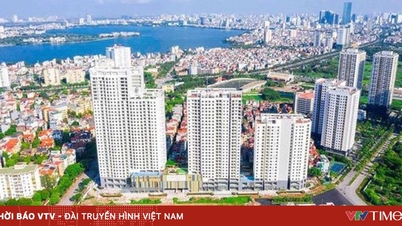
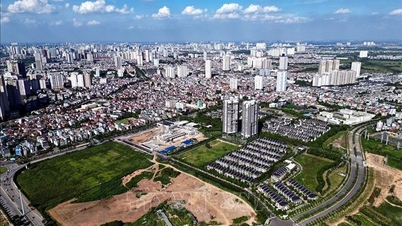
However, according to Deputy Minister of Construction Nguyen Van Sinh, the real estate market still faces many complex challenges: the supply-demand imbalance is a prominent issue with a serious shortage of low-income housing and housing Society is experiencing a surplus in the high-end segment; real estate prices are soaring, rising nearly 60% between 2019 and 2024, and in major cities like Hanoi and Ho Chi Minh City, apartment prices are expected to increase by more than 20-30% in just 11 months of 2025.
The main causes stem from legal obstacles, lengthy administrative procedures, high input costs, and the phenomena of price manipulation and speculation; excessive reliance on bank credit is also a major risk, easily leading to a financial bubble. The practical implementation process still faces difficulties due to a lack of coordination among localities and delays in decentralizing authority.
Furthermore, the demand for sustainable development is becoming increasingly evident with pressure from climate change and rapid urbanization, requiring projects to integrate green, smart, and environmentally friendly elements. The Deputy Minister also affirmed that, in the coming time, the Ministry of Construction will seek solutions to overcome difficulties for stalled real estate projects in localities nationwide in order to supplement supply for the market and unlock resources for the country's economic development.
According to Dr. Can Van Luc, Chief Economist of BIDV and member of the Prime Minister's Policy Advisory Council, the State needs to continue implementing concrete solutions to amend legal documents in a more open direction, strengthen decentralization and transparency for localities, and shorten administrative procedures to thoroughly resolve obstacles related to planning, land, and land prices – the main "bottlenecks" causing project delays. At the same time, capital sources need to be diversified by developing real estate investment funds and corporate bonds. The market information system and high-tech real estate transaction centers need to be improved...
According to economic experts, the establishment of a national housing fund, stricter regulations on the buying and selling of social housing, and the roadmap for perfecting the legal system regarding land, construction, and investment are expected to significantly improve the real estate market in the medium and long term. In particular, the State needs to strengthen supervision and inspection of price fluctuations and strictly handle violations, combined with boosting public investment in infrastructure to balance supply and demand across regions.
Source: https://baoquangninh.vn/cai-thien-thi-truong-bat-dong-san-3390850.html



![[Photo] National Assembly Chairman Tran Thanh Man attends the policy seminar to promote Vietnam-Türkiye cooperation.](https://vphoto.vietnam.vn/thumb/1200x675/vietnam/resource/IMAGE/2026/04/16/1776351415367_vna-potal-chu-tich-quoc-hoi-tran-thanh-man-du-toa-dam-chinh-sach-thuc-day-hop-tac-viet-nam-tho-nhi-ky-8705791-jpg.webp)





















![[Image] Bridges and roads connecting the eastern part of Ho Chi Minh City](https://vphoto.vietnam.vn/thumb/1200x675/vietnam/resource/IMAGE/2026/04/16/1776328595108_ndo_br_bh-vt5-jpg.webp)
































![[Infographic] Details of the Hanoi-Quang Ninh High-Speed Railway Project](https://vphoto.vietnam.vn/thumb/402x226/vietnam/resource/IMAGE/2026/04/16/1776338188424_anh-man-hinh-2026-04-16-luc-18-16-10.png)

![[Photo] National Assembly Chairman Tran Thanh Man meets with the Speaker of the Georgian Parliament](https://vphoto.vietnam.vn/thumb/402x226/vietnam/resource/IMAGE/2026/04/16/1776338494029_anh-man-hinh-2026-04-16-luc-18-21-21.png)





















Comment (0)