I often share links I find online in family group chats so my children can read them. I do this because I find them interesting.

My children, some in college, some still in high school, asked me why I did it. I replied, "I thought it was a good idea." They asked further, "Have you read it?" I stammered, "Well, I thought the title was good."
That's all. I lost favor with my children.
To be honest, work seems to always keep me occupied, so reading, even e-books, is very rare. I usually spend my limited free time browsing social media in an attempt to rejuvenate my mind. The links I find online seem interesting, but the content is often misleading. I hastily send them to my children, which sometimes turns out to be quite tactless. When they ask if I've read them, it's just a gentle reproach; they could have simply said that my approach to reading is problematic.
And it's not just me. Colleagues, friends, and people I know. Many of them are also feeding their children "instant noodles" through unverified links and forcing them to read. These "instant noodle" books are appealing, but they are also full of allure, seduction, provocation, and even incitement. Everything is there. They appear on social media platforms like bait, and without careful consideration, we're turning our children into victims.
One time, during my day off, I took my kids to a shopping mall that happened to be having a used book fair. I pulled them into a nearby cafe, but they insisted on looking at books. I indulged them by pulling out a 500,000 dong note so they could browse to their heart's content, while I went to a coffee shop. My child was left struggling to carry a stack of books and placing them on the table. The books were worn, some even bound. I asked how much they cost, and my child said it was just enough. They didn't mind spending money on used books, saying they were good, reliable, and not necessarily available online. It seemed like they were subtly mocking my reading habits and my approach to choosing books.
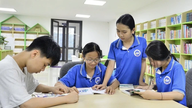
When my child was in elementary school, every year at the beginning of May, she would ask me to sign her up for a summer library membership. I was shocked when, one day, I was almost 30 minutes late and she still hadn't gotten into the car. I went into the reading room and found her by the bookshelves, with only the librarian waiting outside. The librarian said she had been persuaded by the little girl. She said she had found a book she really liked and wanted to finish it. It was a book the library had just received for circulation.
Reading books, looking at books, and, more importantly, developing a reading culture—these things seem to be becoming increasingly distant in modern life. I used to take my children to several book fairs at their suggestion. Most adults brought their children to the fair and then gathered somewhere to chat. Others scrolled through their phones or sat in cafes. Many children darted past the book displays like a fleeting shadow, then went to sit at a cafe with the adults.


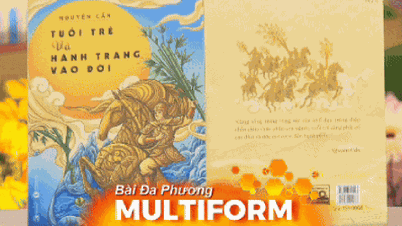
It's the Vietnamese Book and Reading Culture Day (April 21st) again. This year, my children have all finished their school year and are moving on to the next level. I'm happy that the books they've been exposed to have helped them grow. I spent an afternoon bringing home a stack of books, guessing they would like them. The first thing I said to them when I gave them the books was: "Now, take these books, kids." They smiled, because their dad understood them. And I told myself that when I'm tired, I'll also pick up a book. Good books are like a therapeutic balm for the mind.
Hanh Nhien
Source












![[Gallery] UBTech unveils a lineup of "long-legged" robots with stunningly beautiful appearances.](https://vphoto.vietnam.vn/thumb/402x226/vietnam/resource/IMAGE/2026/07/05/1783234567311_img3535-1782964585-2904-1782965454-jpg.webp)