

However, the random selection of the third subject for the 10th grade entrance exam is a new and unprecedented measure, posing many risks, especially in disadvantaged areas. Therefore, a suitable roadmap and solutions are needed.
Recently, the Ministry of Education and Training announced a draft circular amending and supplementing the regulations on admission to junior and senior high schools. Accordingly, regarding the method of entrance examination for grade 10, there will be 3 subjects: mathematics, literature, and a third subject randomly selected by the Department of Education and Training from among the graded subjects of the junior high school curriculum such as foreign language, natural science, history and geography, civics , information technology, and technology.
The current regulations for admission to junior and senior high schools still have many shortcomings.
Since 2006, the Ministry of Education and Training has issued regulations on admission to junior and senior high schools according to Decision No. 12/2006/QD-BGD-ĐT dated April 5, 2006. According to these regulations, there are three methods for high school admission: selection based on academic records, entrance examination, and a combination of both. Applying these regulations, localities have proactively chosen admission methods suitable to their specific circumstances, reducing the pressure of exams and extra tutoring for students graduating from junior high school.
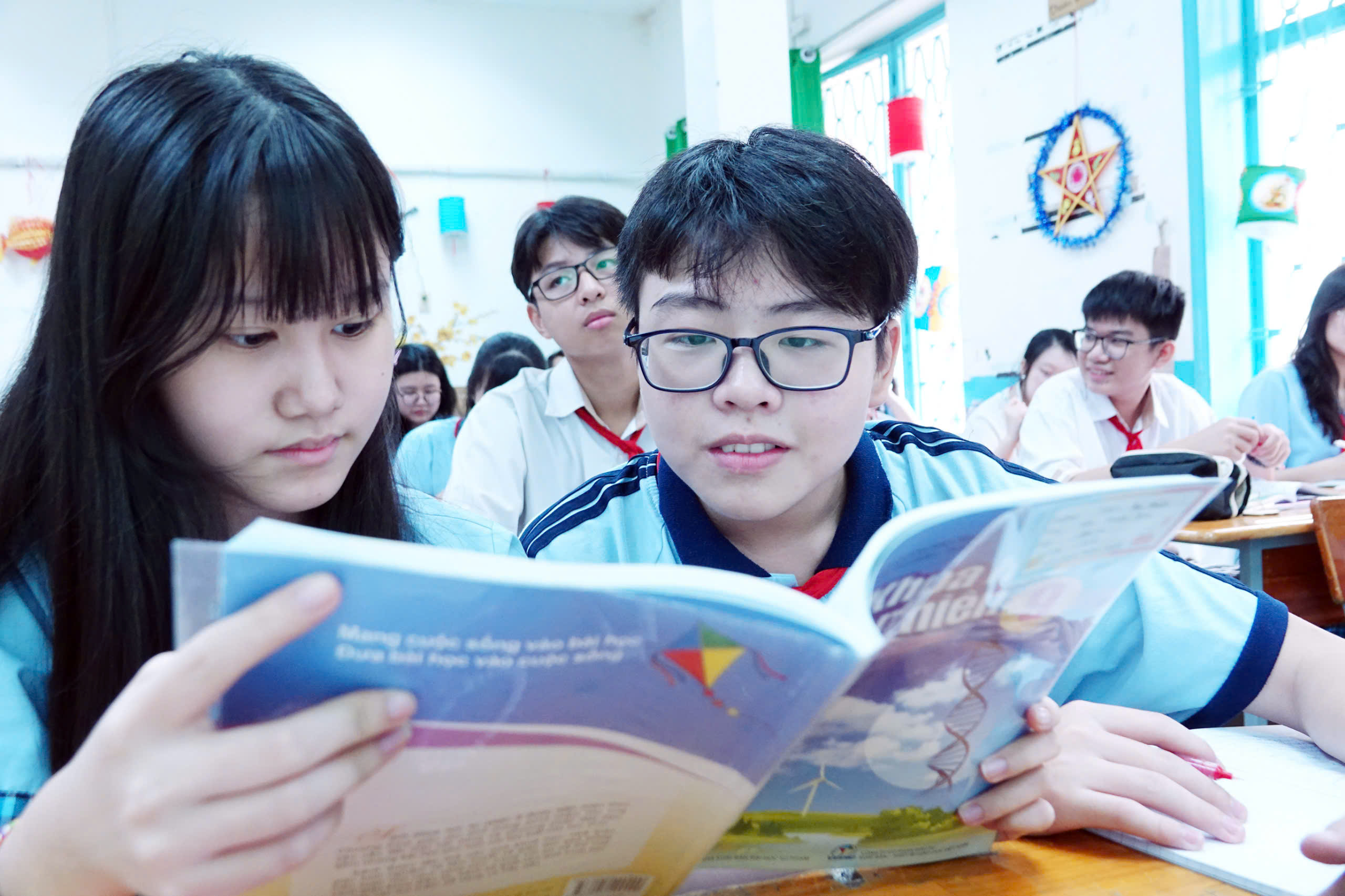
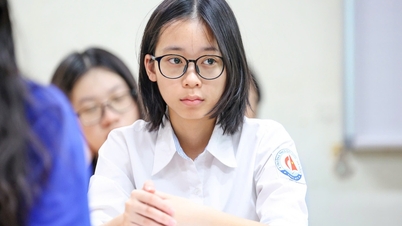
This year, ninth-grade students will be taking the tenth-grade entrance exam, which is expected to have many changes to align with the 2018 General Education Program.
PHOTO: DAO NGOC THACH
Careful consideration is needed before abandoning the combined exam option.
In the draft regulations for high school admissions, the Ministry of Education and Training retains only two options: selection based on academic records and entrance exams, eliminating the combined option of both as before. According to education experts, the combined option is still a good one, as it combines assessment of the learning process (academic records) with assessment at a specific point in time. Therefore, the Ministry of Education and Training should carefully consider removing the combined option.
In terms of admissions, the admission score includes the total score calculated based on the academic and behavioral performance over the four years of junior high school, plus additional points for eligible candidates and incentive points.
Regarding the entrance exam, there are three written subjects: mathematics, literature, and a third subject chosen from the remaining subjects of the junior high school curriculum. The Director of the Department of Education and Training selects and announces the third exam subject at least 15 days before the end of the school year.
Regarding the combination of entrance exams and selection based on academic records, there are two subjects: mathematics and literature, each graded on a 10-point scale, then multiplied by a factor of 2, and combined with academic and conduct scores from the four years of junior high school, as well as priority and incentive points.
After nearly 20 years of implementing the 2006 admission regulations, each admission method has its own advantages and disadvantages. The selection method reduces exam pressure but leads to decreased student motivation and negative practices in teaching and learning. Therefore, after many years of applying the selection method, many localities have returned to entrance exams to improve the quality of secondary education. The entrance exam method has the advantage of motivating students to learn and reducing negative practices in assessment. However, most localities choose a foreign language as the third exam subject, leading to students focusing only on certain subjects and neglecting others. This also leads to extra tutoring in the three exam subjects starting from grade 6.
The combined approach of entrance exams and selection based on academic records has the advantage of integrating both on-site and on-process assessments. However, it also leads to a concentration of students in only two subjects, mathematics and literature, and in some cases, negative practices in student evaluation.
TOWARDS HOLISTIC EDUCATION
The 2018 General Education Program (GEP) focuses on developing qualities and competencies, while simultaneously identifying and nurturing talents and providing career guidance for each student. GEP is divided into two stages: basic education (primary and lower secondary) and career guidance (upper secondary). The educational goals and the division into two stages are the realization of the Party's educational objectives, as defined in Resolution No. 29/NQ-TW, which states: "Ensuring that students at the lower secondary level (up to grade 9) possess fundamental general knowledge, meeting the requirements for strong streaming after lower secondary; upper secondary education must provide access to vocational training and prepare students for quality post-secondary education."
To acquire foundational knowledge and skills, and develop qualities and competencies, students at the lower secondary level study compulsory subjects and participate in educational activities. To achieve this foundation, schools, teachers, and students must focus on all subjects, not prioritizing some while neglecting others. If students neglect certain subjects at the lower secondary level and then choose not to study those subjects in upper secondary school, it will lead to a failure to improve the quality of education in the post-secondary period.
Focusing on holistic education at the lower secondary level is a global trend in education, emphasizing and continuously improving the quality of basic education. The Programme for International Student Assessment (PISA) for 15-year-olds also aims to achieve this goal.
Therefore, with the exam format where the third subject is randomly selected by the Department of Education and Training, all subjects have a chance to be chosen for the exam. This requires schools, teachers, and students to focus on improving the quality of all subjects, not prioritizing one subject while neglecting another. Thus, the random selection of the third exam subject aims to promote a foundational, comprehensive, and fair education across all subjects at the lower secondary level.
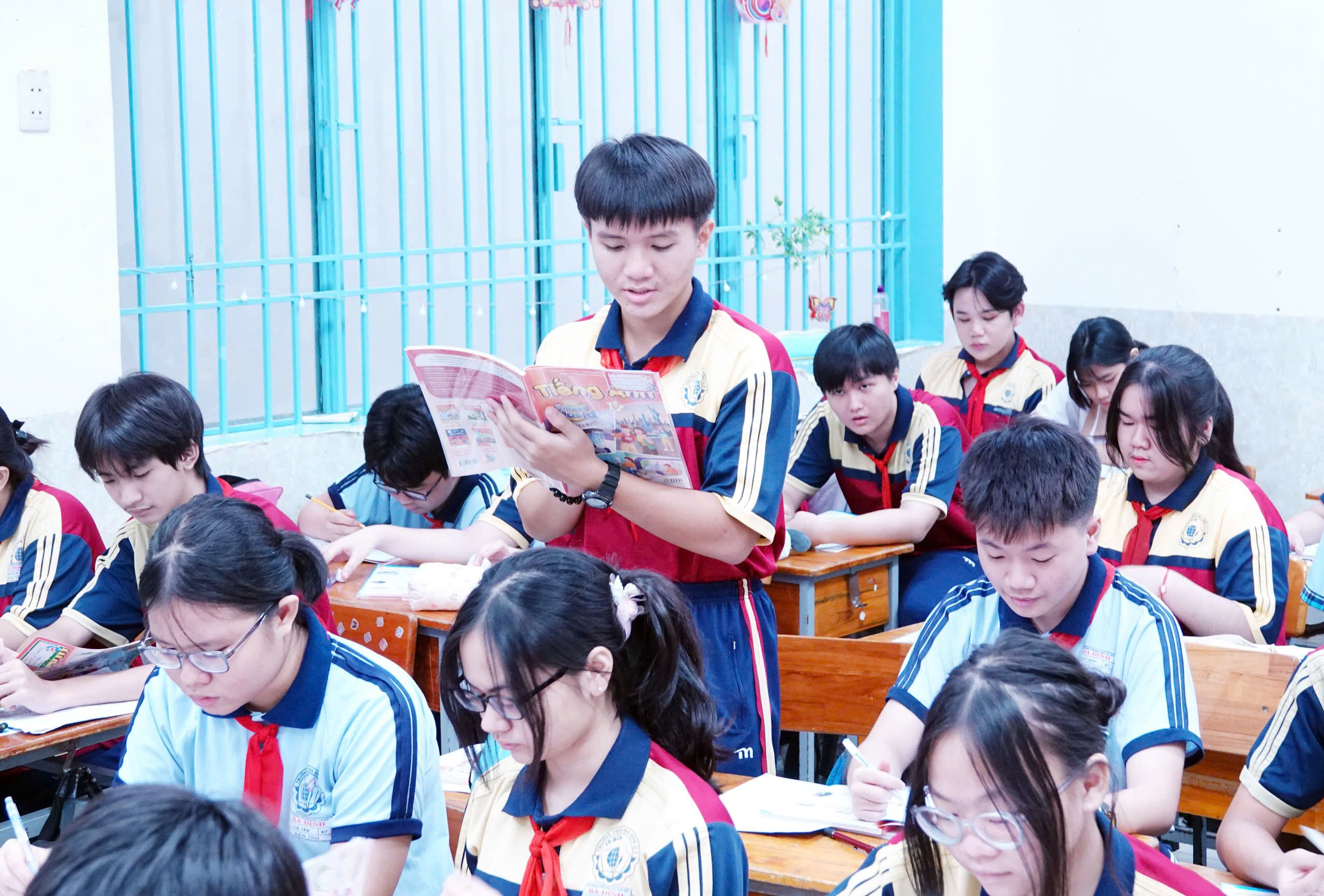
The draft circular amending and supplementing the regulations on admission to junior and senior high schools proposes that the 10th grade entrance exam will consist of three subjects: mathematics, literature, and a third subject randomly selected by the Department of Education and Training from among the graded subjects of the junior high school curriculum.
PHOTO: DAO NGOC THACH
RANDOM DRAWINGS REQUIRE CAUTION.
However, drawing lots for a third exam subject could lead to some difficulties for certain localities and be disadvantageous for foreign languages, as English is targeted as the second language used in schools.
Firstly, some localities lack sufficient teachers and teaching equipment for computer science and technology, resulting in uneven teaching and learning quality in these two subjects across schools. Furthermore, the new exam format for these two subjects will pose challenges for some areas.
Secondly, foreign languages (primarily English) are no longer a fixed exam subject as before, leading to a decline in the quality of teaching and learning in this subject, affecting the goal of improving foreign language skills for international integration.
Thirdly, if students randomly draw integrated subjects like natural science or history-geography, it leads to a very heavy workload, as the knowledge they need to review for the exam covers 5 fields (mathematics, literature, physics, chemistry, biology) or 4 fields (mathematics, literature, history, geography).
To mitigate these risks and disadvantages, the regulations for high school entrance exams should affirm that the random selection of the third exam subject is necessary and appropriate for achieving a foundational general education level for students graduating from junior high school.
However, it should not be mandatory for all localities to draw lots for all 6 subjects; instead, the number of subjects included in the lottery should be at least 4, and all 6 subjects must be included after 3 school years.
We need to address the situation where students either don't study if there's no exam or only study what's on the exam. Therefore, schools, teachers, students, and parents must value all subjects equally, because every subject contributes to a student's success, not just math, literature, or foreign languages.
For integrated natural science or history-geography subjects, the teaching and learning methods should be organized to improve quality and gradually change the perspective that an integrated subject is one subject with many sub-disciplines, such as mathematics having algebra and geometry, rather than multiple subjects within an integrated subject.
Source: https://thanhnien.vn/boc-tham-mon-thi-thu-3-vao-lop-10-can-giai-phap-phu-hop-185241008222254096.htm
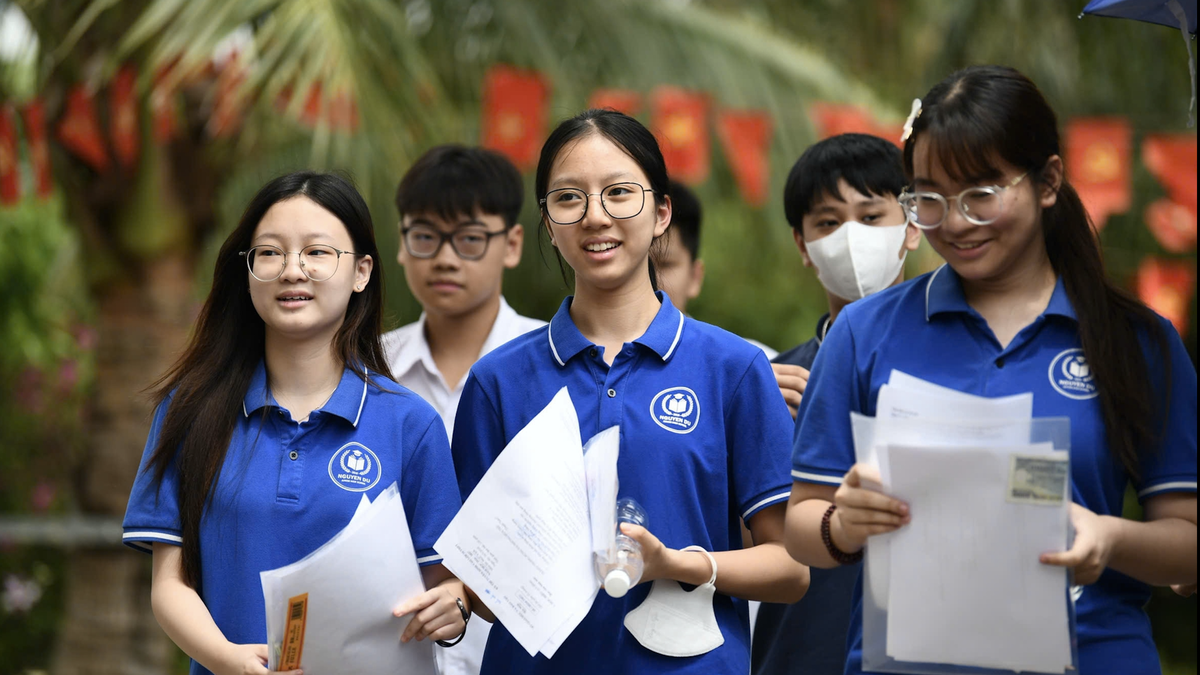



![[Image] Nearly 125,000 Hanoi students completed the Literature exam for the 10th grade entrance exam.](https://vphoto.vietnam.vn/thumb/1200x675/vietnam/resource/IMAGE/2026/05/30/1780117233041_ndo_br_thiet-ke-chua-co-ten-2-png.webp)


![[Video] Nearly 125,000 Hanoi students begin the 10th grade entrance exam.](https://vphoto.vietnam.vn/thumb/402x226/vietnam/resource/IMAGE/2026/05/30/1780130133514_dung00-16-28-24still006-png.webp)









![[Photo] Admire the coral "masterpiece" amidst the million-year-old heritage of Dak Lak province.](https://vphoto.vietnam.vn/thumb/1200x675/vietnam/resource/IMAGE/2026/05/30/1780107638639_y25-jpg.webp)
















































Comment (0)