Small businesses have difficulty accessing "green capital".
During the period 2026-2030, the Party and State have identified the "dual transformation" of greening and digitalization as a crucial foundation for enhancing productivity, increasing the resilience of the economy , aiming for double-digit GDP growth, and achieving net-zero emissions by 2050. To realize this goal, financial resources, including green credit, play a key role.
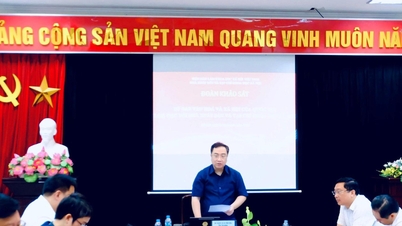
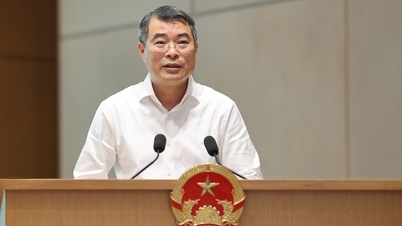
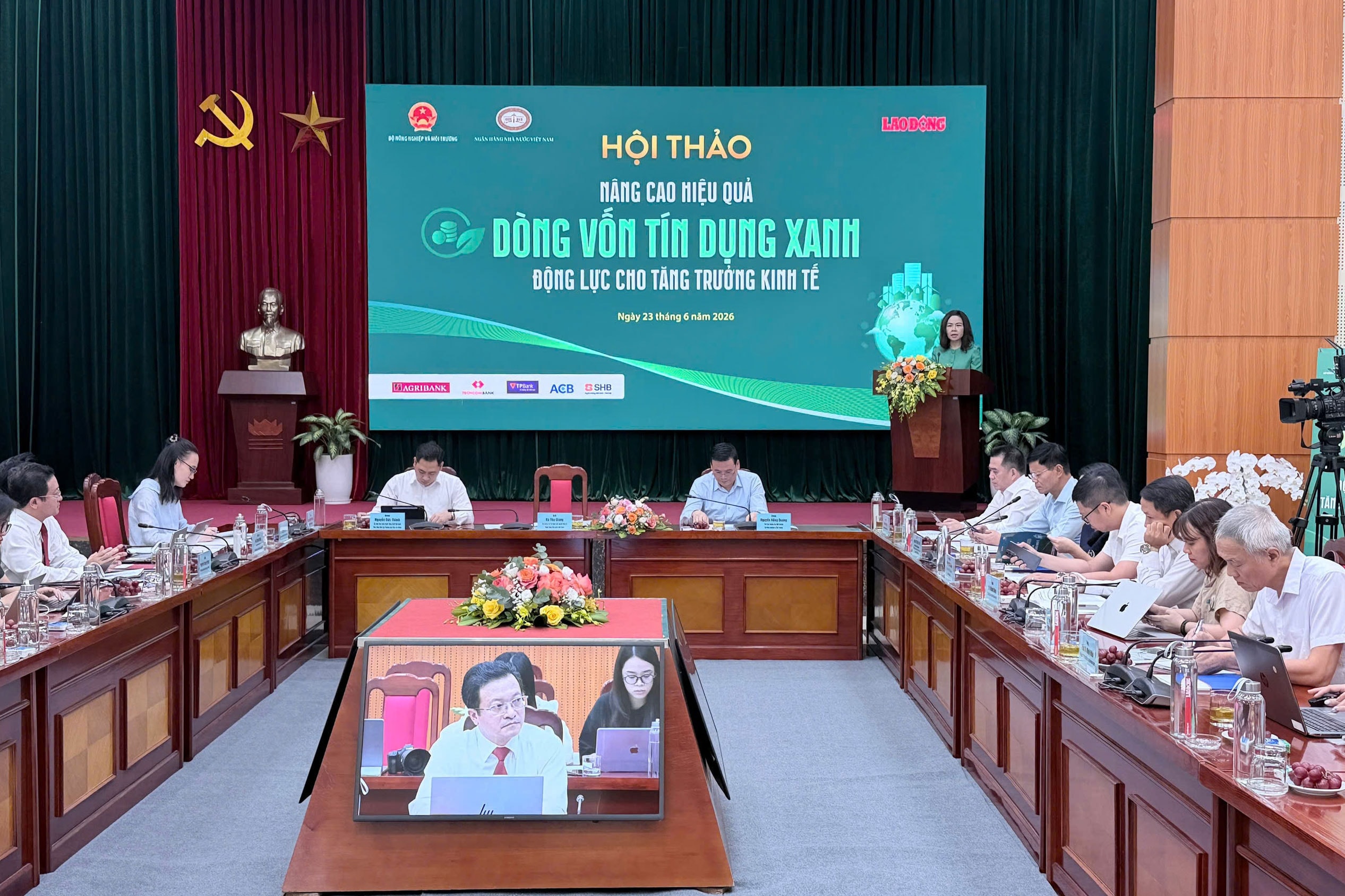
At the seminar "Improving the efficiency of green credit flows, a driving force for economic growth" organized by the Labor Newspaper on the afternoon of June 23, Mr. Nguyen Hong Quang, Deputy Director of the Environment Department, Ministry of Agriculture and Environment , said that Vietnam has gradually formed a legal framework for green credit.
The 2020 Environmental Protection Law for the first time included specific provisions on green credit. Following this, Decree No. 08/2022/ND-CP stipulated the incentive mechanism and implementation roadmap for green credit. In particular, Decision No. 21/2025/QD-TTg on environmental criteria and project classification as green has created a legal basis for identifying green projects.
In addition, the State Bank of Vietnam has continuously issued mechanisms and policies to promote green capital flows. Regulations on environmental risk management in lending activities, credit programs serving green agriculture and the circular economy, and guidelines for lending to projects classified as green have been gradually implemented.
According to Ms. Ha Thu Giang, Director of the Department of Credit for Economic Sectors (State Bank of Vietnam), to date, 82 credit institutions have generated green credit outstanding with a total outstanding balance exceeding VND 828,000 billion, a 4.6-fold increase compared to 2017. The average growth rate has been maintained at over 20% per year. This capital flow is currently mainly concentrated in the fields of sustainable agriculture, forestry, and fisheries; renewable energy, clean energy, and biodiversity conservation.



Despite rapid growth, green credit still lags significantly behind the transformation needs of the economy. According to Dr. Bui Thanh Minh, Deputy Director of the Office of the Private Economic Development Research Board (Board IV), green credit currently accounts for only about 4.2-4.5% of the total outstanding loans in the economy. Notably, the majority of green capital is concentrated in large-scale agricultural projects and renewable energy projects. These are sectors with relatively clear investment models, making it easier to assess efficiency and compliance with environmental criteria. Meanwhile, small and medium-sized enterprises (SMEs) – which account for the majority of businesses in the economy – still face many difficulties in accessing this capital.
According to Dr. Bui Thanh Minh, nearly 80% of small and medium-sized enterprises (SMEs) currently have no history of accessing credit. Meanwhile, to qualify for green loans, businesses must meet additional requirements such as ESG reporting, environmental documentation, or proof that their projects meet green criteria. To meet these conditions, businesses need to invest in technology, standardize management processes, build data systems, and improve management capabilities. However, implementing these changes requires initial capital. “We are facing a double challenge,” Dr. Bui Thanh Minh stated.
Clear incentive mechanisms are needed to encourage conversion.
Currently, banks, regulatory agencies, and businesses all have a need to promote green transformation. However, businesses can hardly implement this process on their own without appropriate support mechanisms, said Dr. Bui Thanh Minh.
He cited Resolution No. 198/2025/QH15 of the National Assembly, which stipulates that businesses, household businesses, and individual businesses are entitled to a 2% annual interest rate subsidy when borrowing capital to implement green projects, circular economy projects, or projects applying ESG standards. According to him, the current issue is not a lack of policy, but rather ensuring that policies are implemented effectively. The State needs a clear mechanism for interest rate subsidies so that businesses can truly access the support, instead of shifting the entire responsibility to commercial banks. For many businesses, the 2% interest rate subsidy could make a significant difference in their investment decisions for green transformation.
From a business perspective, Mr. Bui Khanh Dung, Director of Musa Pacta Co., Ltd., believes that a practical agricultural insurance policy should be developed soon, suitable for various types of production from crop cultivation, livestock farming, and aquaculture to household models, farms, cooperatives, and agricultural processing enterprises. An effective insurance mechanism will help people and businesses feel secure in investing and expanding production, limiting the risk of total loss when facing natural disasters, epidemics, or other unforeseen risks.
Furthermore, a system of green criteria needs to be developed that is more specific, clear, and easy to apply. Given that most agricultural cooperatives and businesses have limited management capacity and access to information, the criteria need to be quantified transparently, for example, using a specific scoring system, so that units can self-assess their level of compliance and determine a roadmap for improvement.
Along with the green criteria, Mr. Dung suggested that a "green flow" mechanism should be established with clear incentives for units that meet environmental requirements well. The level of compliance with green criteria could be linked to support policies such as loan interest rates, creditworthiness ratios, credit limits, or other incentives in the process of accessing capital.



According to Mr. Nguyen Hong Quang, Deputy Director of the Department of Environment, in order for green credit to develop sustainably and become a driving force for green growth, the Ministry of Agriculture and Environment will continue to review and improve the legal system on environmental protection. At the same time, relevant ministries and agencies need to develop a clearer roadmap for implementing green credit and guide credit institutions to integrate environmental criteria into their lending activities.
Another crucial requirement is the early establishment of an inter-sectoral coordination mechanism for green credit and green finance, involving regulatory agencies, financial institutions, and local authorities. In this mechanism, credit, finance, and capital market regulatory agencies play a core role, coordinating with environmental agencies and specialized sectors in policy development, implementation, monitoring, and evaluation of implementation effectiveness.
Source: https://daibieunhandan.vn/can-them-dong-luc-cho-tin-dung-xanh-10421336.html

![[Photo] Strengthening character and expertise: Intense training for artillery soldiers.](https://vphoto.vietnam.vn/thumb/1200x675/vietnam/resource/IMAGE/2026/06/30/1782815602541_lu-368-1875-4571-jpg.webp)