

Many major ports have issued new pricing frameworks.
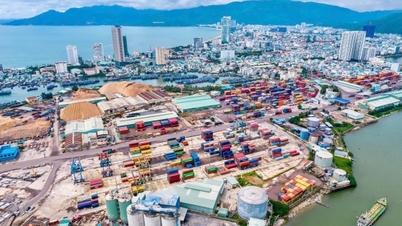
From the beginning of 2024, many seaports in the Cai Mep - Thi Vai area have been preparing to list new port handling service prices to be applied from February 15th. The new prices, according to the regulated price framework, are approximately 10% higher than the old prices.
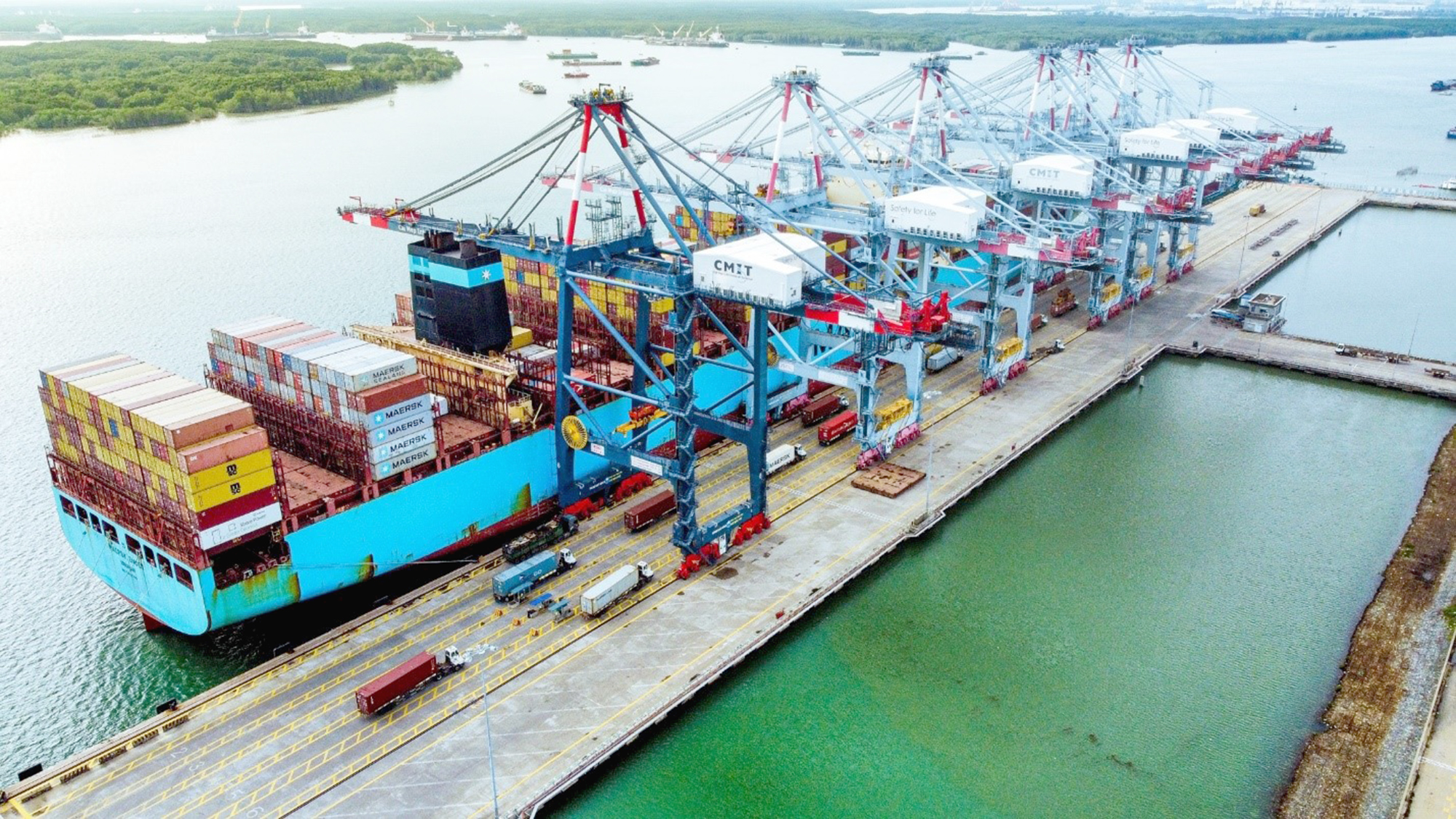
Increasing port handling service fees provides port businesses with additional revenue to invest in and upgrade their capabilities.
Accordingly, the current price range for loading and unloading import and export containers is 57-66 USD/20-foot container for containers with goods; 85-97 USD/40-foot container for containers over 40 feet, and 94-108 USD/container for containers over 40 feet.
For transit and transshipment containers, the loading and unloading price ranges from 34-40 USD per 20-foot container and 51-58 USD per 40-foot container with goods.
This is also a separate pricing framework applied at the two deep-water ports of Lach Huyen and Cai Mep - Thi Vai. Seaports in other areas apply different pricing.
In the Hai Phong seaport area, Nam Dinh Vu port has also issued new container handling service fees.
The loading and unloading rates for import and export containers from ships to the port yard at this seaport are set at 46 USD/20-foot container with goods; 68 USD/40-foot container and 78 USD/container larger than 40 feet.
For Hai Phong port, the price for loading and unloading import/export containers from ships/barges onto the port yard and vice versa at Chua Ve port is listed at 39 USD/20-foot container with goods; 58 USD/40-foot container and 66 USD/container larger than 40 feet.
At Tan Vu port, the prices are $42 per 20-foot container, $63 per 40-foot container, and $73 per container over 400 feet.
Previously, the prices listed by this company at Chua Ve port were $35/20-foot container, $52/40-foot container, and $60 for containers larger than 40 feet.
With the new cargo handling service fees, from the beginning of 2024, Hai Phong Port has set a revenue target for 2024 to increase by approximately 7% compared to 2023, reaching VND 2,310 billion (VND 2,157 billion in 2023).
However, not all seaports have increased their handling service fees in this round. As a seaport located in Zone II, Mr. Nguyen Anh Tuan, Director of Lao-Viet International Port Joint Stock Company (in Ha Tinh ), stated that the majority of goods passing through the port are bulk cargo, so the new regulations have not significantly impacted the port.
Opportunities to enhance port capacity
According to businesses, the increase in handling fees helps seaports increase revenue, provides them with the funds and resources to invest in port equipment, maintain capacity, and enhance their competitiveness against new ports.
According to Circular 39/2023, Vietnamese seaports are divided into 3 zones: Zone I (including seaports in the provinces and cities of Quang Ninh, Hai Phong, Thai Binh, and Nam Dinh); Zone II (including seaports in the provinces and cities of Thanh Hoa, Nghe An, Ha Tinh, Quang Binh, Quang Tri, Thua Thien Hue, Da Nang, Quang Nam, Quang Ngai, Binh Dinh, Phu Yen, Khanh Hoa, Ninh Thuan, and Binh Thuan); Zone III (including seaports in the provinces and cities of Ho Chi Minh City, Ba Ria - Vung Tau, Dong Nai, Binh Duong, Tien Giang, Ben Tre, Dong Thap, Can Tho, An Giang , Vinh Long, Ca Mau, Kien Giang, Long An, Soc Trang, and Tra Vinh).
Specifically, for new container routes at ports in Zone II and ports in the Mekong Delta region, port enterprises are allowed to apply a container handling service fee at 80% of the regulated fee for a period of 3 years from the date of official opening of the new route.
While assessing that Vietnamese ports currently have cargo handling and delivery productivity and berth capacity comparable to ports in the region, Mr. Pham Quoc Long, Deputy General Director of Gemadept Joint Stock Company, stated that currently only the Lach Huyen seaport area (Hai Phong) can apply the price ceiling.
Other ports still only apply floor prices, or slightly higher than the floor price due to competitive factors, to attract shipping lines.
Therefore, in addition to increasing service prices, in the coming period, ports also need to increase investment to improve their capacity and meet the needs of shipping lines and customers in the future.
In the northern region, Gemadept is currently undertaking a project to dredge the Ha Nam canal to a depth of -8.5m for 48,000 DWT vessels and is implementing phase 3 of the Nam Dinh Vu port project (expected in 2024). Upon completion, it will be able to accommodate the largest feeder vessels and intra-Asian ships in the river port area.
In the South, the Gemalink deep-water port, phase 2, is also under study and undergoing procedures to commence construction, aiming to double its operating capacity and berths.
According to our research, many businesses are planning significant investments in seaports in 2024. Notably, Vip Greenport plans to invest in equipment including two new RTG cranes, a shore power system, and a smart gate.
The Vietnam Maritime Corporation (VIMC) has also identified in its business and investment plan for the 2021-2025 period a focus on allocating resources to invest in the construction of new deep-water seaports and international transshipment ports.
Mr. Nguyen Xuan Ky, General Director of Cai Mep International Port (CMIT), affirmed that with the increase in container handling service fees, the revenue of seaports can grow correspondingly, especially at deep-water ports because the main source of revenue for ports comes from container handling fees.
Moreover, increasing service fees also attracts more investment into the port market, strengthening social participation. New investors will have more grounds and basis to implement their projects.
According to a port business, the actual cost of cargo handling services at seaports is not entirely as stated in the publicly available price list.
The actual price is based on many factors and may vary depending on the customer, such as regular customers or walk-in customers, but it must still remain within the regulated price range.
A price increase of around 10% may not immediately bring profits to businesses. This is because ports have already invested heavily in infrastructure and equipment to meet the demands of shipping lines and the trend towards green development.
The Ministry of Transport has just issued Circular 39/2023 on the promulgation of the framework price list for pilotage services, services using piers, berths, mooring buoys, container handling services and tugging services at Vietnamese seaports.
Accordingly, the price for domestic 20-foot container handling services ranges from 260,000 to 427,000 VND, and from 439,000 to 627,000 VND.
40-foot container; 658,000 - 940,000 VND/container over 40 feet with goods.
The loading and unloading rates for imported, exported, and temporarily imported/re-exported containers in Zone I range from 36-53 USD/20-foot container and 55-81 USD/40-foot container with goods; Zone III has loading and unloading rates from 45-53 USD/20-foot container and 68-81 USD/40-foot container; and Port Group No. 5 has loading and unloading rates from 23-27 USD/20-foot container and 34-41 USD/40-foot container.
The two deep-water ports of Lach Huyen and Cai Mep - Thi Vai are subject to separate pricing frameworks.
Source


![[Photo] General Secretary and President To Lam meets with National Assembly delegates from ethnic minorities.](https://vphoto.vietnam.vn/thumb/1200x675/vietnam/resource/IMAGE/2026/04/20/1776696701056_a1-bnd-8331-3342-jpg.webp)
![[Image] National Assembly discusses the implementation of the socio-economic development plan.](https://vphoto.vietnam.vn/thumb/1200x675/vietnam/resource/IMAGE/2026/04/20/1776696707422_ndo_br_img-20260420-185419-jpg.webp)




























































































Comment (0)