


Three scenarios for oil prices
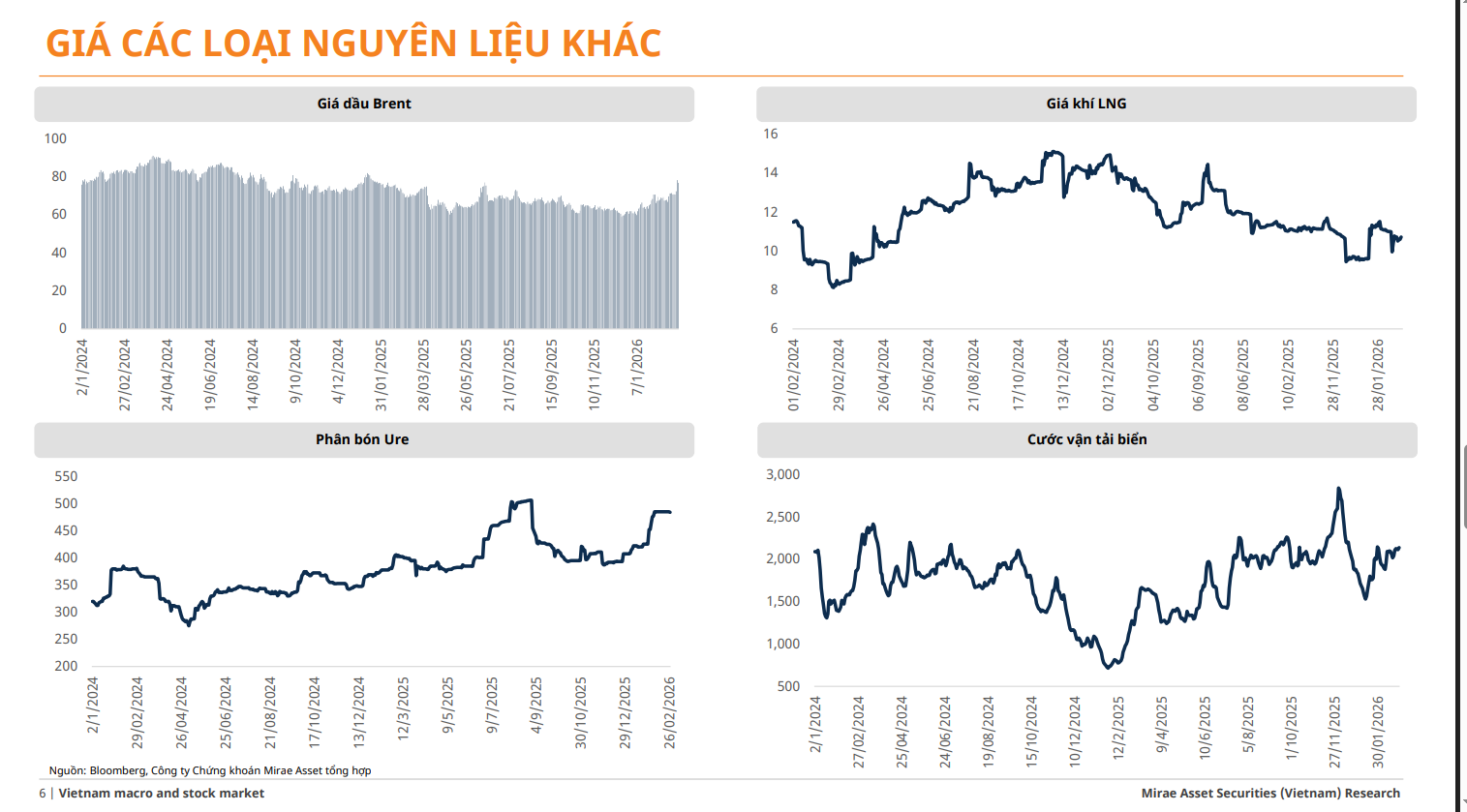
In its updated report, Mirae Asset Securities (Vietnam) forecasts three scenarios for the energy market as tensions in the Middle East escalate.
In the baseline scenario, the conflict is controlled and does not significantly disrupt shipping through the Strait of Hormuz – a strategic waterway for global oil trade. In that case, oil prices could remain around $80-$90 per barrel.
A more negative scenario would involve localized attacks or short-term supply disruptions. Oil prices could then rise to the $90-$100 per barrel range.
In a high-risk scenario, if a prolonged lockdown or disruption occurs in the Strait of Hormuz, global supply could be severely tightened, pushing oil prices above $100 per barrel and creating a new inflationary shock.
According to Mirae Asset, the extent of the oil price increase will determine the intensity of the asset markets' reaction.
Gold rises, global stocks come under pressure.
Along with oil, gold is one of the assets most clearly reacting to geopolitical instability. The precious metal has surged in recent sessions, reflecting increased safe-haven demand from investors.
According to Mr. Tran Hoang Son, Director of Market Strategy at VPBankS, amidst widespread "risk-off" sentiment, major stock indices such as the S&P 500, Nasdaq, and Dow Jones may face short-term correction pressure. History shows that most geopolitical tensions cause markets to fall by 1-3% in the initial phase before gradually stabilizing if the conflict does not escalate.
The Vietnamese stock market is primarily influenced by sentiment and fluctuations in foreign capital flows, rather than by the direct impact of Iranian oil supply.
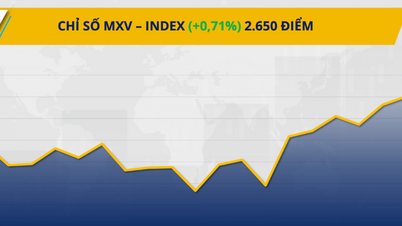
In the short term, the VN-Index may experience a correction if oil prices rise sharply and foreign investors increase net selling. However, the decline is not expected to be too significant if the conflict is brought under control.
Key support zones for the index are around the 1,850-1,870 point range, and further down at the 1,800-1,830 point range. A negative scenario would only occur if there were a prolonged energy shock or a resurgence of global inflation.
Airline stocks are negative, but the oil and gas sector is showing positive signs.
Analysts predict that airline, logistics, consumer, and financial stocks are typically negatively impacted by rising input costs and risks of slowing growth. Conversely, energy, oil and gas, and defense stocks tend to benefit in an environment of high oil prices and prolonged tensions.
According to Mirae Asset, the aviation sector is predicted to be most significantly negatively impacted, with representative stocks such as HVN and VJC. Rising aviation fuel prices, following crude oil price trends, could narrow profit margins, while travel and tourism demand risk weakening if the conflict continues.
The transportation and logistics group, including VTP, HAH, GMD, SKG, and VNS, also faces pressure from fuel costs, insurance, and the risk of supply chain disruptions. In an escalating scenario, rising operating costs could directly impact business performance.
On a moderate level, the steel sector, including stocks like HPG, HSG, and NKG, and the cement and construction materials sector, such as HT1, BCC, and PLC, are indirectly affected by rising energy and transportation costs, while construction demand may slow down due to more cautious market sentiment.
Similarly, the plastics industry, including BMP, NTP, and AAA, is considered sensitive to fluctuations in oil prices due to its input materials being related to petrochemicals. If oil prices remain high for an extended period, the companies' profit margins could be eroded.
For the securities sector (SSI, HCM, VCI, VND) and non-essential retail and tourism (MWG, DGW, FRT), the direct impact is not too significant. However, in the context of increased risk aversion, market liquidity and consumer spending may decline, thereby indirectly affecting business results.
Conversely, Mirae Asset believes that the oil and gas sector is the clearest beneficiary if oil prices rise and remain at high levels. Notable stocks include GAS, PVS, PVD, BSR , PLX, and OIL. Positive energy price developments could support revenue, improve profit margins, and attract investment into this group of stocks.
The fertilizer group, with tickers DPM, DCM, BFC, and LAS, is projected to benefit indirectly from rising gas and output commodity prices in line with energy trends. However, the extent of this positive impact will depend on the ability to control input costs.
Similarly, the chemical industry, including DGC and CSV, could be supported amid rising prices of energy-related commodities, although the benefits will be selective among businesses.
Meanwhile, PNJ shares, representing the gold sector, may benefit from the safe-haven asset sentiment amid increased uncertainty, but the impact is considered more limited compared to the oil and gas sector.
Amidst unpredictable geopolitical fluctuations, experts recommend that investors maintain risk management discipline, limit leverage, and prioritize sectors that can directly benefit from commodity cycles, rather than chasing short-term technical rallies.
Source: https://hanoimoi.vn/cang-thang-trung-dong-dong-tien-dau-tu-dich-chuyen-ra-sao-735808.html





































































































Comment (0)