There are still worries…
Recently, China and the United States have opened their markets, agreeing to officially import Vietnamese coconuts. This is good news for localities that are the "coconut capitals" of Vietnam in particular, and for the Vietnamese fruit and vegetable export industry in general.
The reason is that when exported through official channels, the product has undergone thorough scrutiny, and its production has met the standards of the importing country. Simultaneously, the growing area has been assigned a code, proving it meets the required standards. This is the first step in ensuring that the finished product, after production, can legitimately enter the importing market.
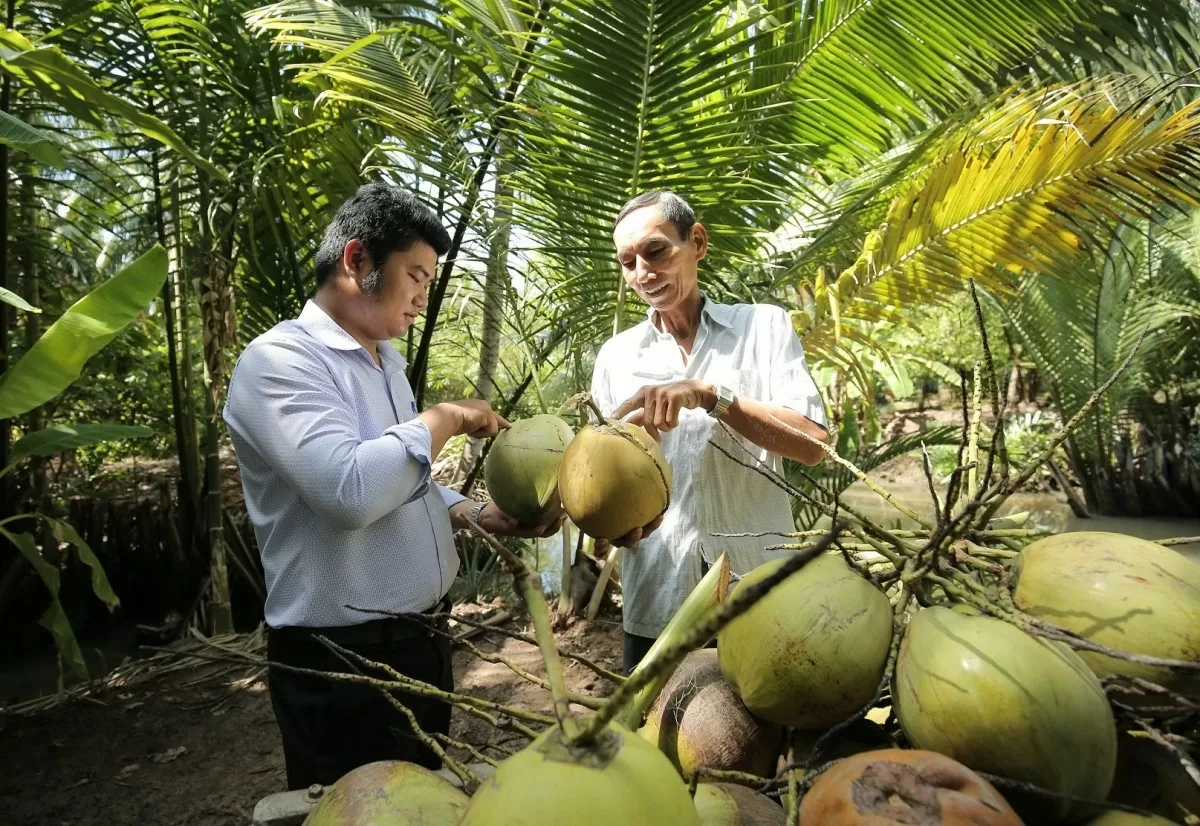 |
| Coconut exports could reach one billion USD this year (Photo: VGP) |
Currently, Vietnam is a major exporter of agricultural products, and China is also Vietnam's largest market. However, the number of products officially exported to this market is very small. The fact that coconuts have been officially licensed for export to China and the US is an opportunity to increase export turnover and build product brands.
According to data from the Import-Export Department of the Ministry of Industry and Trade , in 2023, Vietnam's export turnover of coconut-based and related products such as confectionery, cosmetics, and handicrafts reached over 900 million USD (ranking 4th in the world). With coconuts officially licensed for import into two "powerhouses," the US and China, it is projected that the export turnover of fresh coconuts could increase by an additional 200-300 million USD in 2024 and continue to grow strongly in subsequent years. Thus, if nothing changes, coconuts will join Vietnam's list of billion-dollar agricultural export products.
The story of the coconut is good news for agricultural exports. However, the path to achieving the billion-dollar target for coconuts also faces considerable concerns.

Looking back at the story of durian, it's clear that immediately after China agreed to officially import it at the end of 2022, durian exports increased dramatically. According to the Vietnam Fruit and Vegetable Association, in the first eight months of 2024, durian exports were estimated at US$1.82 billion, a 45% increase compared to the same period last year, contributing 40% to the total export value of fruits and vegetables. China is the largest export market for Vietnamese durian, and Vietnam is currently the second largest supplier of fresh durian to China. Currently, about 90% of durian exports go to the Chinese market.
However, durian exports to China have also been repeatedly flagged for violations of planting area codes. Furthermore, in June, China issued a warning after 77 shipments of Vietnamese durian exported to the country were found to contain cadmium (a heavy metal) exceeding permissible levels.
The cause of this situation is that, at various times, the rapidly increasing demand for durian from the billion-person market has overwhelmed packaging facilities and durian growing areas, leading many households and businesses to "borrow" durian growing area codes and commit fraud to export. Throughout this period, along with the high increase in durian export turnover, authorities have continuously issued notices about the impersonation of durian growing area codes for profit by facilities that do not meet export requirements.
The issue of "borrowing" durian growing area codes once became so heated that businesses proposed "separating durian into an independent industry with its own management mechanism" to protect and ensure sustainable development. The need for a systematic legal framework for the durian industry stems from the fact that, when compared to Thailand – a competitor of Vietnam – the country's success and reputation in the market is also due to its strict enforcement of regulations, meaning that all participants in the supply chain are very afraid of committing violations.
Stronger regulations are needed to ensure the sustainable development of the coconut industry.
The story of the rapid growth of durian production immediately after receiving official export permits serves as a clear lesson. Therefore, Ms. Nguyen Thi Kim Thanh – President of the Vietnam Coconut Association – suggested that, for the coconut industry to develop sustainably and achieve the target of exporting billions of USD, there needs to be a synchronized planning of raw material areas, meeting organic standards and export standards as required by various markets.
The reason is that currently, the area of organic coconut cultivation is still quite small, concentrated only in a few localities in the provinces of Ben Tre, Tra Vinh, Binh Dinh… and mostly on a small scale, with only a few dozen to a maximum of 100 trees per household. Meanwhile, to "go the distance" in exports, meeting market requirements is extremely important.



Looking at our neighbor Thailand, we can see that they have built a very systematic brand for coconuts, from planning cultivation areas and improving quality to establishing a brand. Meanwhile, the biggest challenge for coconut products and businesses today is that compared to many other countries exporting this commodity, Vietnam still lags behind in brand positioning, and the planning of cultivation areas and raw material sources is not yet systematic. The mindset of the people is still focused on seasonality, not long-term sustainability, which leads to difficulties for businesses.
The "highway" for coconuts has opened, but there are also many "barriers" along the way. These include standards regarding plant quality, food safety, and origin. Not to mention, packaging and design also pose significant challenges for the coconut industry. Processing capacity is another major challenge that businesses must overcome on their journey to achieving the billion-dollar target that lies just around the corner.