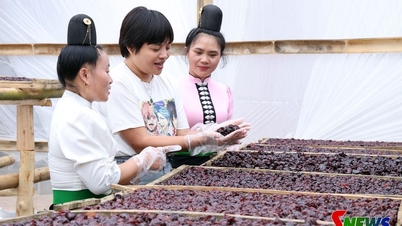
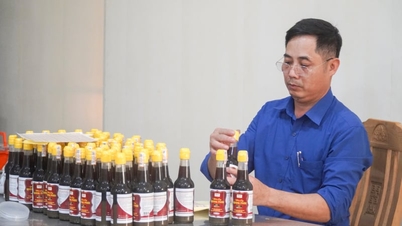
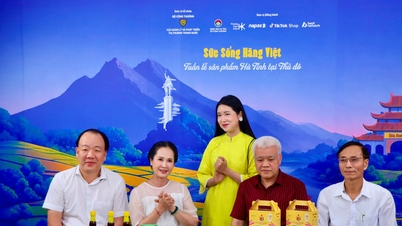
Implementing agricultural extension models in economically and socially disadvantaged areas will receive support covering up to 100% of the total model construction costs.
The government issued Decree No. 268/2026/ND-CP on agricultural extension. This decree stipulates the forms, methods, subjects, and policies on agricultural extension and technology transfer in agriculture as prescribed in Clause 4, Article 52 of the Law on Technology Transfer.
Specifically, the Decree stipulates policies on agricultural extension, including: policies on training and capacity building; policies on information and communication; policies on building and replicating models; support for agricultural extension activities and technology transfer in agriculture; and policies on the socialization of agricultural extension and technology transfer in agriculture.
Training, coaching, and professional development policies
Regarding training and professional development policies, the Decree stipulates that participants in agricultural extension training and professional development programs will receive support covering up to 100% of the costs for training materials, meals, travel, and accommodation.
Those involved in teaching, assisting in teaching, guiding practical sessions, conducting field trips, and organizing classes are entitled to 100% of the support allowances; experts, scientists , artisans, and skilled farmers are encouraged and attracted to participate in teaching training courses and workshops on agricultural extension; at the same time, priority is given to training and developing grassroots agricultural extension officers, community agricultural extension officers, women, and ethnic minorities.
Information and communication policy
The state budget provides maximum support of 100% of the funding for agricultural extension information and communication activities through mass media, publishing newsletters, documents, and publications, organizing agricultural extension events (conferences, workshops, competitions, fairs, exhibitions, forums, seminars), providing agricultural extension consulting and services, building, operating, updating, managing, sharing, and connecting agricultural extension databases and information, electronic portals, websites, digital platforms, social networks, digital technology applications, and other forms of agricultural extension information and communication.
Participants in agricultural extension events receive support for the costs of materials, travel, meals, and accommodation.
Policies for building and replicating models
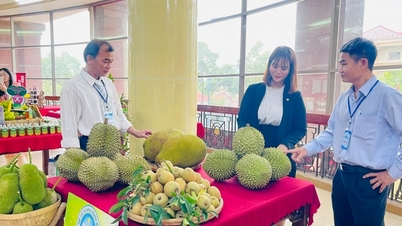
Regarding the policy on supporting model development , the Decree stipulates that models implemented in economically and socially disadvantaged areas, especially disadvantaged areas, border areas, islands, ethnic minority and mountainous regions, and areas affected by natural disasters, epidemics, and pests as announced by competent authorities (within a period not exceeding 3 years) will receive support up to 100% of the total model development costs.

Models implemented in other areas will receive support covering up to 50% of the total model construction costs.
100% of the model implementation costs will be supported; up to 100% of the consulting and training costs will be supported to obtain certifications for quality standards, food safety, disease safety, planting area codes, traceability, and geographical indications for products from the model.
Maximum support of 100% of the implementation costs, training, and technical supervision for model building will be provided.
Regarding policies to support the replication of the model , the state provides support for up to 100% of the costs of information, communication, conferences, seminars, study tours, and model dissemination; and supports the costs of seeds, equipment, and essential supplies for model replication, with a maximum support level equal to 60% of the model construction costs as stipulated above.
Farmers participating in the replication of models linked to value chains are entitled to support policies for the development of value chains as stipulated in current regulations.
Principles for supporting agricultural extension activities and technology transfer in agriculture.
State budget support for agricultural extension and technology transfer activities is based on economic and technical norms for agricultural extension issued by competent authorities, in accordance with the socio-economic conditions of each locality and the state budget's balancing capacity; it does not overlap in the same content with other state investment sources.
Encourage, attract, and mobilize social resources and matching funds from organizations and individuals to expand the scale, scope of participation, and benefits from state-sponsored agricultural extension activities.
Socialization policy for agricultural extension and technology transfer in agriculture.
Organizations and individuals participating in the socialization of agricultural extension and technology transfer activities in agriculture are entitled to the following policies:
- Products are honored, promoted, and introduced when participating in agricultural extension events organized by the central and local governments;
- Receiving guidance and support from state agencies responsible for agricultural extension when participating in agricultural extension activities and technology transfer in agriculture;
- Entitled to preferential policies regarding taxes, fees, loans, land leases, and other policies as stipulated by current laws.
The decree stipulates the responsibilities of organizations and individuals participating in the socialization of agricultural extension activities and technology transfer in agriculture:

- When transferring technical and technological advancements, specific instructions must be provided regarding the features and effects of these advancements.
- Be legally responsible and liable for compensation for damages caused by the transfer and application of technical and technological advancements (except in cases of force majeure as stipulated by law).
Local state agencies responsible for agricultural extension are responsible for inspecting and supervising agricultural extension activities and technology transfer in agriculture carried out by organizations and individuals in their areas, in accordance with current laws.
The above regulations will take effect from August 20, 2026.
Phuong Nhi
Source: https://hoquocdung.chinhphu.vn/chinh-sach-ve-khuyen-nong-10226070216205129.htm


![[Image] Overview of the construction site for the underground station of metro line 5 at the Hanoi Ring Road 1 intersection.](https://vphoto.vietnam.vn/thumb/1200x675/vietnam/resource/IMAGE/2026/07/03/1783065595682_ndo_br_z7974930852369-100ca093c306e72675f1d3700966a86b-jpg.webp)