 |
Many types of glasses incorporate cameras and artificial intelligence. Photo: Yonhap . |
A pair of smart glasses with integrated artificial intelligence (AI) solved a practice math test for the South Korean university entrance exam (suneung) almost perfectly in just 18 minutes.
Specifically, the device completed all 30 questions and scored 96/100 points. Remarkably, the answer to each question appeared on the glasses' display screen in just about 30 seconds after the user scanned the test.
After being posted online, the video of the AI-powered glasses solving exam questions quickly sparked a wave of concern about the risk of technological cheating in education in this country.
The AI glasses answered 29 out of 30 questions correctly.
According to Korea JoongAng Daily , the clip was posted on June 21st by Techmong, a tech YouTuber with 930,000 followers. In the clip, he enters requests into an app on his phone connected to the glasses, asking the AI to identify the correct answers to the questions, then uses the built-in camera on the glasses to scan the test questions. The system answered 29 out of 30 questions correctly; the remaining question was incorrect due to an image scanning error.
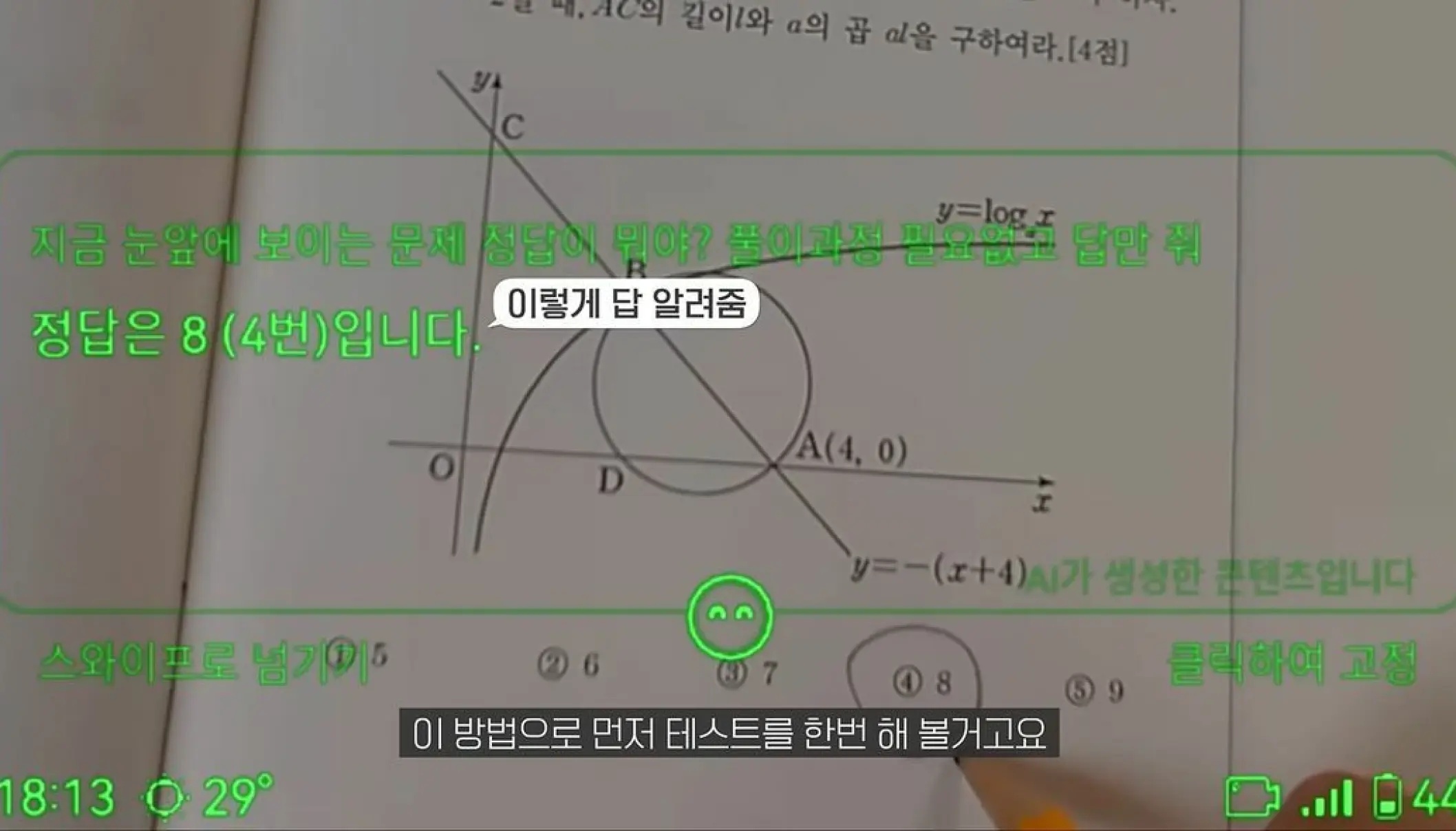 |
AI glasses scan exam questions and provide the correct answers in just 30 seconds. |
In just three days, the clip has attracted over 600,000 views.
The emergence of this technology has caused particular concern among South Korean schools as the end-of-semester exams are approaching. Just a month prior, a TOEIC test center in South Korea also discovered a student using AI glasses to cheat.

In response to this situation, many schools immediately implemented countermeasures. Specifically, a middle school in Gyeonggi Province informed parents that smart glasses were prohibited in exam rooms and would be treated as cheating.
Meanwhile, in Seoul, a high school organized training for teachers to identify AI glasses patterns and enhance monitoring in exam rooms.
Meanwhile, another high school in Gyeonggi plans to borrow metal detectors from the local education agency, while a middle school in Seoul is considering purchasing the equipment with its own budget for inspection purposes.
Find a way to ban AI glasses in exam rooms.
Although schools are tightening regulations, many teachers believe that current measures are only temporary and cannot keep up with the rapid development of AI technology.
A high school teacher in Gangwon Province said that although the school and teachers are considering using existing metal detectors, they are still unable to detect devices made of titanium or plastic.
"Currently, most AI glasses can still be recognized by the naked eye, but with the rapid development of technology, it's only a matter of time before products that are difficult to detect appear. The Ministry of Education and local education agencies need to provide more specific and effective guidance," this teacher said.
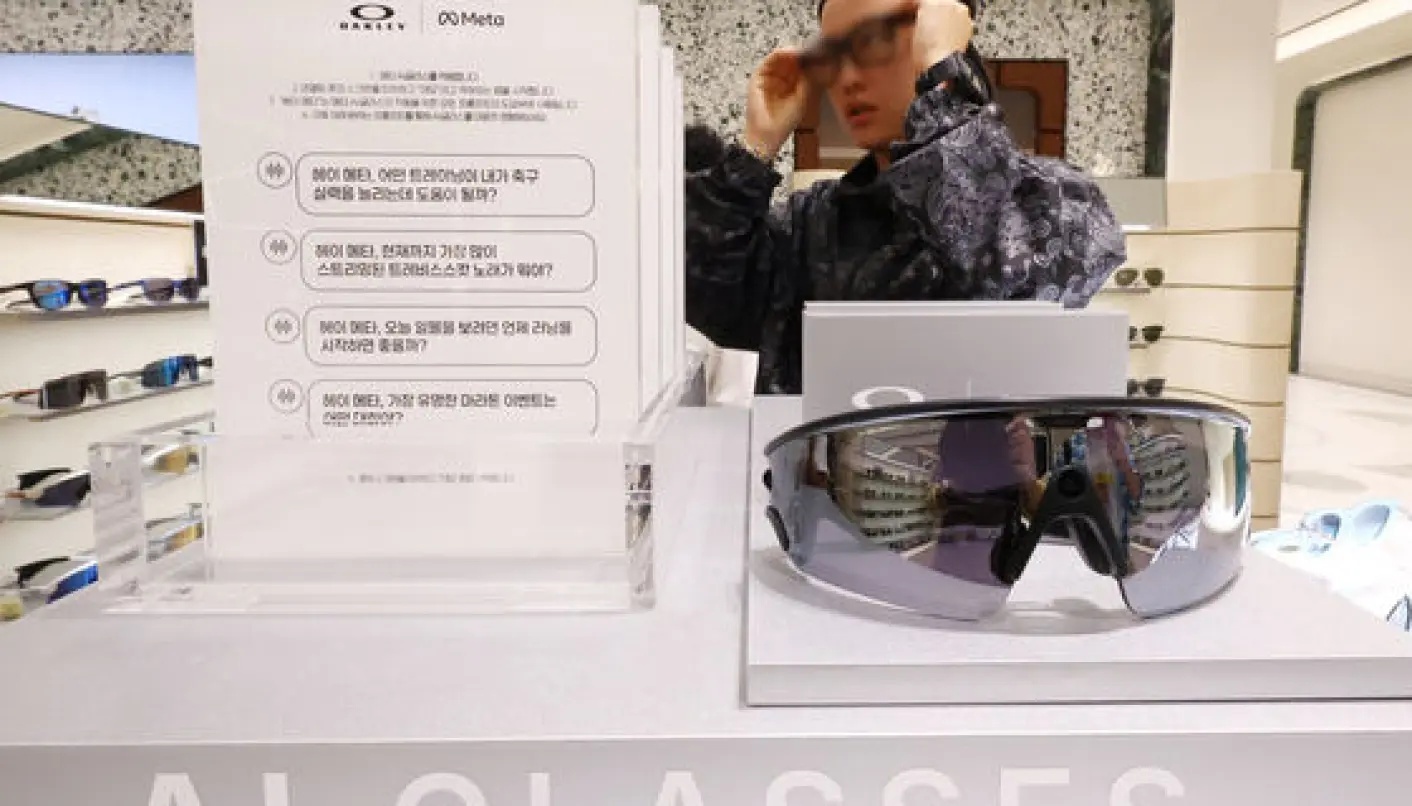 |
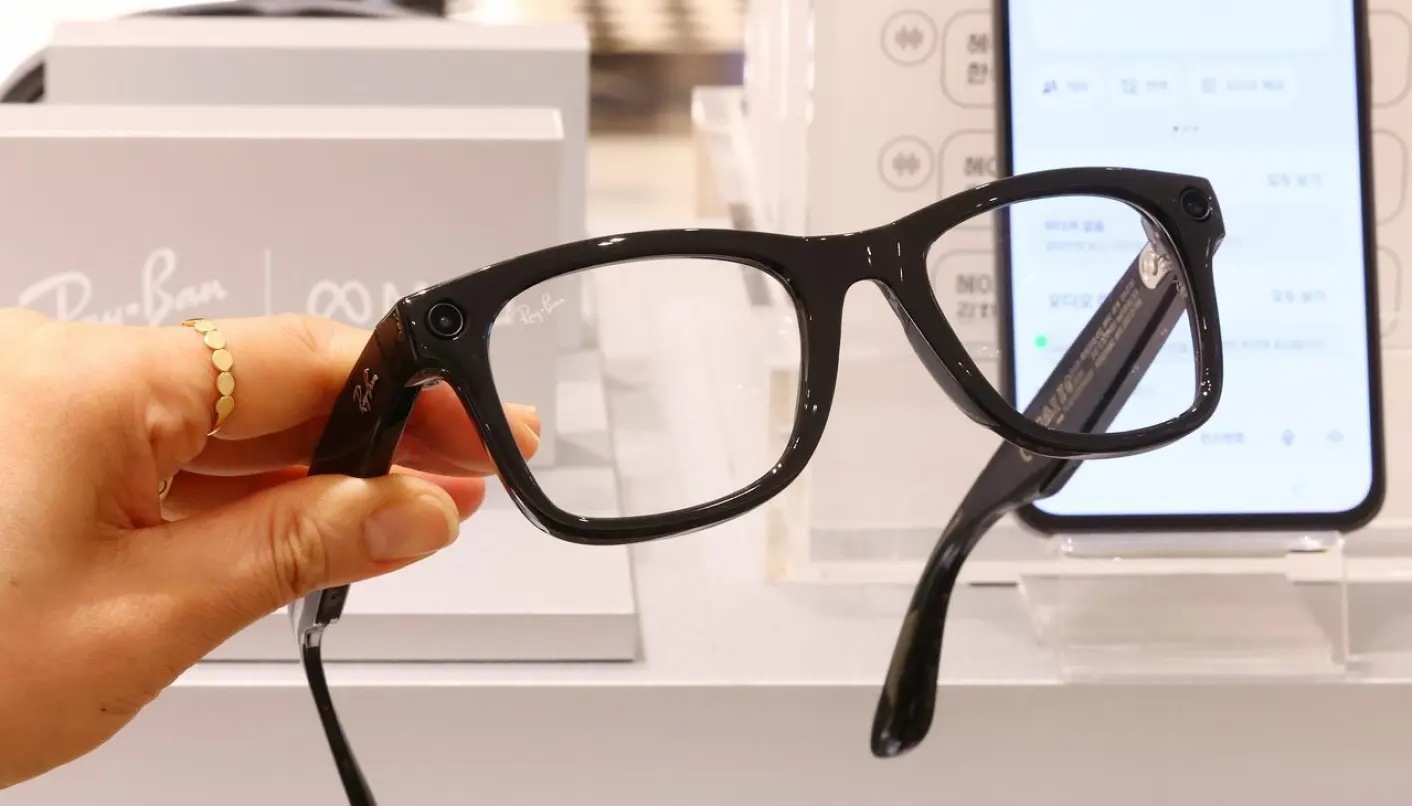
A customer tries out AI glasses at a store. Photo: Yonhap . |
In South Korea, up until now, education authorities have mainly focused on strengthening supervision at examination sites. Recently, on June 16th, the Ministry of Education sent a document to education agencies nationwide, requesting stricter examination organization procedures.
For the suneung exam taking place in November, AI glasses will officially be added to the list of prohibited items in the examination room.



Subsequently, on June 18th, the Gyeonggi Provincial Education Office sent guidelines to schools, introducing five models of AI glasses currently available on the market. A week prior, the Seoul Education Office also instructed invigilators to pay special attention to students wearing glasses with unusually thick frames or who repeatedly touched the temples during the exam, and to check the device immediately after the exam if any suspicious signs were detected.
Discussing this issue, experts argue that simply increasing visual observation will be insufficient to cope with the increasingly sophisticated generation of AI devices. They suggest that, in addition to technical measures, the education sector needs to develop a unified testing process, strengthen penalties, and issue specific guidelines that teachers can immediately apply in examination rooms.
"To reduce the burden on teachers and alleviate students' anxiety about the rapid development of digital devices, a systematic inspection process needs to be established, such as requiring invigilators to directly check students' glasses before and after exams. At the same time, the education sector needs to issue clear, practical, and applicable administrative guidelines," said Professor Park Ju-hyung of Gyeongin National University of Education.
Source: https://znews.vn/cap-kinh-de-doa-ky-thi-kho-bac-nhat-the-gioi-post1663305.html




![[Image] National conference summarizing one year of operation of the overall organizational model of the political system, the three-tiered government model.](https://vphoto.vietnam.vn/thumb/1200x675/vietnam/resource/IMAGE/2026/07/01/1782882811691_ndo_br_1-jpg.webp)