 |
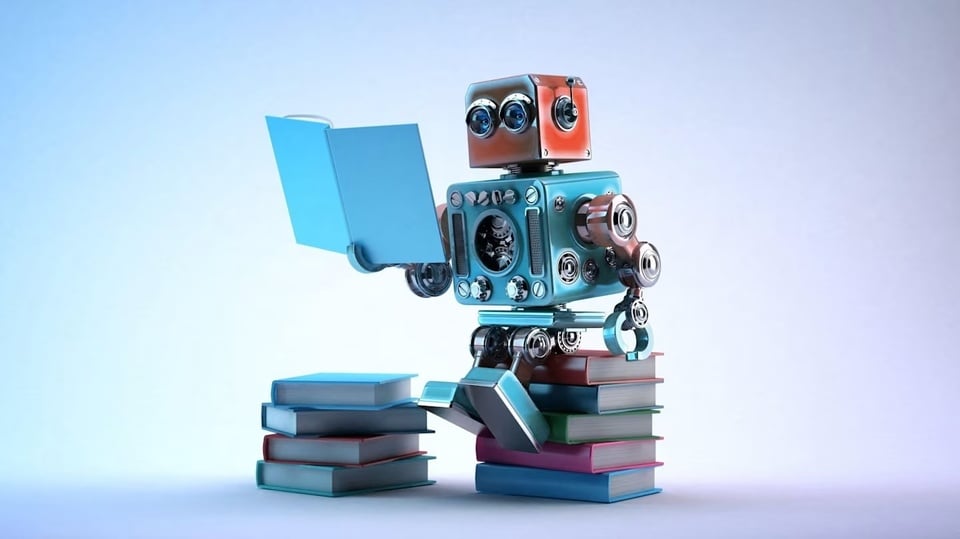
Illustration. Photo: Financial Times . |
Self-help books have long differed somewhat from other genres. They tend to be relatively easy to understand, concise, and use many bullet points to develop their ideas.
While this presentation style is reader-friendly and readily applicable, it also allows ChatGPT to summarize the work more quickly and easily.
The impact of ChatGPT on self-help book sales.
Nowadays, those who want to read "The 7 Habits of Highly Effective People" or "How to Win Friends and Influence People" have a cheap and convenient solution. Instead of buying the books, they can request ChatGPT to summarize the main points.
According to Tim Ferriss, a renowned self-help expert and author of "The 4-Hour Work Week ," AI is impacting the publishing industry of skill-building guidebooks for people.
In a recent post, Ferriss used his own works as examples. He analyzed the sales of five books he has written, including two self-help books: The 4-Hour Body and Tools of Titans .
His chart shows a slight drop in sales in 2023 (after ChatGPT launched) and a further sharp decline thereafter. He predicts his total book sales "in 2026 will be down by about 80% compared to 2022".
It's probably not enough to draw general conclusions based solely on one individual's book sales. However, Ferriss cites data from Publishers Weekly showing a broader trend: self-help book sales in the first quarter of this year decreased by 26.3% compared to the same period last year.
Mark Manson, author of the bestselling book The Subtle Art of Not Giving a F*ck , also declared last year that "the era of self-help books is over."
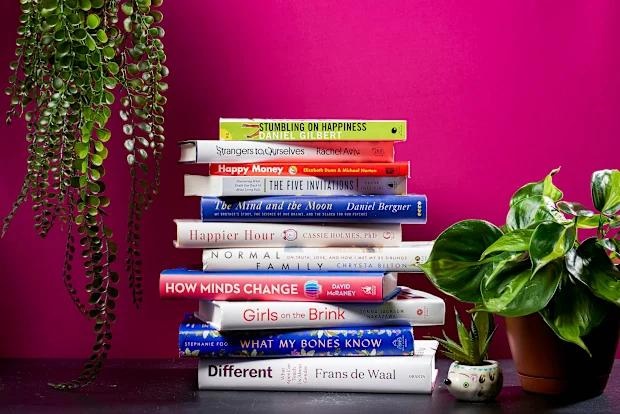 |
The global self-help book publishing industry is estimated to be worth $50 billion . Photo: Washington Post. You may also like  The Thanh Hoa family has seven filial daughters; one is a colonel, another owns a hotel.At nearly 90 years old, Mr. Phan Hong Khanh still maintains the habit of caring for his children and grandchildren. This father from Thanh Hoa, who once raised seven daughters in poverty, now has the "asset" of seven obedient, filial, and successful children.  Truong Sa, at the forefront of the waves: The indomitable spirit of family homes.VTV.vn - In the middle of the ocean, Truong Sa is not only a frontline protecting the sovereignty of the Fatherland, but also a place where life thrives, where family love gives strength to the soldiers and civilians.  Preserving and promoting Cham cultural values in the modern era.Amidst the scorching sun of Ninh Phuoc (Khanh Hoa province), the hands of artisan Truong Thi Gach still diligently work with clay. At 80 years old, she has dedicated over 60 years to the traditional pottery craft of the Cham people. The story of this artisan from Bau Truc pottery village is a vivid glimpse into the journey of preserving and promoting Cham cultural values in modern life. This is also the message disseminated from the Cham Ethnic Culture Festival held in Khanh Hoa from June 26 to 28, organized by the Ministry of Culture, Sports and Tourism in coordination with the People's Committee of Khanh Hoa province, with the theme "Preserving and promoting the cultural identity of the Cham ethnic group in the new era," and with the participation of people and artisans from 7 provinces and cities: Gia Lai, Dak Lak, Lam Dong, Tay Ninh, An Giang, Ho Chi Minh City and Khanh Hoa. |
Pippa Wright, publishing director at Penguin Random House's lifestyle book division Penguin Life, argues that self-help books "are probably outdated": "These books offer rigid, formulaic instructions with a few bullet points, containing information that could easily be summarized... If their content can be summarized in a single paragraph, why buy the whole book?"
She said that readers are also carefully considering these factors when deciding to buy books. Today's readers want new information, groundbreaking content, in-depth expertise, or engaging and impressive writing style.
Others have also pointed to a general decline in the trend of sharing self-help ideas, as evidenced by the recent mixed reactions to the statement by Steven Bartlett, host of the podcast *Diary of a CEO *.
Steven claims that just a few glasses of wine are enough to "ruin three days of his life" because: "I didn't sleep well that night, ate less healthily the next day... Then I did a worse job hosting the podcast, and the day after that I skipped the gym."
While a moderate amount of wine is often thought to aid sleep, the public has criticized the star presenter for offering unverified advice.
The resilience of the self-help industry
However, self-help books have a long history and demonstrate their adaptability, while readers continue to show a need for these works. Samuel Smiles' 1859 book, * Self-Help* , was the pioneering work in the genre that bears its name.
Joe Smiles, author of * The Transformation Economy *, observes: "People turn to self-help books because most of us harbor many aspirations, always wanting to change our circumstances, improve our abilities, behaviors, and ourselves."
"We often feel, and in fact, that we are not capable enough to solve everything on our own. Therefore, historically, people have mainly sought guidance from books," Smiles observed.
As long as insecurities and the habit of comparing oneself to others persist, the market for self-help products will continue to thrive. Old advice is being reimagined to suit the next generation.
Experts in the field of self-development will find new ways to profit from people's weaknesses.
Many big names in the self-help book industry, such as Mark Manson, Tony Robbins (author of Unlimited Power and Awaken the Giant Within ), and Gabby Bernstein (author of Self Help: This Is Your Chance to Change Your Life ), are not only writing books or organizing seminars, but are also embarking on developing personal coaching apps.



Bernstein once shared: "If I don't do it, someone else will, in a way that is not consistent with the core values I believe in."
In the context of a crisis of trust in the digital age, these "self-help experts" might even be more widely accepted than before.
Source: https://znews.vn/chatgpt-khai-tu-thi-truong-sach-self-help-post1663535.html