Left-centered candidate Roberto Sanchez lost by a very narrow margin. Keiko Fujimori's election as Peru's new president has had a significant impact not only in Peru, but throughout Central and South America.
For Peru, Keiko Fujimori is not an ordinary presidential candidate. She is the daughter of the late Peruvian President Alberto Fujimori, who, after leaving office, was imprisoned by the court for human rights violations and corruption. Before winning this presidential election, Keiko Fujimori had run for president four times. Voters in Peru are so familiar with this female candidate that her narrow victory shows that Fujimori's win was not truly convincing. Voters allowed her to win not because she was the best choice, but because she was the least bad of two options. This suggests that the foundation of power for this president-elect is not solid, and governing will be very difficult.

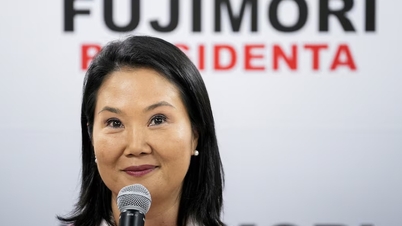
Right-wing, conservative presidential candidate Keiko Fujimori has just been elected president of Peru.



Photo: Reuters
For Central and South America, Keiko Fujimori's election victory, while not resounding, confirms a clear right-leaning trend in politics and society. The ruling left is gradually being replaced by the right, far-right, and populist factions in Argentina and Paraguay (both in 2023), El Salvador (2024), Ecuador, Chile, and Honduras (all in 2025), and Costa Rica and Colombia (both in 2026). In all these places, voters prioritize economic concerns and inflation, security, and political stability. The elected officials all have close ties to US President Donald Trump and have largely copied his policy views.



Source: https://thanhnien.vn/chau-my-tiep-tuc-thien-huu-185260701223530263.htm