

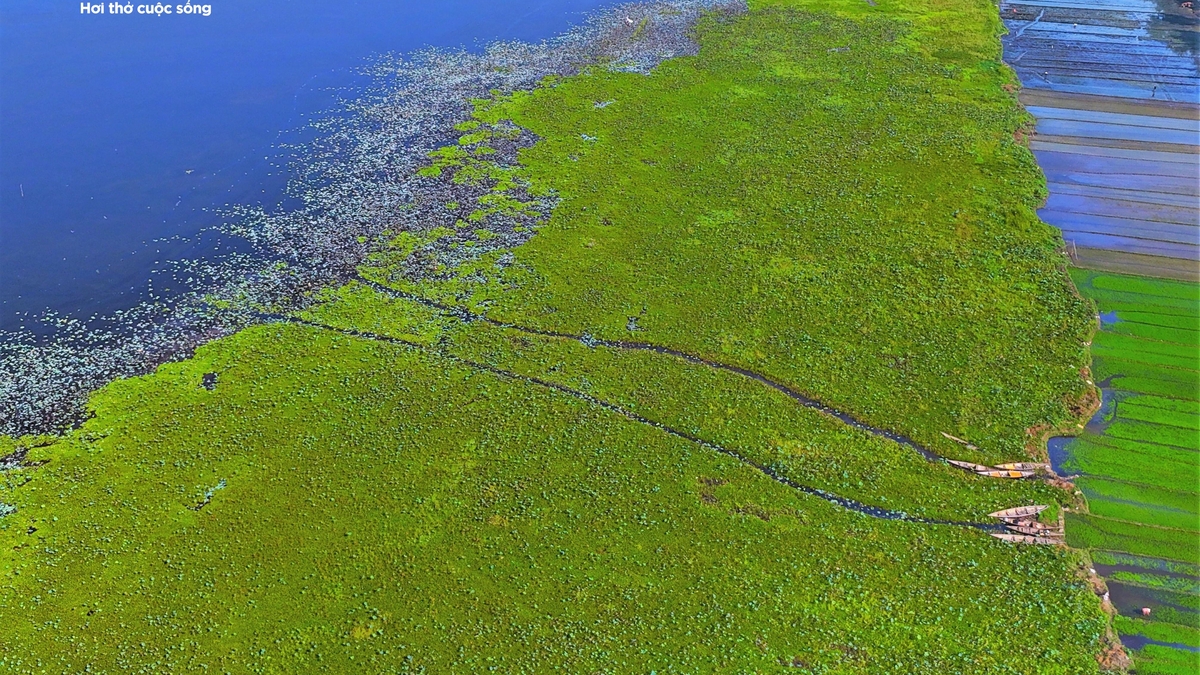
These days, the remnants of the flood are still clearly visible in many fields in Tuy An Dong. In some places, the rice paddies are covered with a thick layer of sand, while in others, there are patches of white salt. This is due to damage to the Ngu Ham Thuy saltwater intrusion prevention dike (Tuy An Dong commune) and the irrigation canal system after the floods. Freshwater cannot be channeled in, making the process of flushing out the salt almost impossible. 137 hectares of rice paddies in Tuy An Dong had to be left fallow during the recent winter-spring crop season.
Mr. Tran Tu Ha, Director of An Ninh Tay Agricultural Cooperative, said that the cooperative had mobilized its workforce to dredge canals and repair minor damage to maintain production. Thanks to this, the cooperative was able to maintain rice cultivation on 387 hectares during the Winter-Spring season. However, about 50 hectares remain uncultivable. Of these, 11 hectares belonging to approximately 100 households were heavily silted up, while 39 hectares belonging to nearly 500 households were affected by salinity and had to be left fallow.
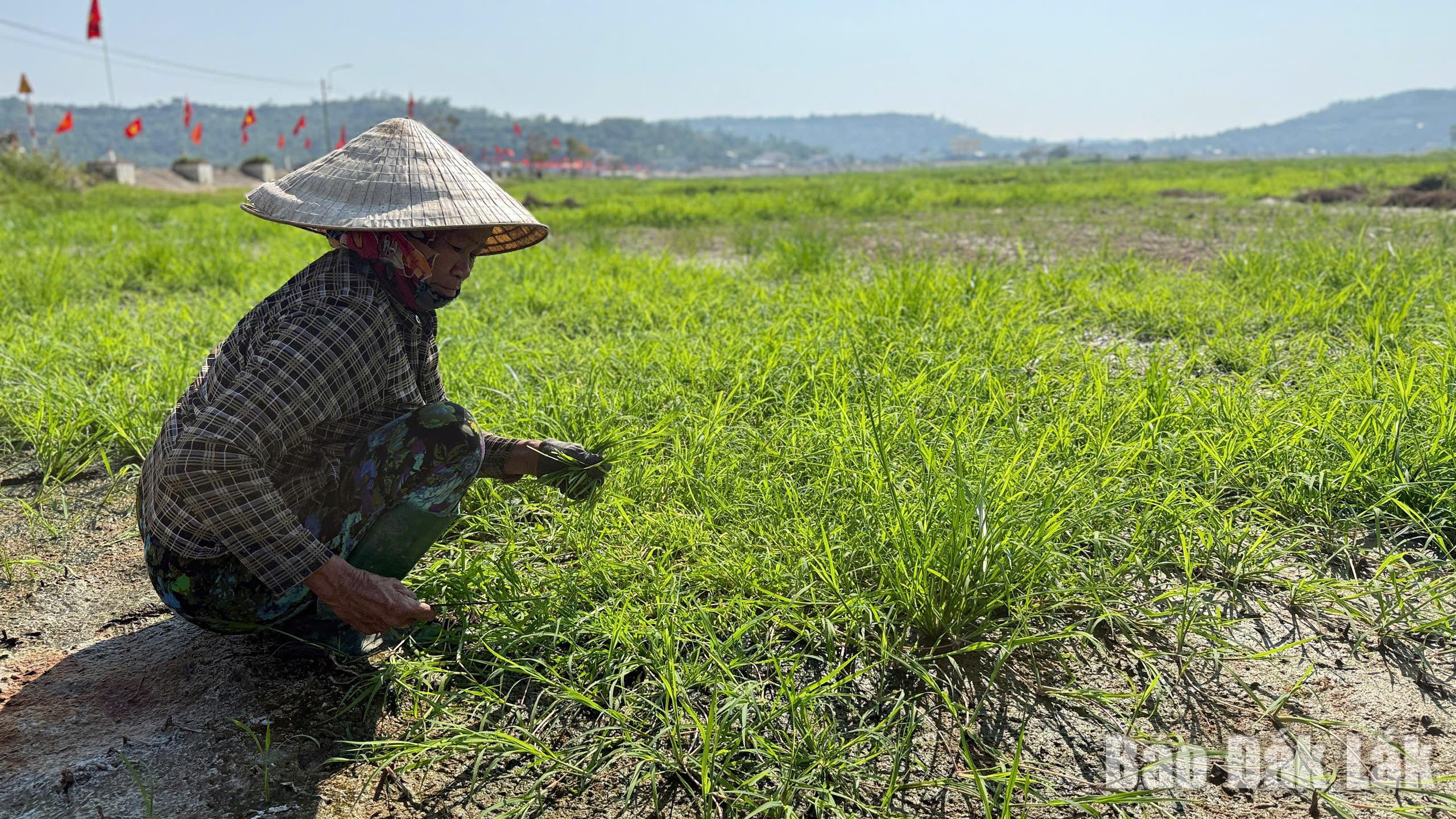 |
| Many rice paddies in Tuy An Dong commune are affected by salinity and need to be treated soon to restore production. |
"To bring this area into production in the upcoming Summer-Autumn crop season, it is essential for all levels of government to support the dredging of silted-up fields and invest in dredging about 3 km of branch canals to ensure sufficient flow to create water pressure, pushing freshwater to flush out salinity in the downstream area when the Tam Giang dam supplies water," Mr. Ha proposed.
Not only is the area affected by salinity, but many fields are also severely silted up. Significantly, although people are eager to reclaim their fields, they dare not dredge them on their own due to issues related to land and mineral resource management. According to Tran Van Bien, Chairman of the Tuy An Dong Commune People's Committee, after the Ngu Ham Thuy dike was damaged and caused saltwater intrusion, the local authorities promptly addressed the problem; and have now basically prevented saltwater intrusion. The main focus now is restoring the silted and saline-affected fields.
“We have proactively dredged many canals and ditches and are continuing to review them to ensure the water flow for salinization. Regarding the silted-up areas, the local authorities are considering allowing residents to reclaim the land themselves, stockpile soil and sand, and seek guidance from relevant agencies on how to handle the situation,” Mr. Bien said.
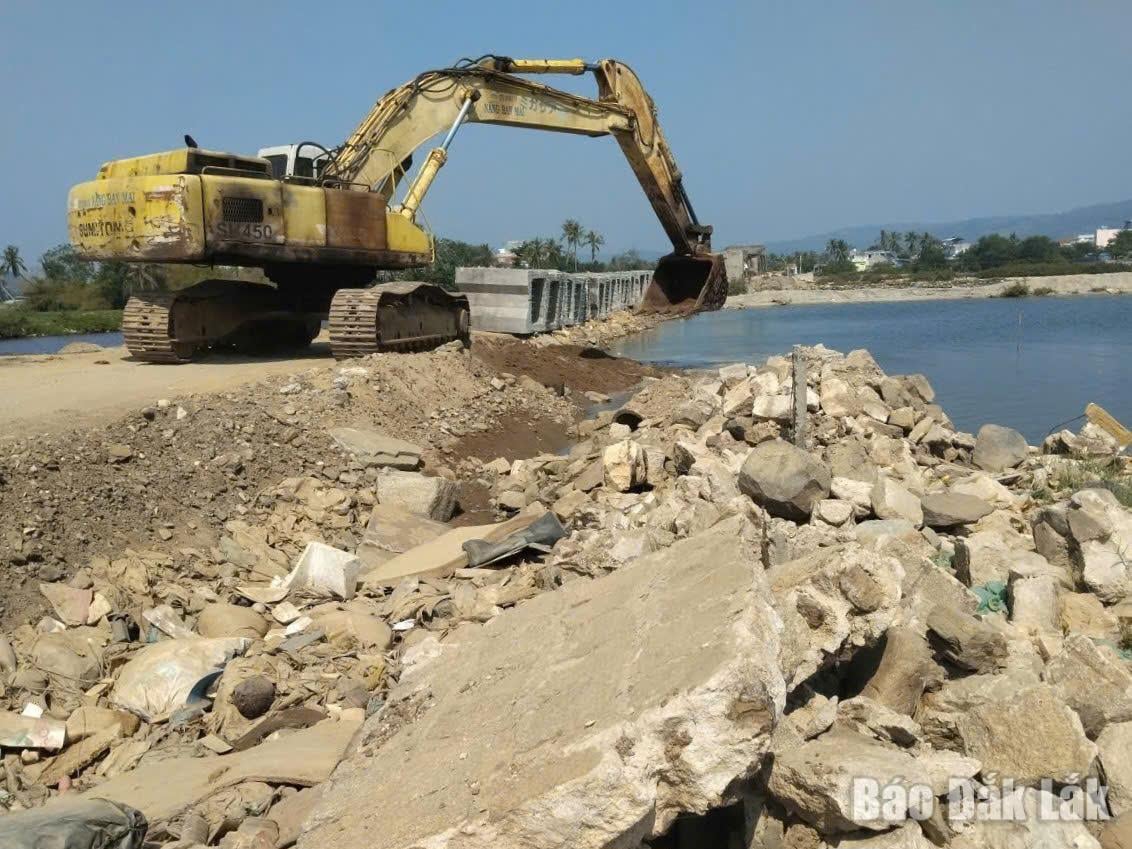 |
| The Ngự Hàm Thủy saltwater intrusion prevention dike (Tuy An Đông commune) has been completed with earth embankment construction, ensuring the prevention of saltwater intrusion. |
In O Loan commune, the situation is much more difficult. Approximately 80 hectares of rice fields in the Phuoc Luong area have been abandoned during the winter-spring crop season and are likely to be unusable for the upcoming summer-autumn crop. According to Nguyen Van Tinh, Secretary of the O Loan Commune Party Committee, the entire area depends on water from the Tam Giang dam. Due to its distance from the source, bringing in freshwater to flush out the salt is almost impossible, while saltwater intrusion from the sea continues. "In the long term, the local authorities are requesting the province to invest in building a saltwater barrier dam to end this situation and help farmers stabilize production," Mr. Tinh said.
Snow Fragrance
Source: https://baodaklak.vn/kinh-te/202604/chay-dua-rua-man-cuu-dong-ruong-ce055ab/
![[Photo] National Assembly Chairman Tran Thanh Man arrives in Türkiye to attend IPU-152](https://vphoto.vietnam.vn/thumb/1200x675/vietnam/resource/IMAGE/2026/04/15/1776261003665_tnk10-jpg.webp)
![[Photo] My Son at night: A thousand-year-old heritage site amidst the Milky Way](https://vphoto.vietnam.vn/thumb/1200x675/vietnam/resource/IMAGE/2026/04/15/1776261039184_ndo_br_chon6-jpg.webp)
![[Photo] The General Secretary, President and his wife meet with Vietnamese-Chinese friendship leaders.](https://vphoto.vietnam.vn/thumb/1200x675/vietnam/resource/IMAGE/2026/04/15/1776264829725_vna-potal-tong-bi-thu-chu-tich-nuoc-to-lam-gap-mat-nhan-sy-huu-nghi-viet-nam-trung-quoc-8703641-3130-jpg.webp)
![[Photo] National Assembly Chairman Tran Thanh Man attends the opening session of IPU-152](https://vphoto.vietnam.vn/thumb/1200x675/vietnam/resource/IMAGE/2026/04/16/1776277863731_ctqh5-jpg.webp)
![[Photo] Mrs. Ngo Phuong Ly meets and exchanges views with Mrs. Peng Li Yuan](https://vphoto.vietnam.vn/thumb/1200x675/vietnam/resource/IMAGE/2026/04/16/1776277858080_phu-nhan-1-jpg.webp)



















































Comment (0)