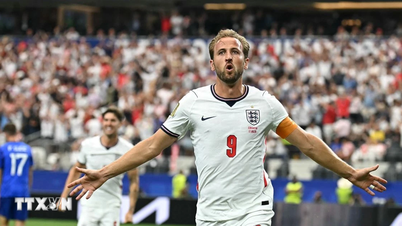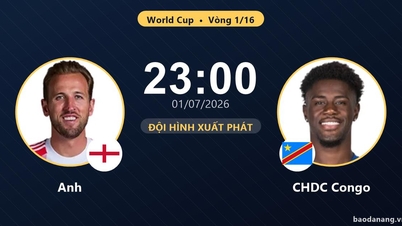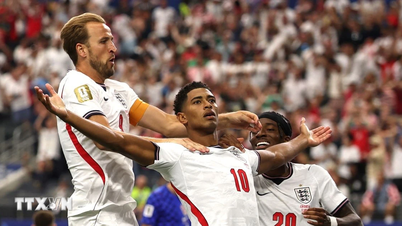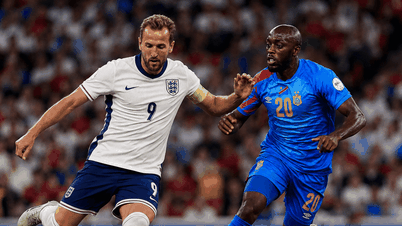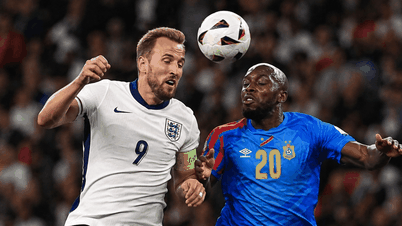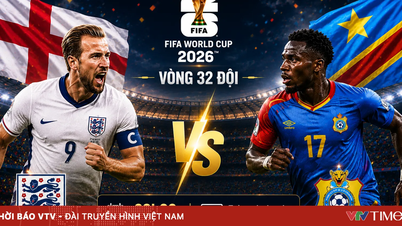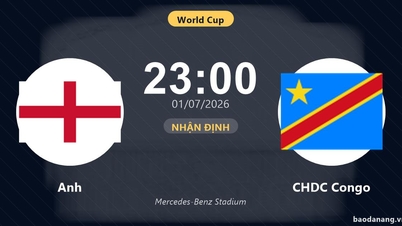
Ahead of the 2026 World Cup Round of 16, all the numbers favored England. They topped Group L, possessed a superior squad, and were considered one of the title contenders. Meanwhile, the Democratic Republic of Congo was making its first appearance in the World Cup knockout stage.
However, it is precisely this disparity that makes coach Thomas Tuchel particularly cautious.
"Don't panic. Don't start doubting yourself."

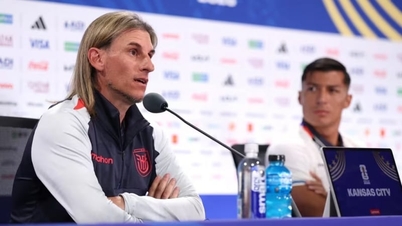
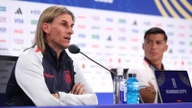
That was the message the German strategist sent to his players in the pre-match press conference. According to Tuchel, England will most likely once again face a low, patient, and physically strong defensive block – a scenario similar to what Ghana and Panama created in the group stage.
The first trap: Making England lose patience.
According to international media analysis, the Democratic Republic of Congo is not a team that wants to control possession. What they want is to draw their opponents into a state of urgency.
The African team is willing to sit deep, cede control, seal off the midfield area, and wait for the opponent to make a mistake. The longer they go without scoring, the more likely the opponent is to lose composure, push their formation too high, and leave gaps for counter-attacks.
In fact, England themselves struggled against this style of play, drawing 0-0 with Ghana and only breaking the deadlock against Panama after more than an hour of play.
The second trap: Fast counter-attacks.


Experts believe that the Democratic Republic of Congo is a team "not built to play attacking football, but built to avoid defeat." They are willing to defend in numbers, but are still extremely dangerous when transitioning between attacking and defensive phases.

Yoane Wissa is a formidable attacking threat with three goals at the World Cup. Alongside him are speedy and physically strong players like Noah Sadiki and Aaron Wan-Bissaka, capable of exploiting the space behind England's flanks if the opposition pushes forward.
The third trap: Pressure on the favored team.
Coach Tuchel admitted that England went into the match as a team expected to win.
He emphasized that the pressure doesn't come from opponents, but from the expectations of fans and the media.
"Everyone wants us to win. That's normal. But it's important to keep believing if the goals haven't come yet."

The media suggests that the surprises in the knockout rounds – such as Germany and the Netherlands being eliminated, or Brazil having to wait until the last minute to overcome Japan – are a reminder that the gap between teams at the World Cup is no longer as wide as it once was.
To advance, England must win in their own way.



In terms of strength, individual quality, and squad depth, England still have the edge over the Democratic Republic of Congo. However, if the game unfolds at the pace their opponents desire – slow play, stagnation, and then impatient attacking – the Three Lions could easily put themselves in a difficult position.
Perhaps that's why Thomas Tuchel's reminder before kick-off wasn't just for his players, but also a warning to anyone who thought this would be an easy match.
In the World Cup, sometimes the most dangerous thing isn't having a stronger opponent, but having an opponent who forces you to play the way they want.
Source: https://danviet.vn/chdc-congo-giang-bay-cho-su-tu-anh-sup-ho-d1439684.html
![[Image] National conference summarizing one year of operation of the overall organizational model of the political system, the three-tiered government model.](https://vphoto.vietnam.vn/thumb/1200x675/vietnam/resource/IMAGE/2026/07/01/1782882811691_ndo_br_1-jpg.webp)