

According to experts, the Consumer Price Index (CPI) in 2025 is entirely controllable and will hover around 4 to 4.5%.
Flexible price management policies will help the CPI achieve its target in 2024.
According to data from the General Statistics Office, the average Consumer Price Index (CPI) for the fourth quarter of 2024 increased by 2.87% compared to the same period last year. The average CPI for 2024 increased by 3.63% compared to 2023, achieving the target set by the National Assembly .
In an interview with a reporter from the Industry and Trade Newspaper, Dr. Le Quoc Phuong, former Deputy Director of the Center for Industrial and Trade Information ( Ministry of Industry and Trade ), assessed that the low CPI increase in 2024 is due to low global price increases, lower global inflation, and reduced inflationary pressure from external sources. Despite high GDP growth, domestic demand remains low (the lowest since 2022) due to people tightening their spending. At the same time, food prices are not expected to increase significantly (except for a short period after Typhoon Yagi in September 2024) because Vietnam is a major agricultural producer with abundant supply.
 |
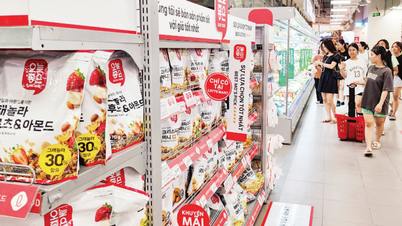
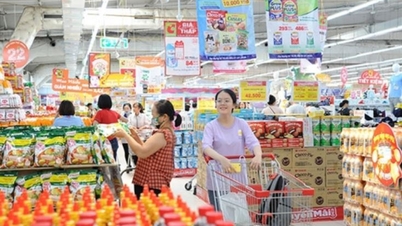
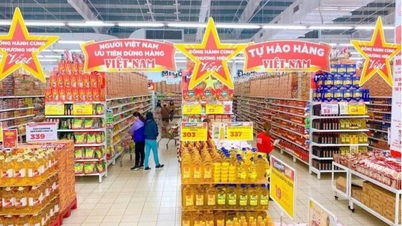
| In 2024, the CPI was relatively well controlled. |
Furthermore, this expert highly appreciates the State's price management measures. In 2024, energy prices (electricity, coal, gasoline) were managed and regulated by the State. The Government consistently implemented policies to curb inflation and stabilize the macroeconomy . As a result, from 2014 to the present, Vietnam has continuously maintained low inflation (below 4%). Vietnam's macroeconomic indicators are quite stable (high foreign exchange reserves, trade surplus, low public debt-to-GDP ratio), helping to reduce inflationary pressure.
According to experts, in 2024, the prices of state-regulated goods were managed cautiously: medical service prices remained unchanged; electricity prices were adjusted only once; tuition fees were kept at the same level as last year… Effective control of these price-regulated items played a significant role in curbing inflation. In addition, tax and fee adjustments and monetary policies also contributed to the overall management goal. Furthermore, another objective factor was the cooling of global inflation, which helped to reduce imported inflation, contributing to the overall result.
The CPI target for 2025 is achievable.
Sharing his views on factors affecting economic growth and the CPI control target for 2025, Dr. Le Quoc Phuong said that globally, inflation in many major economies is trending downwards. In addition, many central banks are gradually lowering interest rates, the global economy is gradually recovering, and global demand is showing a slight recovery. This will contribute to increased demand for imported goods, and Vietnam – one of the world's major exporting countries – will benefit.
However, risks also arise as global inflation, while declining, still carries the potential for a resurgence. Conflict hotspots have not cooled down, and may even be escalating. The protectionist policies of the Trump administration are expected to significantly impact Vietnam's import and export activities, as this is the largest market for Vietnamese goods. Increasingly severe climate change is also putting upward pressure on prices, especially for agricultural products.
Domestically, the new government has raised its GDP growth target for 2025 to "above double digits" (i.e., above 10%). To achieve this goal, many solutions to boost production and stimulate consumer demand will be implemented. In addition, after a period of maintaining stability to ensure macroeconomic stability, the prices of healthcare and education services are projected to increase according to schedule. Energy prices (gasoline, electricity, coal) may continue to rise.
“Based on favorable and unfavorable factors in the world and domestically affecting inflation, the forecast for the average CPI in 2025 is 4.2%-4.5% (if no unexpected factors occur), ensuring both GDP growth targets and not exceeding the target allowed by the National Assembly (not exceeding 4.5%)” – Dr. Le Quoc Phuong stated his opinion.
Concurring with this view, Associate Professor Dr. Ngo Tri Long, an economic expert, believes that inflation in Vietnam in 2025 will be controlled at a reasonable level, fluctuating between 3.5% and 4.5%. This reflects the efforts of the Government and relevant agencies in maintaining macroeconomic stability and controlling prices. Close monitoring and timely policy adjustments are essential to ensure the inflation control target is met in 2025.
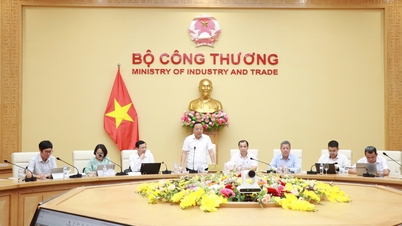
Previously, at the meeting of the Domestic Market Steering Committee for the fourth quarter of 2024, held on January 7, 2025, in Hanoi, Deputy Minister of Industry and Trade Nguyen Sinh Nhat Tan – Head of the Domestic Market Steering Committee – stated that in 2024, all indicators would be met, with the CPI reaching 3.63% (the ceiling being 4.5%). However, keeping the CPI too low would not be ideal either.
“Building on the momentum of 2024, 2025 presents an opportunity to accelerate and achieve economic goals. Therefore, market management and advisory work must be flexible. We can push the CPI scenario closer to the 4.5% target set by the National Assembly to ensure macroeconomic stability while creating conditions for growth,” Deputy Minister Nguyen Sinh Nhat Tan emphasized. He also stated that not only in 2025 but also in subsequent years, the Party and State leaders have declared a double-digit growth target, so market management and advisory work must be adjusted promptly to adapt to market conditions.
| According to Resolution No. 158/2024/QH15 of the National Assembly on the Socio-Economic Development Plan for 2025, the inflation control target is set at an average consumer price index (CPI) increase of approximately 4.5%. |
Source: https://congthuong.vn/chi-so-cpi-nam-2025-se-o-muc-4-45-370340.html
![[Image] National Assembly discusses the implementation of the socio-economic development plan.](https://vphoto.vietnam.vn/thumb/1200x675/vietnam/resource/IMAGE/2026/04/20/1776696707422_ndo_br_img-20260420-185419-jpg.webp)




![[Photo] General Secretary and President To Lam meets with National Assembly delegates from ethnic minorities.](https://vphoto.vietnam.vn/thumb/1200x675/vietnam/resource/IMAGE/2026/04/20/1776696701056_a1-bnd-8331-3342-jpg.webp)









































































Comment (0)