

Visiting the former Zone D in Dong Nai during the dry season of March, tourists not only get to hear stories of heroic history and experience the unique cultural nuances of the Chơro ethnic group, but also get to explore and immerse themselves in the vast green space of the primeval forest and feast their eyes on the "flower road" displaying its vibrant colors along the DT 761 road stretching from Mã Đà to Bà Hào...
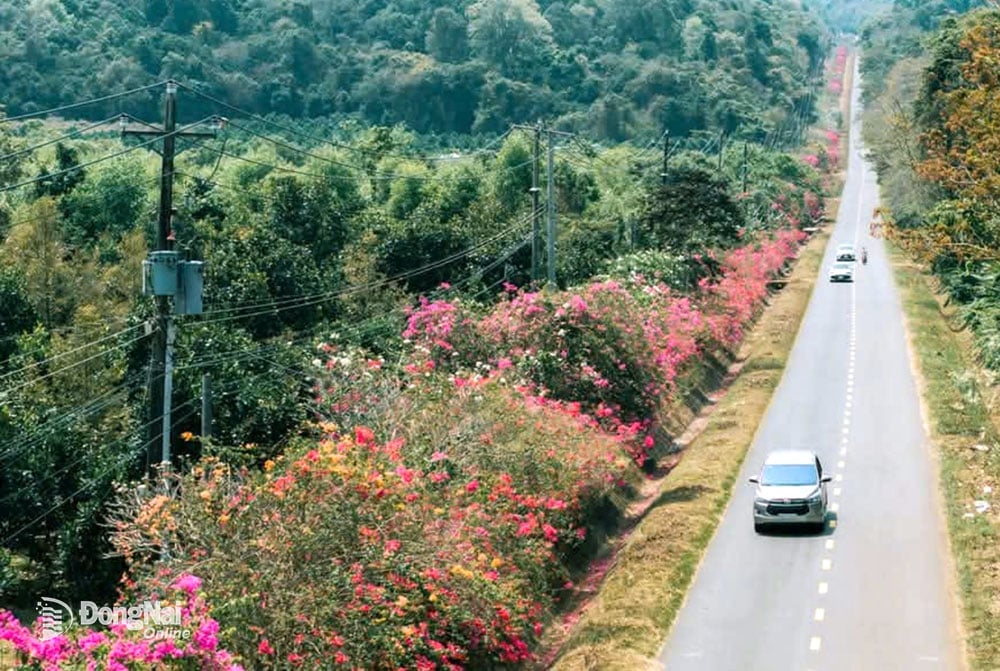 |
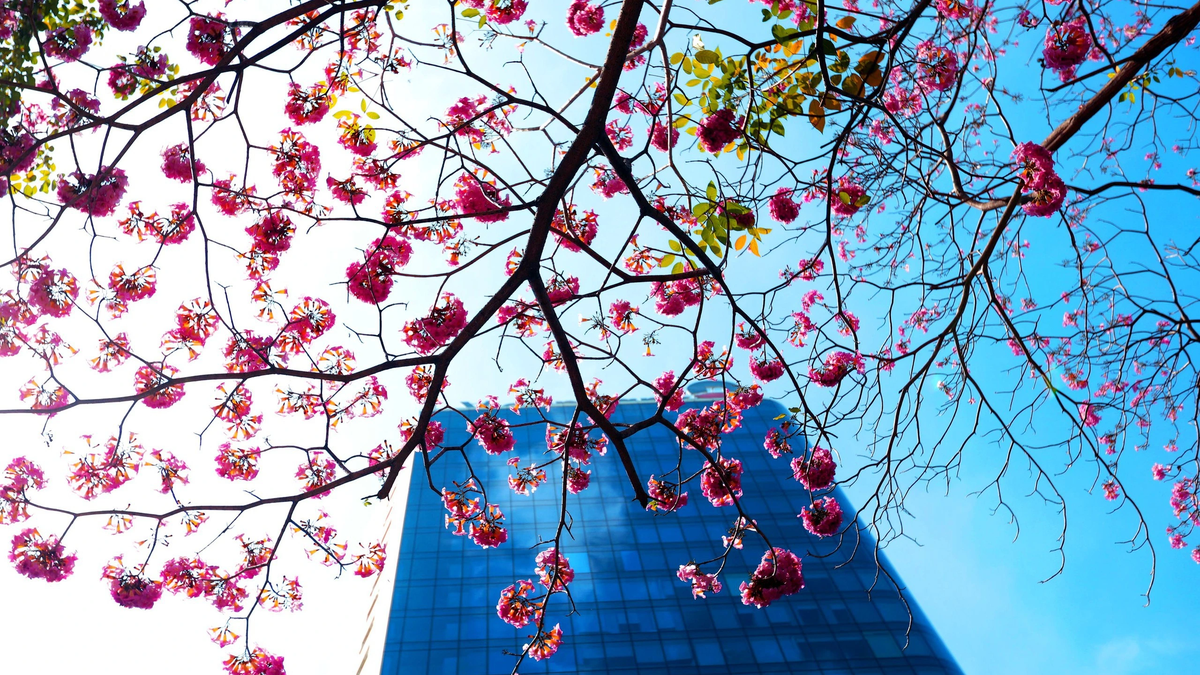
| A vibrant flower-lined road stretches along Provincial Road 761. Photo: Dong Nai Nature and Culture Reserve. |
Reviving a historical land.
During the resistance war against the US, Zone D was a fierce battleground between our forces and the enemy. With its central location bordering the eastern provinces, its dense forests, deep streams, and rich flora and fauna, Zone D was an ideal area for gathering forces, storing supplies and weapons, and developing all aspects of a long-term resistance base. Therefore, the Central Committee, the Regional Party Committee, and the Military Command of the region chose it as their base and built the Southern Central Committee base (1961-1962), the Eastern Southern Regional Party Committee base (1962-1967), and the Suoi Linh Tunnel base. From there, they led and commanded the armed forces of the region, coordinating with the main forces of the region to overcome difficulties, repel many enemy sweeps, and fight major battles such as Hieu Liem, Phuoc Thanh, Binh Gia, Dong Xoai, Dat Cuoc, Bau San…
After the war ended, the heavily bombed and devastated forests of the Zone D War Zone gradually recovered. These forests hold significant ecological and historical value for Dong Nai province and the entire Southeast region. Therefore, in 1997, Dong Nai province adopted a policy of closing off natural forests, and in 2004, the Vinh Cuu Nature Reserve and Historical Site was established (now the Dong Nai Nature and Culture Reserve, abbreviated as the Reserve) to protect the remaining forest area, restore and further enrich the forest. This also includes protecting and promoting revolutionary historical sites, protecting the environment and headwaters, and promoting the value of the inland wetlands of Tri An Lake and the lower Dong Nai River to serve the sustainable economic development and environmental protection strategy of Dong Nai and the entire Southeast region.
| One of the solutions for sustainable tourism development is to encourage local communities in buffer and core zones to participate in forest management and protection through a co-management mechanism that benefits both parties. Simultaneously, they should participate directly or indirectly in tourism activities by providing tourism services and products. |
Alongside the protection of the forest ecosystem, historical revolutionary sites located within the old-growth forests are also being preserved and promoted. Over the past 50 years (1975-2025), with conservation efforts, the appearance of these relics, from trenches, tunnels, shelters, offices, and workplaces to shrines, monuments, memorial plaques, martyrs' cemeteries, and traditional exhibition houses, has been restored and renovated. These sites have become important historical landmarks in the journey of reconnecting with the roots for people from all walks of life inside and outside the province.
In the former Zone D of the war, nestled in the dense forest, lay the Chơro ethnic village, which sheltered and nurtured many revolutionary fighters and endured the devastating effects of countless American bombs, bullets, and chemical weapons. Yet, the Chơro people remained steadfast, clinging to their village and the forest alongside the revolutionary resistance until the complete liberation of South Vietnam. As the country entered the reconstruction period, the Chơro people continued to overcome economic difficulties, gradually stabilizing their lives and production.
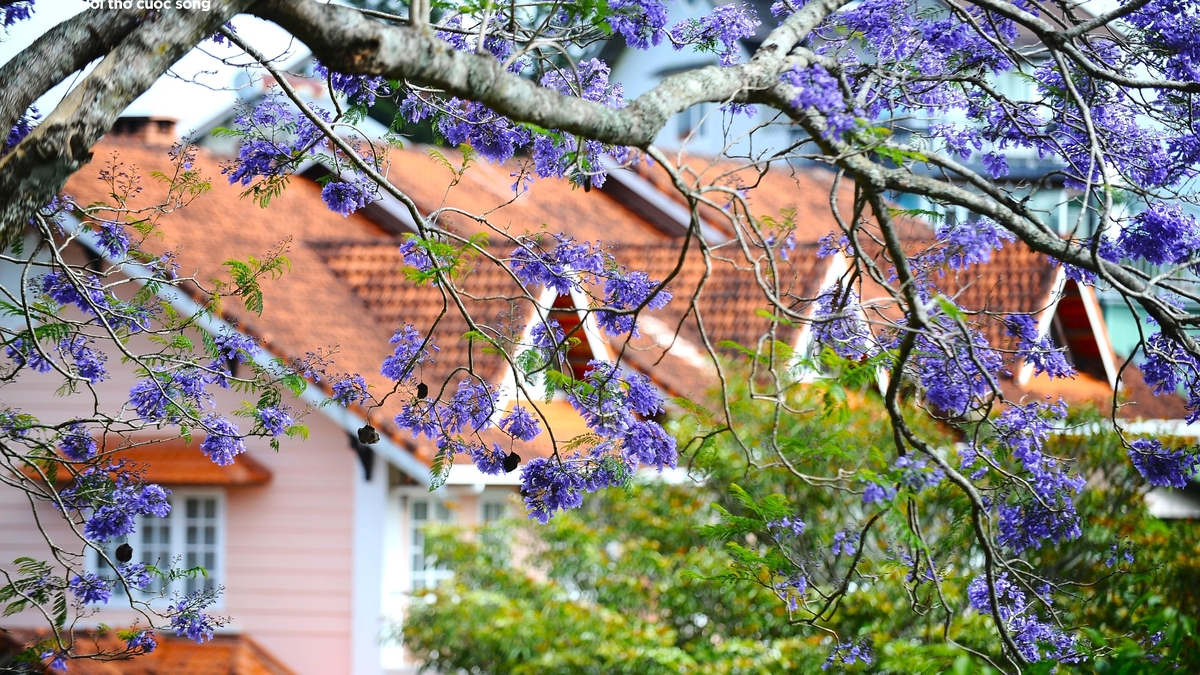
Perhaps the most interesting aspect of the revival in this historical land is the "flower road"—a unique idea and tireless effort by the Conservation Area over 10 years ago, aimed at adding a soft, vibrant touch to the landscape along Provincial Road 761. Flowers bloom year-round, but the peak blooming period is from February to May, the dry season in the South, when the sun and wind make the bougainvillea/frangipani flowers even more vibrant. Viewed from above, the more than 30km long bougainvillea/frangipani flower road resembles an endless silk ribbon adorning the ancient forest.
Developing eco-tourism, cultural tourism, and historical tourism.
Mr. Nguyen Van Ha, Director of the Center for Ecological, Cultural, and Historical Studies of the D War Zone within the Conservation Area, shared: “Since the Conservation Area was established, alongside research and protection of the forest ecosystem, we have been promoting activities to develop heritage tourism and ecotourism. When visiting the Conservation Area, tour guides will take visitors on a journey through the forest and back to the resistance war era with touching stories about people and events that have become part of the nation's history of struggle... This helps visitors understand the historical and cultural values of the locality, contributing to fostering patriotism and educating about revolutionary traditions, love of nature, and environmental protection awareness.”
Over the past period, the Center for Ecology, Culture, and History of the D War Zone has actively organized many beneficial activities such as: competitions to learn about the historical value of the D War Zone, competitions to learn about biodiversity and the environment to help students love forests and nature more and become more aware of environmental protection. Many schools inside and outside the province have had interesting experiential trips to the Conservation Area, and the students have created quite impressive and meaningful products. These include emotionally charged essays or recycled materials to create handcrafted souvenirs…
As a result, the conservation and promotion of natural and cultural heritage values here have seen many positive changes. According to statistics, while the number of visitors was 23,000 in 2017, it increased to over 55,000 in 2024 (a 139.1% increase).
On December 29, 2023, the People's Committee of Dong Nai province issued Decision No. 3489/QD-UBND approving the Ecotourism, Resort, and Entertainment Project of the Conservation Area, giai đoạn 2021-2030. The Conservation Area has quickly and actively implemented the project with the following tasks: developing a plan for product development and connecting tourism routes/destinations; widely publicizing the leasing of forest land for ecotourism, resort, and entertainment services; and calling on organizations and individuals to cooperate in establishing investment projects for ecotourism, resort, and entertainment through self-organization, collaboration, or leasing of forest land in accordance with the approved project. It can be seen that the project represents a new direction and a foundation for the development of tourism in the Conservation Area in particular and Vinh Cuu district - Dong Nai province in general.
The achievements serve as motivation for the Conservation Area to continue implementing sustainable tourism development solutions. These include regular maintenance to prevent degradation of historical sites; beautifying natural landscapes and planned ecotourism development sites such as Ba Hao Lake, Tri An Lake, the Central Committee of the Southern Region, the Eastern South Vietnam Regional Party Committee, the War Remnants Area, Suoi Linh Tunnel, Rang Waterfall, the Stone Park, Bau San Scenic Area, Hong Thap Tu Scenic Area, the Wildlife Rescue and Conservation Center, and the National Medicinal Plant Conservation and Development Garden of the Eastern South Vietnam Region...
Xuan Nam
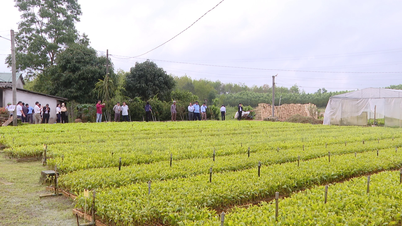
Miss H' Hen Niê experiences reforestation at the D War Zone.
Source: https://baodongnai.com.vn/dong-nai-cuoi-tuan/202503/chien-khu-d-vung-dat-lich-su-vuon-minh-17e273d/

![[Photo] Young people of the Dong Thap Border Guard actively participate in "March Border Month" activities.](https://vphoto.vietnam.vn/thumb/1200x675/vietnam/resource/IMAGE/2026/03/23/1774248483508_ndo_tl_dt3-jpg.webp)







































































Comment (0)