

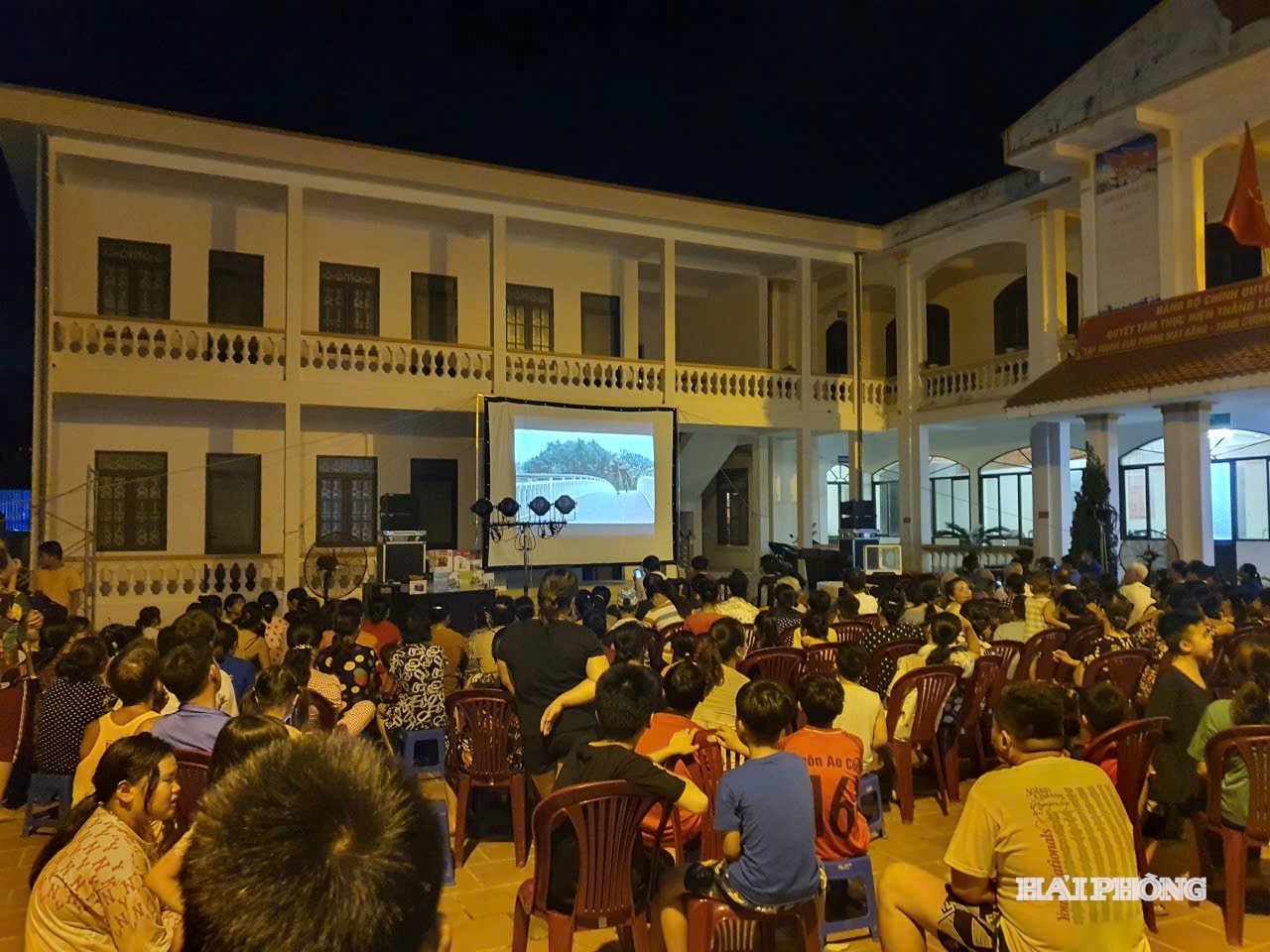
Amidst the increasingly modern pace of life, where brightly lit cinemas have become a familiar choice for urban dwellers, there are still those who quietly bring films to the people in remote areas and special zones of Hai Phong .
Bringing cinema closer to the people.
A typical day for the mobile film screening team in a remote village begins quite early. On the small vehicle belonging to the Hai Phong Center for Culture, Cinema and Exhibitions, the equipment – such as a high-powered speaker system, projection screen, projector, cables, and generator – is neatly arranged after thorough inspection. Following behind are the motorbikes of the team's staff and personnel, accompanying them to carry out their mission.
Depending on the distance, team members arrange their travel times accordingly. Mobile screenings are often far away, so preparation needs to be even more meticulous. "If a small detail goes wrong while traveling far, the entire screening is wasted," said Bui Hong Quang, a technical staff member with over 10 years of experience.
Mobile film screening locations are not fixed. Sometimes it's the courtyard of the Cat Hai Special Zone Cultural Center, other times it's the courtyard of the An Lao Commune Cultural Center. Each location has different conditions, but all share the same excitement of the people whenever they see the mobile film screening vehicle appear.
Mobile film screenings are quite demanding. In the summer, the screening area is stiflingly hot; in the winter, the cold wind makes the hands of those adjusting the air conditioner numb. Yet, no one in the team has ever thought about giving up or getting tired of the job. "Seeing the villagers filling the area from very early on, holding their children, their eyes glued to the screen, makes all the fatigue disappear," said Mr. Nguyen Xuan Dam, Deputy Director of the Center for Culture, Cinema and Exhibitions.
For the mobile film screening team, the greatest joy is seeing people show up in large numbers, attentively watching and sharing their feelings after each screening. There were days when it was drizzling, and they thought the program would have to be canceled, but as soon as the rain stopped, people rushed out asking, "Are you still showing it? If so, we'll wait!" These simple questions became a source of motivation for them to continue fulfilling their mission.
Many film screenings lasted until late at night. After work, the whole team would pack up, loading the equipment onto the vehicle under the dim flashlights of the locals who helped illuminate the way. The journey back was sometimes dozens of kilometers long, but the car was always filled with laughter. On some days, elderly people would wait for the program to end just to give the team gifts from their hometown, such as bunches of bananas, melons, or pomelos. "These small gifts contain the affection of the people for us, and we love and are more attached to our work," said Dam happily.
Connecting communities and reviving memories.
.jpg)
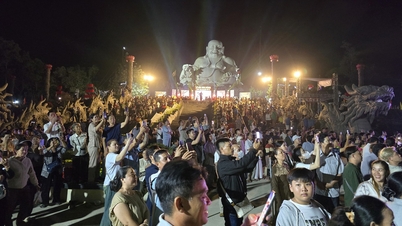
In remote villages or island areas, each mobile film screening is not only an opportunity for people to watch a film, but also an important cultural and spiritual event. Ms. Hoang Thi Thu, a resident of An Lao commune, expressed: "In the past, every evening the whole family would bring mats out to the warehouse yard to watch movies with the projector making a crackling sound. It's been a long time since we've been able to watch a movie outdoors like this, it's so much fun!"
Many of these mobile film screenings have become gathering places for people in the village and commune to socialize and meet. Today, mobile film screenings are not just entertainment; they also include documentaries and propaganda films about protecting maritime sovereignty , combating social evils, traffic safety, fire prevention and control, building a cultural life, environmental protection, digital transformation, and building new rural areas.
For people in remote areas, this provides an additional channel of information that conveys content in the most understandable, visual, and emotionally engaging way. Through these film screenings, the Party's guidelines and the State's new policies reach the people faster and more vividly. "We hope there will be more mobile film screenings for our people. These are not just ordinary propaganda sessions, but also places where people can meet," said Mr. Nguyen Van Tu, a resident of the Bach Long Vi Special Economic Zone.
To further promote mobile film screenings, many staff members of the Hai Phong Cultural, Cinema and Exhibition Center wish to have more modern equipment and better transportation support, especially when traveling to remote communes or special zones. "The attention and investment from relevant agencies is a motivation for the center's staff to work with peace of mind and effectively carry out the task of disseminating information and serving the spiritual life of the people," said Mr. Nguyen Xuan Dam, Deputy Director of the Hai Phong Cultural, Cinema and Exhibition Center.
THANH HOASource: https://baohaiphong.vn/chieu-bong-ve-lang-527349.html























































Comment (0)