


Dragon Temple - a place of worship for the Goddess of the Mountains.
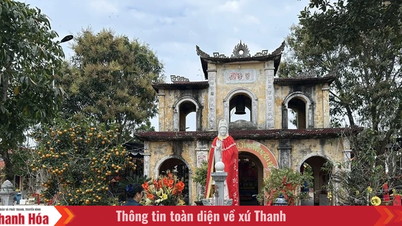
In the early days of spring, the Dragon Temple - Water Temple complex becomes more bustling than ever, with a high number of visitors coming to sightsee and worship. However, thanks to the well-organized and serious guidance implemented by the management board, everyone visiting during the spring festival consciously abides by the regulations, working together to preserve the environment, ensure security and order, and maintain the solemnity of the temple grounds.
Ms. Nguyen Thi Cuc, a visitor from Hac Thanh ward, said: “Every year at the beginning of the year, my family comes here to visit and pray for peace and good fortune. Not only do I get to immerse myself in the ancient atmosphere of the temple, but I also have the opportunity to learn more about the cultural and historical values preserved through many generations. Each time I come here, I feel more peaceful and relaxed. The space here is truly special, like a spiritual anchor that helps me regain balance in life after busy days at work.”
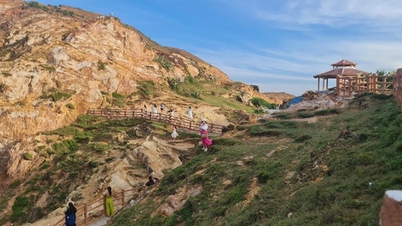
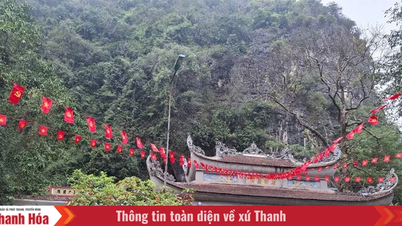
According to the elders in the village, these two temples were built by the people in the 16th century. They are called Dragon Temples because of their location at the foot of Dragon Mountain. With its "back against the mountain, front against the water" position, Dragon Temples boast an incredibly picturesque landscape. In front is a small bridge spanning a stream that flows year-round with clear, babbling water. The temple is nestled against the Dragon Mountain range, surrounded by lush trees; behind it is a steep, rocky slope that stands tall, defying time. A unique feature of Dragon Temples is that the surrounding area is entirely constructed of stone, creating a pure, ancient atmosphere rarely found elsewhere. The shrine dedicated to the Mother Goddess of the Mountains is housed in a cave, creating a space that is both intimate and wild, poetic yet profoundly sacred.
Leaving the Dragon Temple, following a small path along the mountainside for about 500 meters, visitors arrive at the Water Temple – a temple dedicated to the goddess Thoai, also known as the Third Goddess, who governs the waterways. Located on a rocky mountainside, the temple's altars are arranged in three tiers, creating a unique architectural feature. Visitors are also impressed by the sight of thousands of strangely shaped fish, often called "sacred fish" by the locals, swimming in the crystal-clear stream at the foot of the temple, adding to the mystical atmosphere of the place.
Mr. Bui Van Kinh, head of the Dragon Temple - Water Temple management subcommittee, said: "The Dragon Temple - Water Temple complex was classified as a provincial-level historical, cultural, and scenic site in 1993. Currently, the complex still retains its relatively intact natural landscape and preserves many valuable artifacts such as foundation stones and trays, confirming that these are valuable documents with significant value in many aspects of researching the origin, existence, and development of the belief system in particular and various aspects of the local people's lives throughout history. The artifacts and religious objects within the complex are also still intact, reflecting the process of protecting and promoting the value of this site for the spiritual life of the local community."
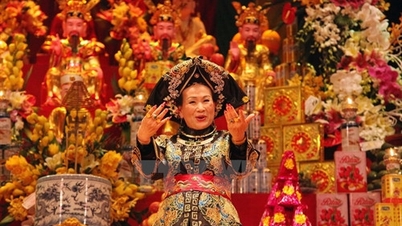
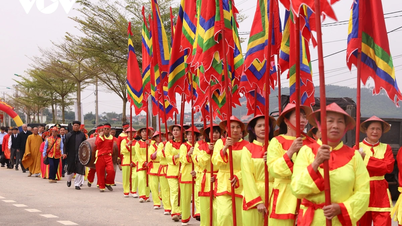
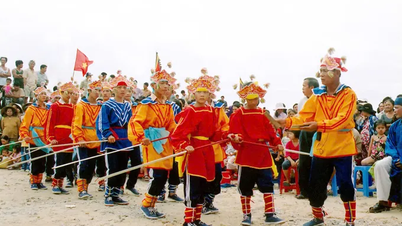
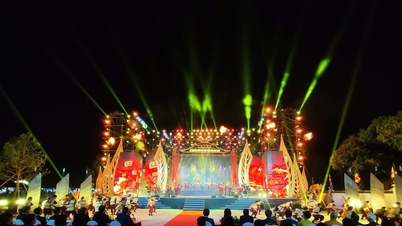
The Dragon Temple - Water Temple is a place of worship for the Mother Goddesses Thượng Ngàn and Thoải, a widely influential figure in the Mother Goddess worship culture of this region, making it a spiritual destination for many people. Over the years, thanks to the attention of the local government and the joint efforts of the people and visitors from all over, the temple has been gradually renovated and beautified, meeting the spiritual and cultural needs of local people and tourists. In particular, on the 24th day of the 2nd lunar month, the Dragon Temple - Water Temple festival is solemnly organized by the local community with a procession of palanquins from the Dragon Temple to the Water Temple and the organization of many unique folk games and performances, attracting the participation of a large number of people.
Text and photos: Trung Hieu
Source: https://baothanhhoa.vn/linh-thieng-den-rong-den-nuoc-280506.htm









































Comment (0)