
Combating waste should be focused and targeted.
Recognizing that saving and combating waste are key and ongoing tasks for the entire political system, in 2025 and beyond, Ho Chi Minh City will focus on building and effectively implementing a comprehensive and targeted program for saving and combating waste, linked to the streamlining and reorganization of the two-tiered local government apparatus; and continuing strong administrative reform and digital transformation.
 Báo Tin Tức•12/10/2025
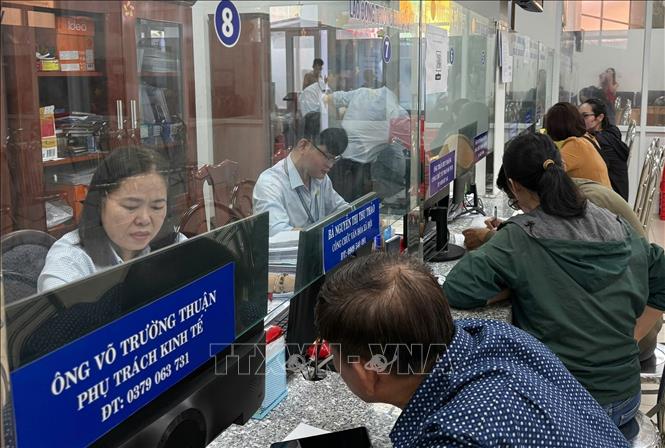
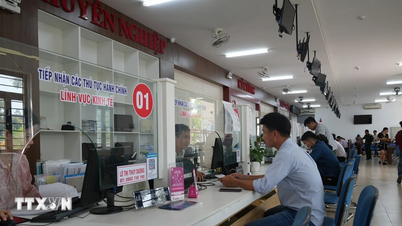
Public officials explain, advise, and guide citizens to ensure they understand administrative procedures. Photo: Huu Duyen/TTXVN
Combating waste in investment and management of public assets.
The plan for promoting thrift and combating waste in Ho Chi Minh City in 2025 and subsequent years, issued by the People's Committee of Ho Chi Minh City, clearly states: To build and effectively implement a five-year and annual program on thrift and waste prevention, ensuring comprehensiveness, focus, and a specific theme for each year; concentrating on key areas such as energy, land, resources, minerals, state budget, and public assets; strengthening state management, tightening discipline and order, thoroughly saving and combating waste, and improving the efficiency of managing and utilizing the city's resources, especially in the management and use of resources, state budget, and public assets.
Following the merger with Binh Duong and Ba Ria - Vung Tau provinces, and the streamlining of the administrative apparatus and operation of the two-tiered local government, Ho Chi Minh City has placed even greater emphasis on strengthening savings and combating waste in the management and use of public assets. The City People's Committee has requested departments, agencies, wards, communes, and special zones to promote savings and combat waste, focusing on key areas such as: managing and utilizing public investment capital, land, and factories; accelerating project progress; and finding solutions to address difficulties in stalled, halted, or delayed projects and constructions, as well as unused or inefficiently used buildings and offices.
At the Ho Chi Minh City People's Council meetings following the merger, many council members argued that, despite the city's efforts to rectify and resolutely handle cases of waste, many public buildings and land plots remain vacant, and numerous joint venture and partnership projects are delayed in approval, dragging on for years without being implemented. The city has made efforts to review, reorganize, and plan the reuse of public land and buildings after the reorganization of the two-tiered local government, but implementation in many areas and sectors has not been truly decisive or synchronized, and still faces many obstacles and limitations.
To promote the practice of saving and combating waste, the Chairman of the People's Committee of Ho Chi Minh City, Nguyen Van Duoc, directed relevant units to strengthen specialized inspections and supervision on preventing and combating corruption, waste, and negative practices, focusing on public land and property projects. The Chairman of the People's Committee of Ho Chi Minh City requested departments, agencies, and localities to propose specific solutions for each land and property address; and to consider converting them into public facilities such as: government offices, educational and medical facilities, official residences, community centers, etc., in order to ensure efficient use, in accordance with planning and local needs.
Enhancing the role of Party committees and leaders.
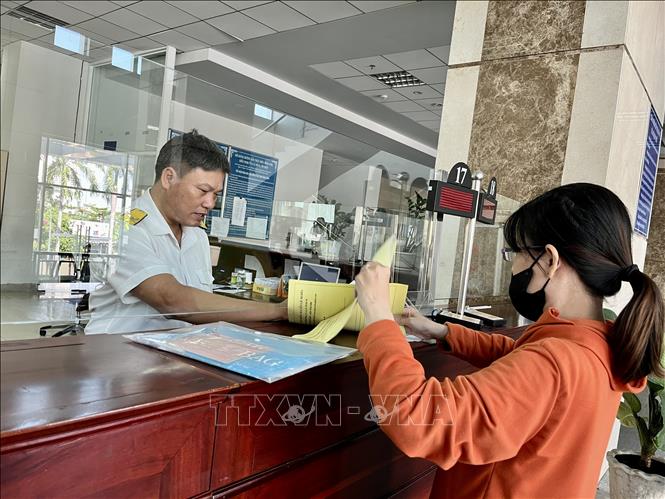
Citizens conduct transactions at the Ho Chi Minh City Tax Department. Photo: Hua Chung/TTXVN
According to the Steering Committee for Anti-Corruption, Waste, and Negative Practices of Ho Chi Minh City, in the first nine months of 2025, the work of preventing and combating waste was strengthened by all levels and sectors, focusing on reviewing and handling public assets such as buildings and land during the restructuring and streamlining of administrative units and the operation of the two-tiered local government; ensuring complete and accurate statistics on the current situation; exploiting assets in accordance with regulations and effectively, avoiding omissions and losses of assets. The city has resolved 266 out of 838 outstanding and problematic projects, land plots, and constructions.
Significant results have been achieved in the practice of saving and combating waste in several areas such as budget, public investment, and public asset management. The Ho Chi Minh City People's Committee reported that in the first six months of 2025, the city inspected and uncovered numerous cases and units violating regulations related to saving and combating waste, with a total economic penalty of nearly 54,000 billion VND, of which 99.3% has been recovered. The city also cut 10% of recurrent expenditures (excluding salaries and salary-related expenses) to create a fund for salary reform, amounting to 1,417 billion VND.
To ensure effective and high-quality implementation of austerity and anti-waste measures, the Ho Chi Minh City People's Committee continues to emphasize the responsibility of leaders in directing and implementing austerity and anti-waste efforts, linking them to the fulfillment of assigned duties and responsibilities; clearly defining the responsibilities of each agency, organization, unit, and each official, civil servant, and employee in practicing austerity and combating waste.
According to Dr. Nguyen Thanh Hai and Dr. Le Minh Hai (Ho Chi Minh City University of Law), in the fight against waste, from the perspective of government operations, the team of officials and civil servants plays a particularly important role, acting as a "checkpoint" to control and prevent waste, but also simultaneously posing a potential risk of causing waste and corruption. Therefore, in addition to professional qualifications, each official and civil servant needs to constantly cultivate ethics, political acumen, and public service culture; they must always uphold the law and place the interests of the people at the center of all public service activities.
To further enhance the role of Party committees and leaders in the fight against waste, Dr. Tran Thi Lua (Deputy Head of the Political Science Department, Ho Chi Minh City Branch of the Vietnam Youth Academy) emphasized: "There is a need for clear and specific regulations on the responsibilities of Party committees and leaders in leading, directing, and organizing the implementation of this work. In particular, a mechanism must be established to evaluate and review responsibility transparently and seriously when serious cases of waste occur. Clearly defining responsibilities will create pressure and motivation for leaders to truly get involved and set a good example in the fight against waste."
To fulfill its core and ongoing task of saving and combating waste, Ho Chi Minh City continues to strengthen state management, tighten discipline and order, thoroughly save and combat waste in all fields, and improve the efficiency of managing and utilizing resources; while simultaneously promoting solutions to enhance the people's right to self-governance and the supervisory and critical role of the Fatherland Front, political and social organizations, mass associations, and the people.
Source: https://baotintuc.vn/thoi-su/chong-lang-phi-co-trong-tam-trong-diem-20251012152332207.htm






















































































Comment (0)