

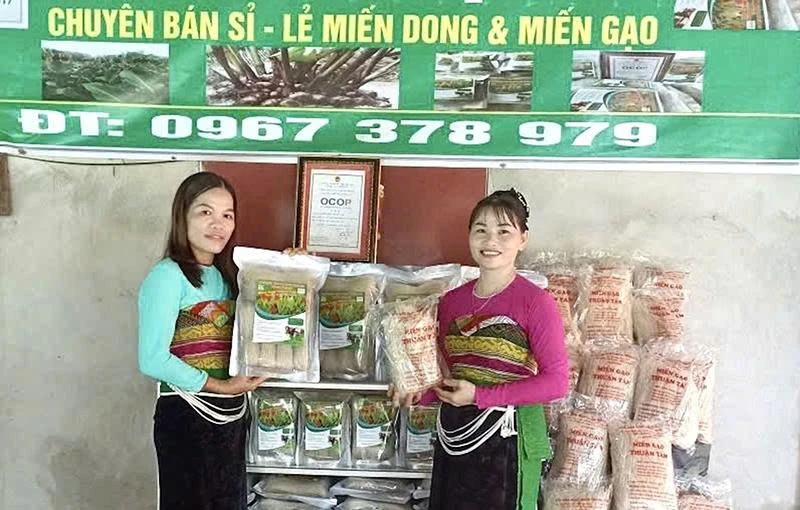
Thuan Tam vermicelli from Cam Thach commune is made from cassava tubers grown by local people.
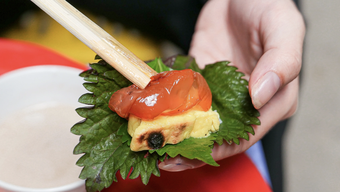
Thanh Hoa is known for its rich and flavorful cuisine , deeply intertwined with the lives of its people for generations. Previously, dishes like shrimp paste, vermicelli, and bamboo shoots were primarily handcrafted, serving daily life or sold in markets. However, with the development of the market and consumer demand, standardizing these traditional dishes into OCOP (One Commune One Product) products has opened up a promising new direction. The most important thing is to preserve the traditional flavors while simultaneously improving processing methods, investing in packaging and labeling, and building a compelling product story. These changes have helped local dishes transcend their culinary value and become competitive products, increasing income for local people, such as Ha Yen shrimp paste, Tu Tru sticky rice cake, Phu Quang sticky rice cake, Phu Xuan rice vermicelli, and Pu Luong sticky rice cooked in bamboo tubes.
Ai Village, now Ai Thon hamlet, Dinh Tan commune, is famous for its delicious and flavorful soy sauce. The soy sauce is produced manually, based on a natural fermentation process, but to create those golden, sweet, and fragrant bowls requires the technique, experience, and unique secrets of each family. Ms. Trinh Thi Thao, a descendant of a family with generations of soy sauce makers, said: "In the past, people only made soy sauce for their family meals; after many years, when they accumulated experience in making delicious and flavorful soy sauce, they started selling it at the market. From there, it became known to many people, and soy sauce making became a traditional occupation providing a stable income for many people in Ai Village."
According to Ms. Thao, the ingredients for making soy sauce are easy to find, such as soybeans, glutinous rice, salt, and clean water. It is usually made in April, May, and June, when there is plenty of sunshine and wind, allowing mold to grow quickly. The jars used to store the soy sauce must be earthenware jars made from heavy clay, fired at high temperatures to withstand the salinity and exposure to sunlight without cracking. The soy sauce is only scooped out in the morning or evening to avoid it turning sour in the sun.
To meet consumers' stringent demands for food hygiene and safety, households have used clean ingredients; utensils such as jars and containers are regularly cleaned, and bottles and packaging are attractively designed with labels indicating the address and origin... Currently, the product has been recognized as achieving OCOP 3-star quality.
In mountainous areas with large forest areas, bamboo shoots are considered a product deeply rooted in the cultural identity and characteristics of ethnic minority communities. While bamboo shoots were once a staple in the meals of local people, they have now become OCOP (One Commune One Product) products, affirming their value with 19 products recognized under the OCOP program, including Nang Non dried bamboo shoots, Muong Ca Da dried bamboo shoots, Pieng Cu sour bamboo shoots, Muong Khang shredded dried bamboo shoots, etc. Many products are sold in supermarkets and food stores in Hanoi , Hai Phong, and are gradually finding a foothold in southern provinces.
Ms. Vi Thi Soan, Director of Bat Mot Agricultural Service Cooperative in Bat Mot commune, said: “The bamboo shoot harvesting season lasts from June to November each year. People in Bat Mot have to wake up early in the morning to go into the forest to select and pick the freshest and most delicious young bamboo shoots, because only those that meet the standards will retain their natural sweetness when dried; then they process, dry, and package them to ensure that the natural flavor is preserved, delicious, and safe for consumers. Besides maintaining traditional production methods, producers in the commune have brought their products to digital platforms, e-commerce sites, and social networks to promote, introduce, and sell them.”
Being recognized as a 3-star OCOP product not only affirms the quality of Bat Mot dried bamboo shoots but also opens up great opportunities for the product to reach a wider market in many provinces and cities.
From simple, rustic dishes, localities are gradually creating OCOP products with high economic and cultural value. This is not just a story of product development, but also a journey of preserving and spreading the essence of traditional cuisine, bringing Thanh Hoa's specialties further into the market.
Text and photos: Le Ngoc
Source: https://baothanhhoa.vn/tu-mon-an-dan-da-nbsp-den-san-pham-ocop-283071.htm











































































Comment (0)