


Linh Son Thanh Lam Pagoda (Go Dau District).
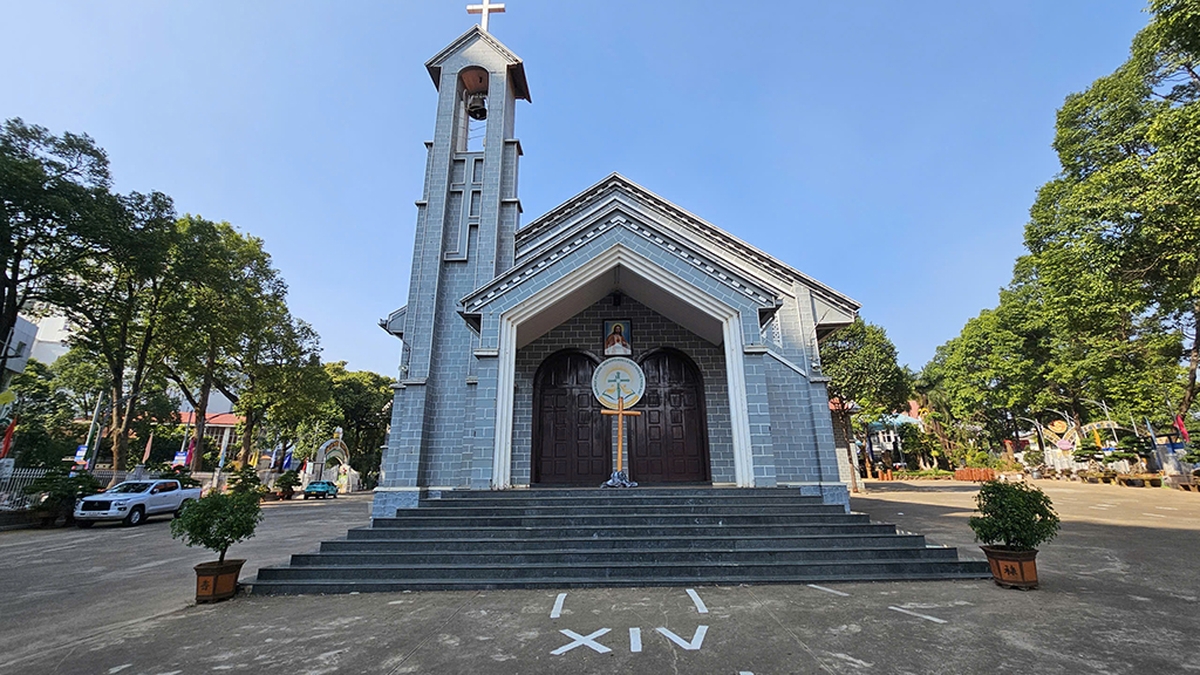
After April 30, 1975, Thanh Phuoc was a commune in Go Dau district, Tay Ninh province (National Political Publishing House, page 1117). Currently, in the inner city area of Go Dau district town, there are two ancient temples, the first letters of each temple's name being the name of the old Thanh Phuoc village. These are Thanh Lam Temple (Linh Son Thanh Lam) and Phuoc An Temple (later renamed Buu Nguyen Temple).
Thanh Lam Pagoda
From Phan Rang - Thap Cham, Mr. Che Van Hung, a Cham man, along with other migrants, participated in the southward expansion to reclaim land in Thanh Phuoc village (now part of Go Dau district). He ascended Mount Ba Den ( Tay Ninh ) to become a monk under the guidance of Patriarch Thanh Tho - Phuoc Chi at Linh Son Tien Thach Pagoda. The Patriarch bestowed upon him the Dharma name Truong Long - the Dharma name Chon Thanh, becoming the 42nd generation of the Zen school, Lam Te branch, Lieu Quan lineage.
After studying Buddhism with the patriarch, in the year of Ất Sửu (1865), Venerable Trừng Long returned to Thanh Phước village to build a thatched hut for meditation and propagation of the Dharma. In the year of Bính Dần (1926), the thatched hut was expanded into a temple by the patriarch and named "Linh Sơn Thanh Lâm," where "Linh Sơn" commemorates the origin from Linh Sơn Tiên Thạch Temple, "Thanh Lâm" means green forest because the patriarch once came here to clear the wild forest to establish the temple, as the old saying goes, "In the mountains lies the troubles / In the forest emerges the monastery," and "Thanh" is the first letter of the village name.
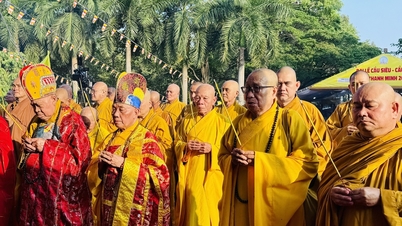
To date, Linh Son Thanh Lam Pagoda has had five abbots, from Venerable Truong Long to Venerable Truong Hao, Nhu Ngoc - Thien Chau, Hong Vinh - Hue Lac, and now the pagoda is presided over by Grand Master Thich Hue Tri. Generations have always followed the ancestral teachings: "The lineage and lineage continue the Zen tradition, with descendants practicing the Buddhist path and benefiting all sentient beings."
Many descendants of the Chế clan have become monks, built and presided over numerous temples in the Tây Ninh region, such as Venerable Huệ Tâm at Long Sơn Temple, Venerable Quảng Ngộ at Hồng Phước Temple, Tây Ninh city; Venerable Thiện Chơn at Quan Âm Temple, Châu Thành district; Venerable Thiện Pháp at Bảo Pháp Temple, Gò Dầu district; and Venerable Thiện Nghĩa at Thiền Lâm Temple (Gò Kén), Hòa Thành town.

Buu Nguyen Pagoda (formerly Phuoc An Pagoda, Go Dau).
As the ancestral temple of the Che clan in Tay Ninh, the temple houses an altar dedicated to 16 ancestral kings of the Che clan of the Champa (Champa) state, an altar for the Che clan (Tay Ninh), and preserves the family genealogy compiled by Venerable Truong Long. The monks of Linh Son Thanh Lam Temple pay great attention to receiving and guiding disciples, compiling Buddhist scriptures, notably the works Cong Van Thien Mon (1869) and Thong Mon Nhat Dung (1889) written in Chinese characters by Venerable Chon Thanh.
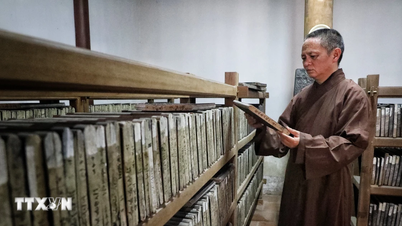
The temple still preserves many historically valuable artifacts associated with it, such as woodblock prints, a system of wooden statues, scriptures, petitions, and tools for making musical instruments. This is a unique aspect of Buddhism in Tay Ninh, because although most Cham people living in Tay Ninh follow Islam, the Che clan has converted to Buddhism and has made significant contributions to spreading the Dharma and saving sentient beings.
Phuoc An Pagoda
Originally, there were two women from Gò Dầu who took refuge with Venerable Như Ngọc - Thiện Châu at Thanh Lâm Pagoda. Both studied together and aspired to establish a pagoda. One, named Lâm Thị Dưa (Mrs. Ba Dưa), donated land for the pagoda, while the other, commonly known as Mrs. Sáu Thiên, undertook the construction. The two women consulted Venerable Như Ngọc about naming the pagoda. He named it “Phước An,” implying that the word “Thanh” from the name Thanh Lâm Pagoda and the word “Phước” from Phước An Pagoda combined represent the name of Thanh Phước village, where the two pagodas are located.
Later, the two women traveled to spread the Dharma. Mrs. Ba Dua returned to An Hoa village (Trang Bang) and established Hoa Lam Pagoda, while Mrs. Sau Thien went to Thi Vai mountain ( Ba Ria - Vung Tau ) to build a hermitage for meditation. Before leaving the pagoda, they invited Nun Dieu Duc, a disciple of Venerable Giac Phu, from Linh Son Tien Thach Pagoda to become the abbess of the pagoda.
The nun and her disciple, Venerable Chánh Quang, came to the temple to study and propagate the Dharma, changing the temple's name from "Phước An" to "Bửu Nguyên". In 1948, Mrs. Lâm Thị Dưa and her husband, Mr. Trần Giang, donated the land to the Bửu Nguyên temple for permanent ownership, with the witness of the village headman, village elders, the village chief of Thanh Phước village, and the local government of Mỹ Ninh district, Tây Ninh province.
To date, Buu Nguyen Pagoda has had four abbots, from Nun Hong Cam - Dieu Duc to Grand Master Chanh Quang, Senior Monk Nhuan Minh - Dinh Phat, and currently, Venerable Thich Hue Dat is the abbot.

Ancestral hall of Linh Son Thanh Lam Pagoda.
In particular, during the time of Master Chánh Quang, he was renowned as a talented monk who had sought Dharma teachings from Abbot Giác Điền at Linh Sơn Tiên Thạch Temple, where he was given the Dharma name Tịnh Viên. After succeeding as abbot of Bửu Nguyên Temple, he vowed to write the Lotus Sutra with his own blood. Master Chánh Quang entered seclusion, cut his own blood, and mixed it with wine to write the Lotus Sutra.
After three years, the Buddhist scriptures written in Chinese characters were completed, comprising seven volumes. These scriptures are now enshrined in the main hall of the temple. Furthermore, when casting the temple's large bronze bell, the bronze remained solid despite repeated attempts. Master Chánh Quang even cut his own blood and dripped it onto the bronze, ensuring its solidification. The bell casting was successfully completed, and it is still preserved at the temple today.
The Buddhist scriptures and the large bronze bell are considered the "sacred treasures" of the temple. Through these events, many devotees admire the virtuous conduct of the master and frequently visit the temple. This is also a unique feature of Buddhism in Tay Ninh in general and Buu Nguyen Temple in particular, reflecting the virtuous conduct and practice of the ancient masters.
Linh Son Thanh Lam Pagoda, Buu Nguyen Pagoda, along with Thanh Phuoc communal house and Thanh An temple of the Chinese community, are cultural and religious institutions of the old Thanh Phuoc village. With Buddhist events passed down to posterity and the contributions of Zen masters, along with the existing relics, they form a piece of the historical and cultural puzzle of Go Dau district in particular and Tay Ninh province in general.
Phi Thanh Phat
Source
![[Photo] Prime Minister Pham Minh Chinh receives the Chinese Ambassador to Vietnam](https://vphoto.vietnam.vn/thumb/1200x675/vietnam/resource/IMAGE/2026/04/05/1775397481797_ndo_br_dsc-5512-jpg.webp)













































Comment (0)