

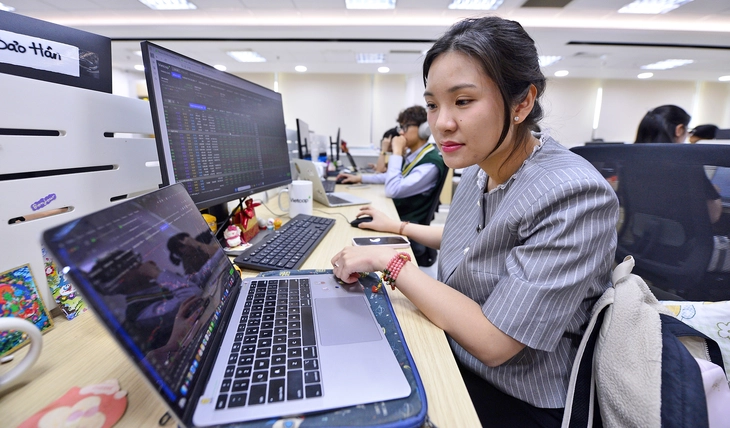
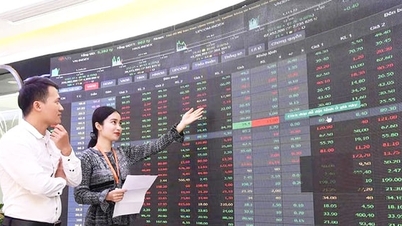
The KRX system not only shortens settlement times and meets the T+2 cycle criteria, but also allows for the implementation of operations such as intraday trading - Photo: QUANG DINH
In the upcoming period of upgrading from frontier to emerging market status, experts believe that the Vietnamese stock market needs substantial improvements, such as improved trading mechanisms and diversification of new products beyond simply offering quality securities, in order to attract and retain large inflows of foreign capital.
The implementation of advanced trading mechanisms such as pending settlement, T0 trading, short selling, or even trading through lunchtime is being discussed as solutions to increase the market's attractiveness. However, according to experts, in addition to the benefits, there are also accompanying risks that need to be considered...
Opportunities to increase liquidity
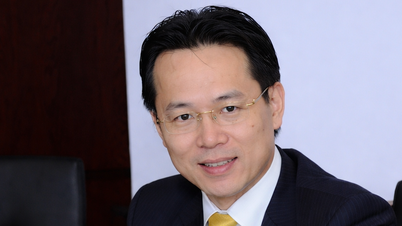
Speaking to Tuoi Tre newspaper , Mr. Thomas Nguyen, Director of Foreign Markets at SSI Securities, said that international investors are always looking for better trading experiences and more new product options in the market. And the application of intraday trading or short selling mechanisms will be important advantages for the Vietnamese market.
With extensive experience in international markets, Mr. Thomas predicts that market trading volume could increase significantly with the implementation of new mechanisms and products.
Vietnam's current average daily trading volume has reached over 50 trillion VND, but Mr. Thomas noted that maintaining and boosting this scale is crucial. High liquidity is always an extremely attractive factor for foreign investors.
Nevertheless, it cannot be denied that the implementation of new mechanisms and products will come with a number of concerns, alongside opportunities. Some investors have expressed concerns about the risk of unlimited losses when short selling. While the maximum loss when buying shares is 100%, when short selling, the share price can rise indefinitely, leading to potentially very large losses.
If an investor short-sells a stock at 10,000 VND but the price later rises to 50,000 VND, they will have to buy it back at five times the original price, resulting in significant losses.
On a market scale, short selling can amplify declines, causing panic and instability during market downturns.
This is why, historically, some countries have had to temporarily ban short selling to stabilize the market. However, Mr. Bui Van Huy, Vice Chairman of the Board of Directors and Director of Investment Research at FIDT Joint Stock Company, believes that the Vietnamese stock market, as well as the global market, is now very different from the past.
Short selling is an important tool for increasing liquidity, creating balance, and is an effective risk hedging strategy, Mr. Huy said. When short selling is involved, stocks that have been inflated to excessively high prices will soon be corrected to a reasonable level due to pressure from the short sellers.
"There are no risks inherent in the product itself, but rather in how people use and manage it," Mr. Huy added.
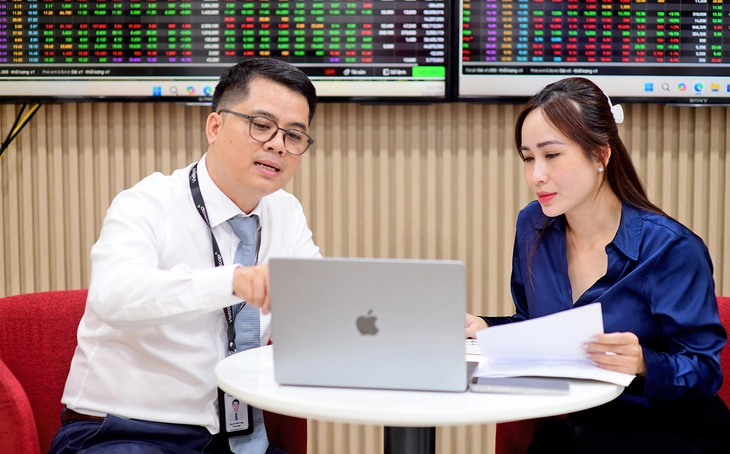
The KRX system lays the groundwork for developing new financial products to meet the demands of the evolving stock market - Photo: QUANG DINH
Waiting for new products and improved trading mechanisms.
According to Mr. Huy, implementing inter-lunch trading, if adopted, would be a change in line with international practice. However, instead of eliminating lunch breaks, trading should be implemented earlier in the day.
"Initially, this trading method could be applied only to certain groups such as professional investors, or to specific groups of stocks that meet criteria for liquidity and fundamentals," Mr. Huy suggested.
Mr. Do Bao Ngoc, Deputy General Director of Kien Thiet Vietnam Securities, also believes that experience from some markets shows that eliminating lunch breaks does not always significantly increase liquidity.
"For Vietnam, eliminating the lunch break could help the market react more quickly to international news and benefit institutional investors, but the impact on overall liquidity may not be significant because individual investors still make up the majority," Mr. Ngoc predicted.
Meanwhile, for securities firms, trading through lunchtime requires increased staffing and continuous operations, adding further cost pressure for smaller companies.
Meanwhile, according to Mr. Ngoc, what the market needs now are new products, with investors shortening the settlement cycle, allowing for more interest in short selling, especially given that the Vietnamese stock market is still quite limited in terms of products.
Besides VN30 index futures contracts and government bonds, there are no other popular derivative products such as contracts on individual stocks or options. "In addition, the settlement cycle is currently still at T+2, while emerging markets usually apply T+0 or T+1, a factor considered key to enhancing flexibility and attractiveness to foreign capital," Mr. Ngoc said.
Some experts also argue that trading through lunchtime is not a decisive factor in market upgrades. In highly volatile market conditions, continuous, uninterrupted trading can even reveal limitations, especially when personnel and systems are still new to operation.
Meanwhile, according to experts, the KRX system has initially operated stably, without any serious errors affecting market operations. This is a prerequisite for the parties to continue researching and deploying new trading products integrated into the KRX system to better meet the market's development needs, including some new trading mechanisms such as intraday trading and selling securities pending settlement.
Considering the risks, what should be prioritized?
The launch of the KRX system is a crucial foundation for trading reform, although it will take more time for the system to stabilize. "A reasonable solution is to pilot trading through lunchtime first with products such as warrants and derivatives to measure the impact, before considering expanding it to underlying stocks," Mr. Ngoc suggested.
According to Mr. Ngoc, allowing the sale of securities pending settlement will have a positive impact on investor sentiment and liquidity. Investors will feel more flexible, able to release capital quickly and reduce the risk of being "stuck with unsold securities." Market liquidity will therefore increase due to a faster capital turnover.
However, this policy also carries risks, as many individual investors may engage in short-term trading, leading to significant intraday volatility. "However, this does not have a significantly negative impact on the overall market. To mitigate risks, it is necessary to ensure timely handling of payment risks when they arise," Mr. Ngoc said.
Mr. Nguyen Son, Chairman of the Board of Directors of the Vietnam Securities Depository and Clearing Corporation (VSDC), stated that the sale of securities awaiting settlement is regulated by Circular 120, and this function has also been integrated into the KRX system. However, the biggest problem currently lies not in the technical infrastructure but in the risk management capabilities of market participants.
Annual statistics show that many cases still require post-transaction error handling, or even payment postponement or cancellation, due to lax control over customer margin requirements. "This reality demonstrates the inherent risk of default when implementing intraday trading and selling securities pending settlement. This risk needs careful consideration when comparing it to the benefits of this product," Mr. Son said.
To minimize risks, according to Mr. Son, market participants need to build serious and rigorous risk management processes and ensure resources to fulfill payment obligations on behalf of customers when necessary. Regulatory authorities should continue to improve risk monitoring and handling mechanisms, and impose sanctions on securities companies that do not comply with risk management regulations for intraday trading.
"Selling securities pending settlement will be considered for implementation first, followed by intraday trading. In addition, trading through lunchtime is also an important part of the plan after the KRX system officially goes live. Implementing trading through lunchtime will give investors more time to trade, reduce pressure from orders at the beginning of the day, and align with international practices," Mr. Son said.
Day trading carries significant risks.
Mr. Nguyen Son, Chairman of the Board of Directors of VSDC, said that practical implementation in other stock markets shows that intraday trading poses high risks for investors and the market if not properly controlled.
Even in the US stock market, despite setting high financial and experience requirements for investors, only over 10% of investors profit from these transactions. The Singapore market is in a similar situation. In Taiwan, although the market was established in 1961, it wasn't until 2014 that the regulatory authority allowed intraday trading.
The practical experience of international markets is a valuable lesson for the Vietnamese market, and the timing of intraday trading will not be an instantaneous decision. It will be carefully considered by the regulatory authorities based on calculations that are most beneficial to the market when conditions permit.
To attract investors, you need to have attractive products.
Mr. Thomas Nguyen, Director of Overseas Markets at SSI Securities Corporation, said that the scale of capital flows from actively managed funds into Vietnam may be smaller than many people predict, because the Vietnamese market is not yet deep enough to attract large-scale actively managed funds to invest aggressively.
Therefore, according to Mr. Thomas Nguyen, the upgrade process and the achievements are only a single step in a long roadmap for the development of the capital market. The biggest risk for the Vietnamese market is being upgraded but not continuing to develop further. The market is not doing enough to become more attractive and accessible to investors.
"Remember, if you have a market and invite people in, but there are no attractive goods or products, no one will be interested and they will leave. Vietnam will have to work even harder after the upgrade," Thomas Nguyen advised.
BINH KHANH - HA QUAN
Source: https://tuoitre.vn/chung-khoan-viet-cho-san-pham-moi-2025090508075442.htm

![[Photo] General Secretary and President To Lam meets with National Assembly delegates from ethnic minorities.](https://vphoto.vietnam.vn/thumb/1200x675/vietnam/resource/IMAGE/2026/04/20/1776696701056_a1-bnd-8331-3342-jpg.webp)
![[Image] National Assembly discusses the implementation of the socio-economic development plan.](https://vphoto.vietnam.vn/thumb/1200x675/vietnam/resource/IMAGE/2026/04/20/1776696707422_ndo_br_img-20260420-185419-jpg.webp)









![[Infographic] Stock market on April 20th: VN-Index rises nearly 20 points, continuing towards the 1,850 point mark.](https://vphoto.vietnam.vn/thumb/402x226/vietnam/resource/IMAGE/2026/04/21/1776708220825_screenshot-2026-04-20-193155-jpg.webp)

























































Comment (0)