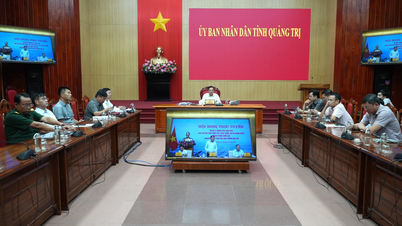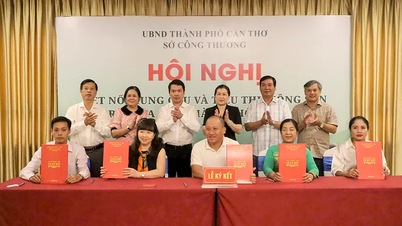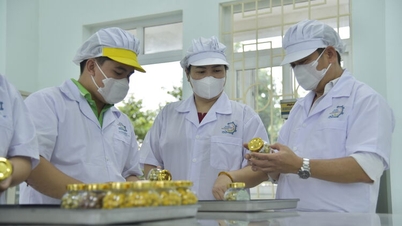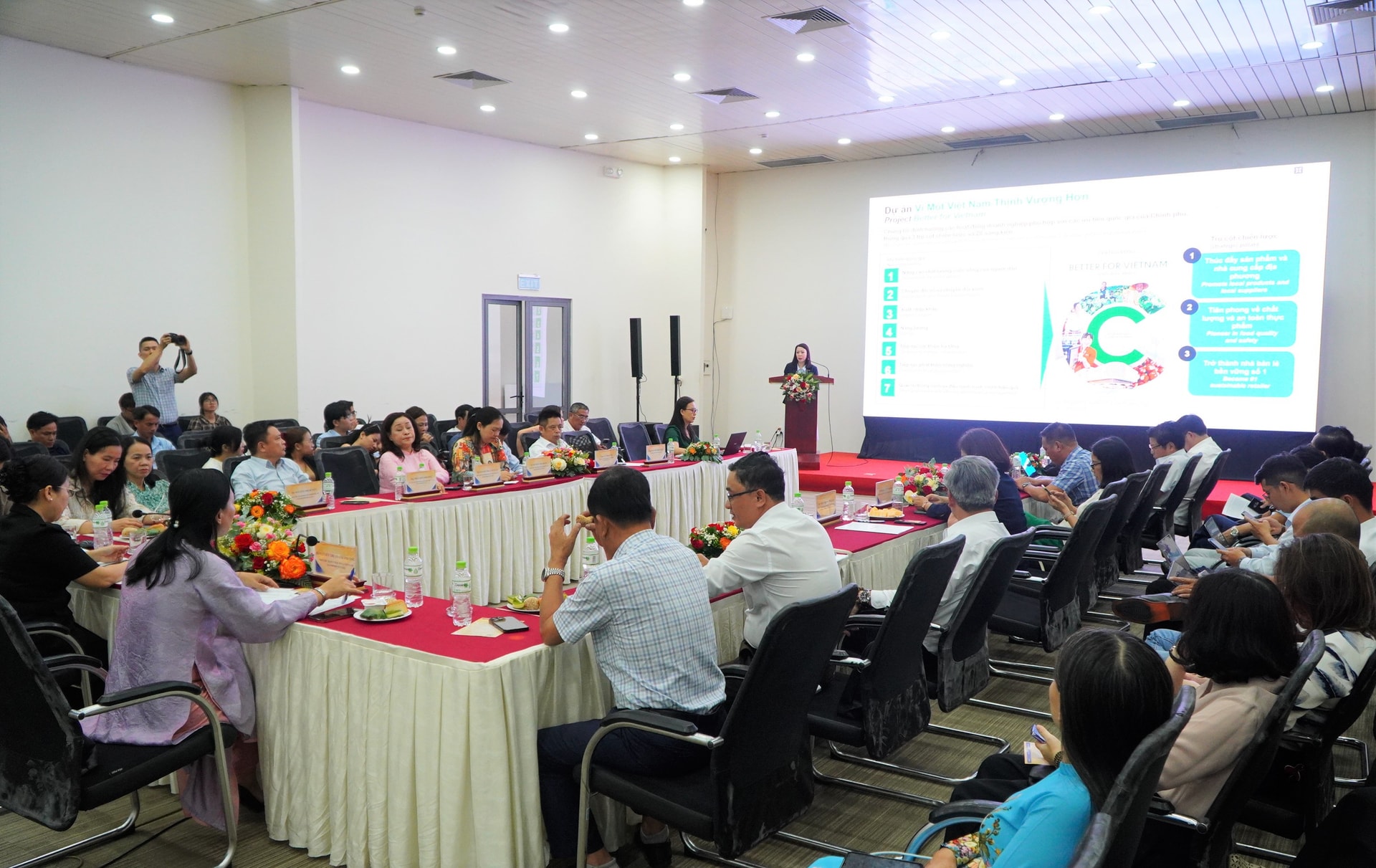
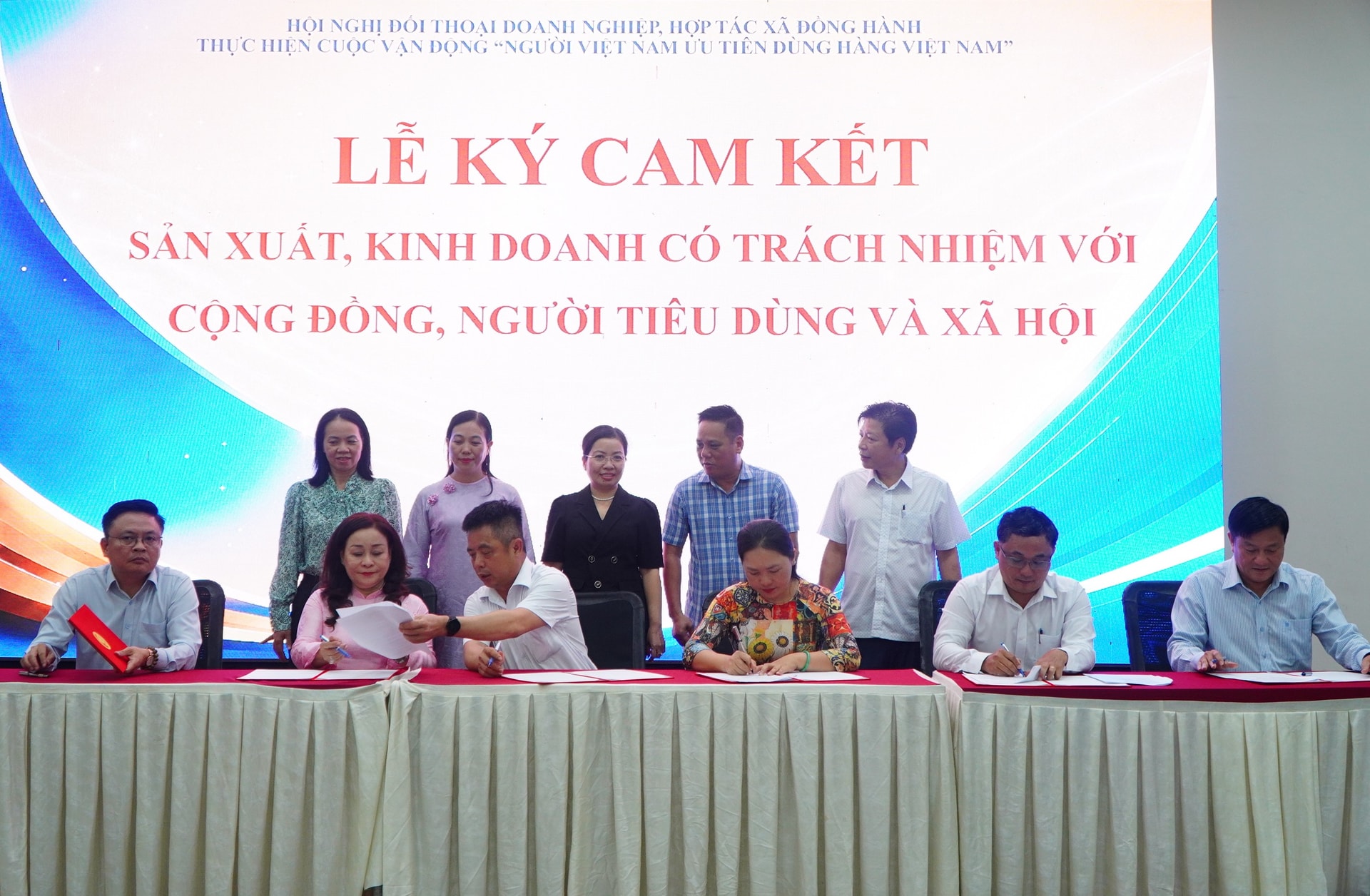
On the afternoon of June 11th, the Vietnam Fatherland Front Committee of Da Nang City, in coordination with the Department of Industry and Trade, organized a dialogue conference with businesses and cooperatives to jointly implement the campaign "Vietnamese people prioritize using Vietnamese goods".
The event is part of the Da Nang Vietnamese Goods Fair 2026 - honoring OCOP products, and also in response to the peak month for implementing this campaign.
Supporting Vietnamese products
According to a report by the Vietnam Fatherland Front Committee of Da Nang city, after more than 15 years of implementation, the "Vietnamese people prioritize using Vietnamese goods" campaign in Da Nang has achieved many positive results.
The proportion of Vietnamese goods in supermarkets, shopping malls, convenience stores, and traditional markets consistently remains high, accounting for 70-90%. Many innovative models have proven effective, such as: Vietnamese goods fairs, Vietnamese product sales points, OCOP spaces, and online Vietnamese product booths.

Over the past period, the city has organized 14 trade fairs; providing nearly 648 million VND in support (equivalent to 50% of booth costs) to 166 participating businesses and cooperatives.
Activities such as listing products on e-commerce platforms, registering trademarks, ensuring traceability, and promoting international trade have been intensified. Simultaneously, the city has provided preferential credit support to 13 businesses with 20 investment projects, with outstanding loans in priority sectors exceeding 150 billion VND.
The city has issued a policy to support the development of OCOP (One Commune One Product) for the period 2026-2030. Key policies include: supporting 50% of the investment cost for machinery and equipment; providing up to 100 million VND per entity for international trade promotion activities; and supporting up to 70% of the cost of establishing production-consumption linkages…
However, according to Nguyen Thi Thanh Phuong, Vice Chairwoman of the Vietnam Fatherland Front Committee of Ho Chi Minh City, Vietnamese goods are also facing many major challenges from the competitive pressure of imported goods, the explosion of e-commerce, and the increasingly high demands of consumers for green standards and traceability.




As evidence of this, Ms. Tran Thi Phuong Lan, Director of External Relations for the Central Region of Central Retail Vietnam, stated that despite the company's efforts to connect supply and demand at GO! supermarkets, the number of OCOP products from Da Nang entering the system remains very modest.
For example, at GO! Da Nang, there are currently only 21 products on the shelves, while the entire city has more than 500 certified products.
What can be done to help Vietnamese products reach a wider market?
At the dialogue conference, delegates emphasized that businesses and cooperatives need to proactively improve product quality and build strong brands in order to sustainably develop the Vietnamese goods market.
Regarding distribution barriers, Director of the Department of Industry and Trade Le Thi Kim Phuong stated that bringing Vietnamese goods into supermarkets still faces many difficulties, partly because businesses have not yet met stringent standards.
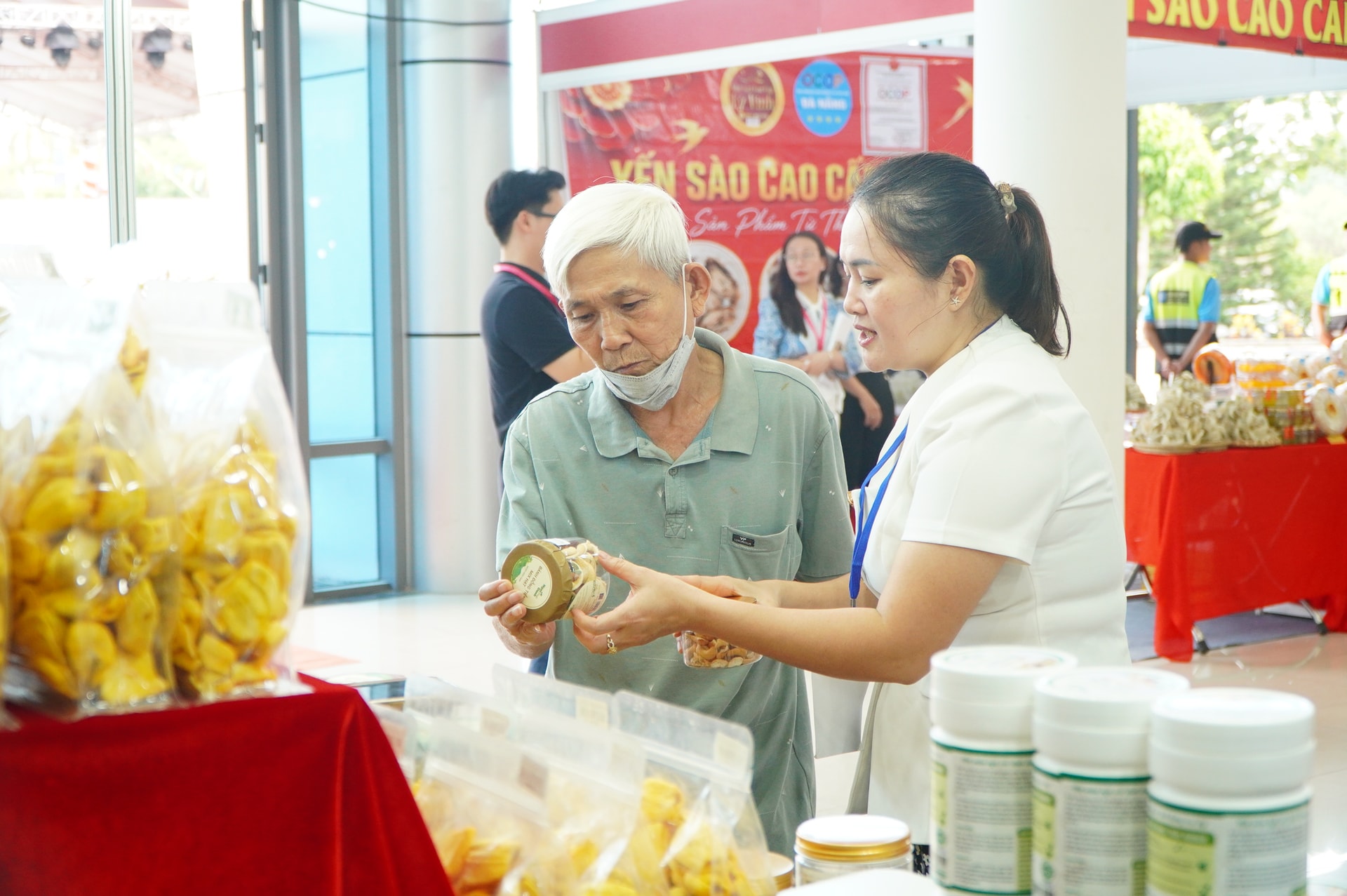
In particular, the designs and packaging of products from Da Nang are still quite monotonous and have not kept up with market trends when compared to imported goods and those from other localities.
Ms. Phuong suggested that supermarkets should flexibly adjust their standards to pave the way for domestic goods; and at the same time, encourage businesses to focus on innovative designs to make products more visually appealing and attractive.
According to Dr. Nguyen Thi My Huong, a member of the "Made in Da Nang" project advisory team, the current bottleneck is not a lack of products, but a lack of "passports of trust".
To enter and expand into modern distribution chains, products must be standardized to allow buyers to quickly verify information and consumers to quickly trust them.
According to Ms. Huong, the "Made in Da Nang" project was created to support businesses in raising their standards and fully meeting the stringent requirements of distributors and tourists.



Ms. Nguyen Thi Hien, Director of Lac Son Agricultural Cooperative, shared that the biggest obstacle for small cooperatives is the lack of highly skilled personnel. Therefore, businesses urgently need guidance and advice from the government on standard procedures right from the start - for example, intellectual property procedures.
"The city also needs a central point of contact to guide businesses to do things right from the start, avoiding mistakes that waste time and resources," Ms. Hien said.
According to Nguyen Thi Thanh Phuong, Vice Chairwoman of the Vietnam Fatherland Front Committee of Ho Chi Minh City, businesses and cooperatives need to play a pioneering role in technological innovation, improving product quality, and building Vietnamese brands.
Each unit must act as an "ambassador" spreading confidence in Vietnamese products to consumers, contributing to deepening and achieving tangible results in the "Vietnamese people prioritize using Vietnamese goods" campaign.
Source: https://baodanang.vn/chung-tay-dua-hang-viet-vuon-xa-3340217.html

![[Photo] Thousands of people participate in a run to show their support for the campaign "Sharing a common determination to build drug-free communes, wards, and special zones".](https://vphoto.vietnam.vn/thumb/1200x675/vietnam/resource/IMAGE/2026/06/27/1782554475933_0673e2a3df7b5e25076a-8283-jpg.webp)





























![[Photo] A phone-free summer afternoon at the village library](https://vphoto.vietnam.vn/thumb/1200x675/vietnam/resource/IMAGE/2026/06/27/1782551770949_anh-1-jpg.webp)