

Land-based waste challenges
According to statistics, the province generates more than 1,800 tons of household waste daily, including nearly 226 tons of plastic waste. In recent times, the province has paid special attention to protecting the marine environment, issuing numerous plans and solutions and implementing specific actions to collect and process waste in accordance with local characteristics and national goals. The province has effectively implemented many activities such as: the "Anti-Plastic Waste" movement in coastal communes and wards; organizing regular waste collection campaigns at beaches, fishing ports, and residential areas; cooperating with international organizations to monitor plastic waste in Nha Trang Bay... In addition, many tourism businesses in the province have pioneered the elimination of plastic bottles, using glass bottles instead; replacing plastic straws with bamboo, rice, and grass straws; Recycling plastic waste into spaces and decorative items for tourism contributes to raising environmental awareness among tourists, such as: Ana Mandara Cam Ranh, Sheraton Nha Trang Hotel & Spa; Champa Island Resort, Long Phu Tourism Joint Stock Company...
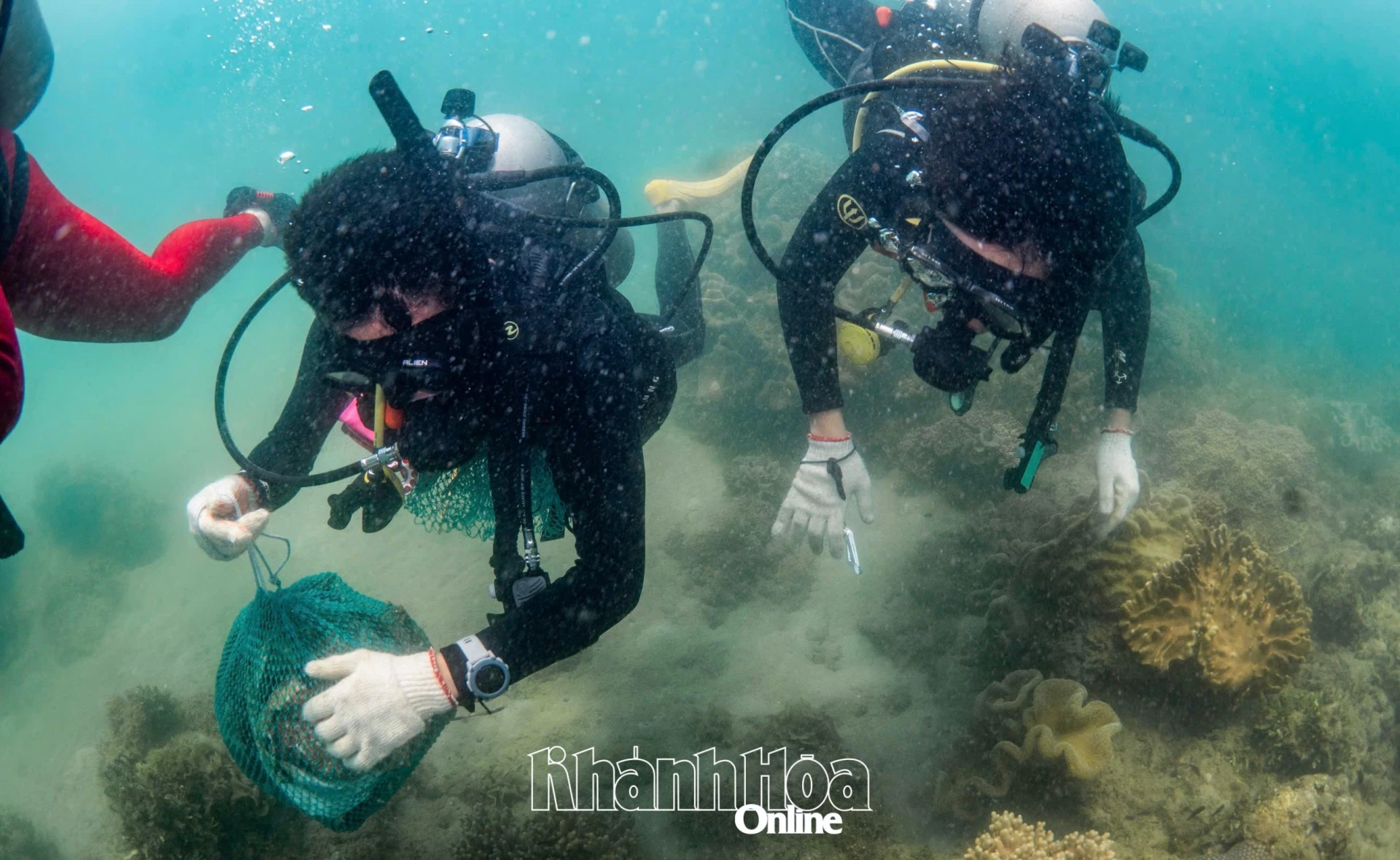 |
| Diving activity to collect trash in Nha Trang Bay. Photo: Provided by Viet Divers Diving Club in Ho Chi Minh City. |
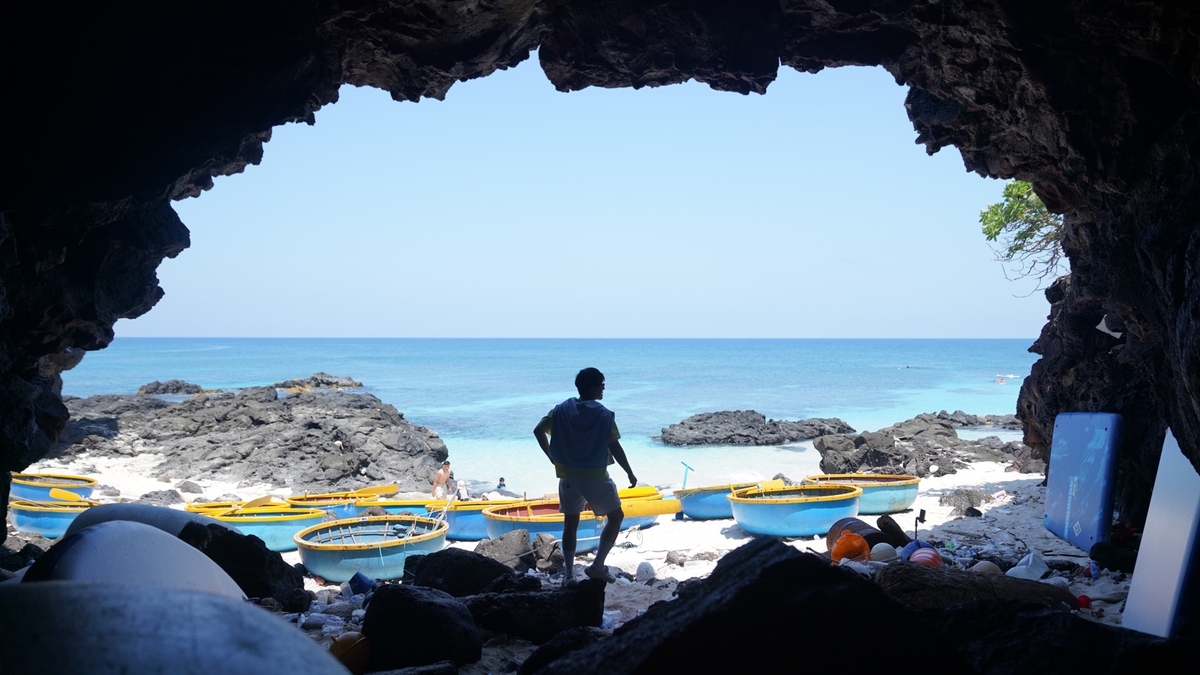
However, marine waste remains abundant due to the continued littering habits of some residents and tourists; the lack of a synchronized waste collection, sorting, and recycling system, especially on islands like Binh Ba and Bich Dam; limited funding for monitoring, patrolling, and waste cleanup; and difficulties in handling damaged fishing gear and managing waste from fish farms. With over 200 islands of varying sizes, waste collection, transportation, and treatment in island communes face numerous challenges and high costs, often leading to inadequate on-site disposal (burning, landfilling).
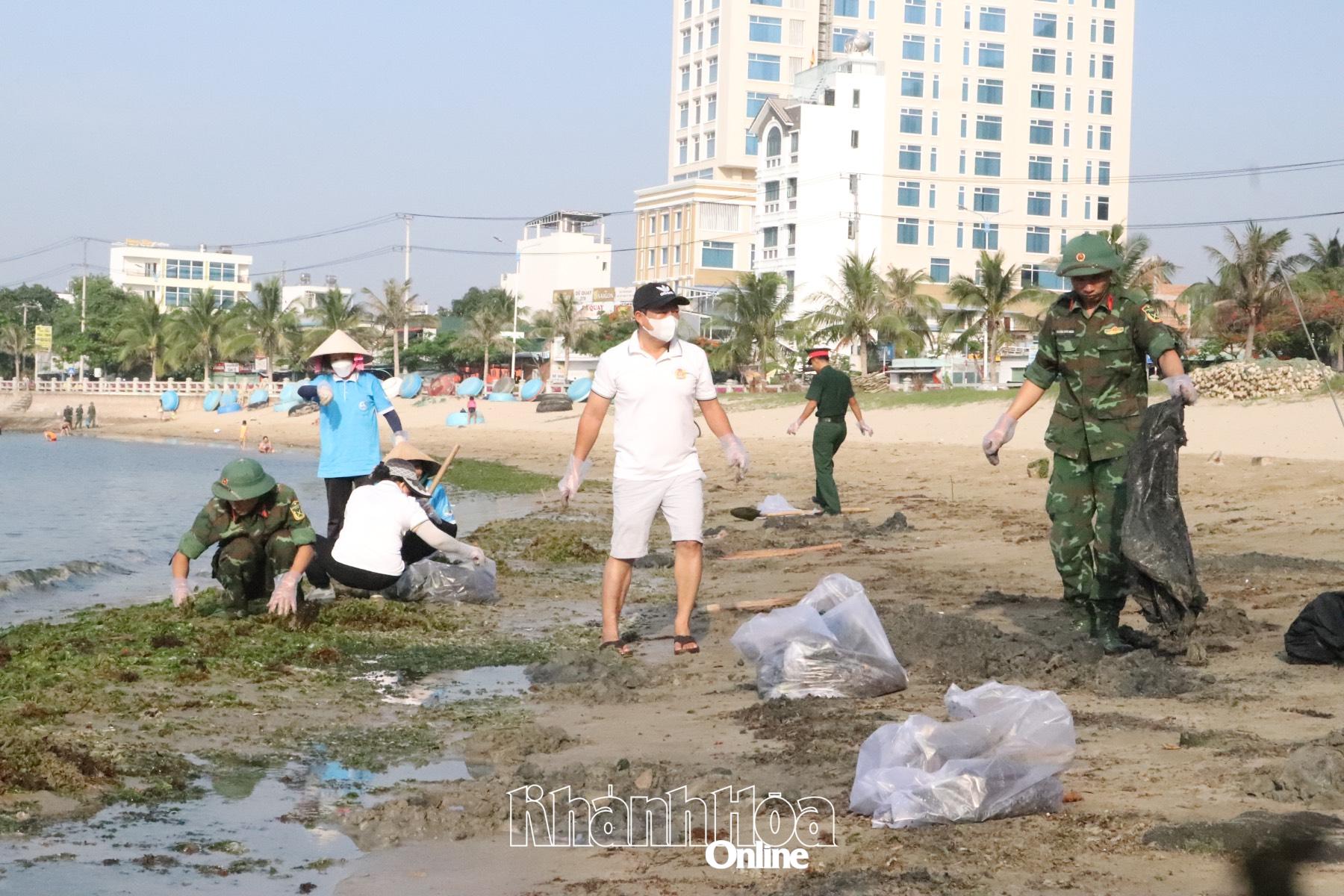 |
| Waste collection activities along the Nha Trang coastline. |
According to Mr. Nguyen Trong Chanh, Deputy Director of the Department of Agriculture and Environment, plastic pollution at fishing ports and coastal areas is directly affecting the province's tourism image and environmental quality. Therefore, continuing to implement the national and provincial plans on managing marine plastic waste is not only the responsibility of the management agencies, but also requires a strong shift in the awareness of the fishing community and businesses.
A comprehensive solution and decisive action are needed.
At a recent conference on marine and island issues, Dr. Nguyen Thi Xuan Thang, a technical expert from the Climate Change, Energy, and Environment (CCE) Unit of the United Nations Development Programme (UNDP) Vietnam, stated that Khanh Hoa province currently has four main sources of pollution: coastal tourism and services; fisheries and aquaculture, and fishing ports; industry and seaports; and domestic waste from the mainland. Of these, domestic waste from the mainland is a particularly challenging issue, as while urban waste collection reaches 97%, processing capacity remains weak. Waste from residential areas along rivers and coastlines is a direct and persistent source of pollution. Therefore, the province needs to promote waste sorting at source, upgrade processing infrastructure, and implement river cleaning projects. In tourism activities, the province should apply the Green Tourism Criteria, requiring tourists and hotels to replace environmentally friendly items; and promote awareness among tourists to encourage them to take action. In the fishing and aquaculture sectors, it is necessary to launch the "Fishing boats bring trash ashore" campaign, strictly manage waste from cages and fishing gear; and at the same time strengthen the collection, treatment, and strict monitoring of waste and wastewater from industrial activities and seaports.
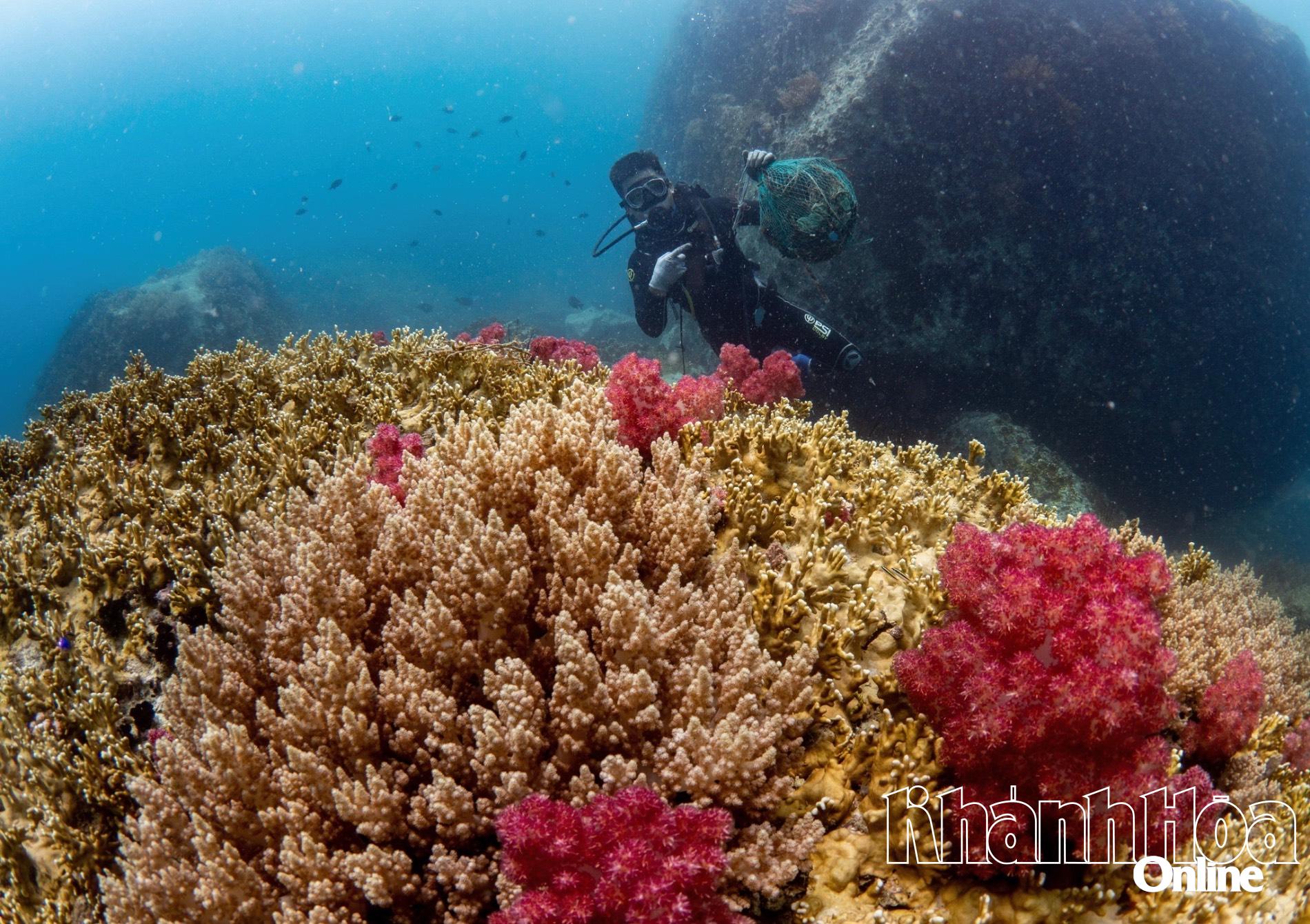 |
| Diving activity to collect trash in Nha Trang Bay. Photo: Provided by Viet Divers Diving Club in Ho Chi Minh City. |
According to many experts, Khanh Hoa province needs to adopt a circular economy model; state management agencies and the people must change their mindset about waste, considering plastic waste as input materials for other industries (producing plastic pellets, construction materials, garments, etc.). The province needs to attract and incentivize investment in recycling and reuse projects; tighten management and treatment of waste in industrial zones, fishing ports, seaports, and coastal residential areas; and strengthen regional and international cooperation to access financial resources, advanced environmental technology, and effective management experience.
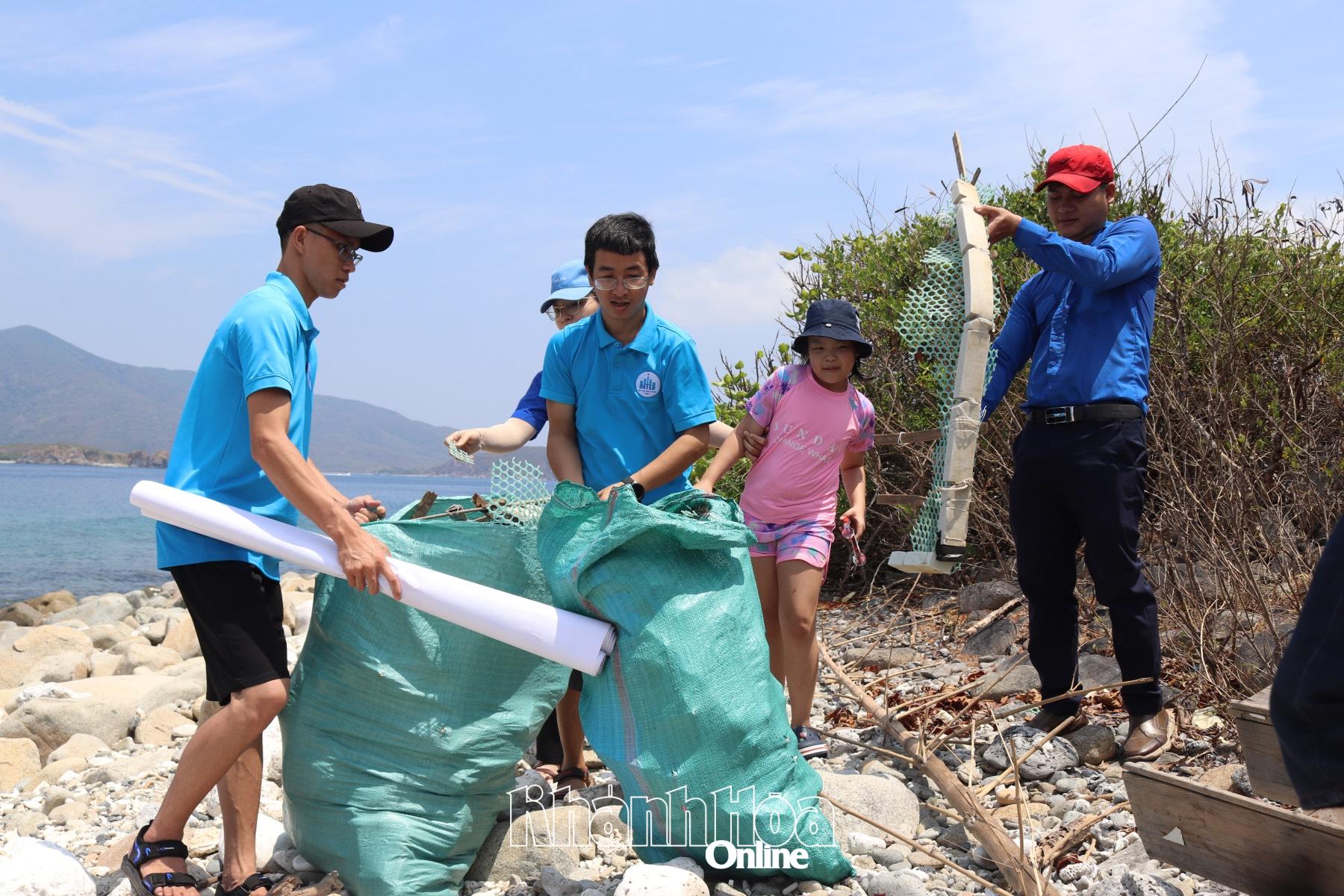 |
| Waste collection activities along the Nha Trang coastline. |
Experts argue that all waste treatment and recycling technologies will be ineffective if waste is not sorted at the source, because plastic waste mixed with organic waste cannot be recycled efficiently, and processing costs will increase. Therefore, it is necessary to strengthen guidance on waste sorting skills for households and businesses; standardize collection methods and schedules; invest in modern treatment and recycling technologies instead of landfilling; and apply GIS (digital mapping) and drones to monitor and identify pollution "hot spots" and sources of illegal waste discharge. Along with this, it is necessary to mobilize resources from businesses, encourage investment in waste collection and treatment, and promote the monitoring and awareness-raising role of organizations and communities.
THAI THINH
Source: https://baokhanhhoa.vn/xa-hoi/202512/chungtay-giu-bien-sach-0017e47/










































































Comment (0)