


By 2025, the total value of domestic consumption and exports of cassava in Vietnam is estimated to reach approximately 1.3 - 1.5 billion USD.
Today (January 28th), in Hanoi, the Vietnam Association of Agricultural Economics and Rural Development, in collaboration with the Vietnam Cassava Association and Forest Trends, organized a meeting on the topic "Vietnam's Cassava Supply Chain: Current Situation and Challenges".
In recent years, while exports of many key agricultural products have faced difficulties, the export value of cassava and cassava products has maintained relatively stable growth. By 2025, the total value of domestic consumption and exports of the cassava industry is estimated to reach approximately US$1.3 - US$1.5 billion, making Vietnam the world's third largest cassava exporter and the second largest cassava consumer globally.
According to Mr. Nghiem Minh Tien, Chairman of the Vietnam Cassava Association, the cassava production, processing, and trade sector makes a significant contribution to Vietnam's agricultural trade. In recent years, the cassava industry has gradually invested in environmentally friendly practices and expanded the applications of its products.
Vietnam is currently both a major producer of raw cassava and a large-scale processing and export center for cassava in the region. The total annual supply of raw cassava reaches over 18 million tons of fresh cassava; of which approximately 58% is produced domestically and 42% is imported, mainly from Laos and Cambodia. The domestic cassava cultivation area is over 500,000 hectares, supplying around 10 million tons of fresh cassava annually; the amount of imported cassava is equivalent to approximately 8 million tons.
Delegates argued that, given the strong increase in cassava exports in terms of volume but slow growth in export value, the fundamental and long-term solution is to increase added value through promoting deep processing. Accordingly, it is necessary to gradually reduce the proportion of exports of dried cassava chips and semi-processed cassava starch, while encouraging investment in the development of high-tech products such as modified starch, products serving the food, pharmaceutical, industrial, and bioenergy sectors. This is considered a crucial direction to improve efficiency, sustainability, and reduce dependence on fluctuations in the raw material market.
Sharing further insights on the solution, Mr. Nguyen Vinh Quang, representative of the Forest Trends organization, suggested that to ensure traceability, the cassava industry needs to restructure its current supply chain, strengthen control over production, especially land use management; gradually shift informal activities to formal ones, transparentize the entire chain, and ensure sufficient evidence for traceability.
Restructuring the supply chain towards traceability requires the industry to receive adequate priority from the Government and relevant agencies. “Compared to other commodities such as coffee and timber, the cassava industry has not yet received adequate attention from the Government. With 1.2 million farming households, including many ethnic minority households in disadvantaged areas, currently involved in production, the cassava industry deserves high attention from the Government,” stated Dr. To Xuan Phuc of the Forest Trends organization.
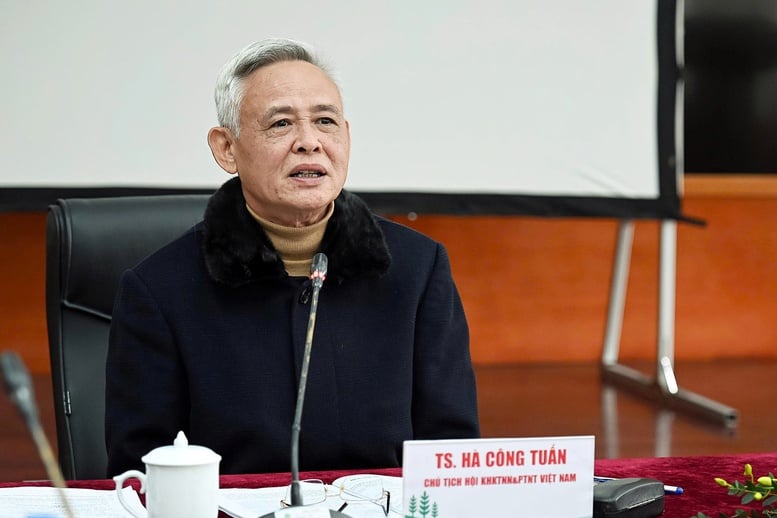
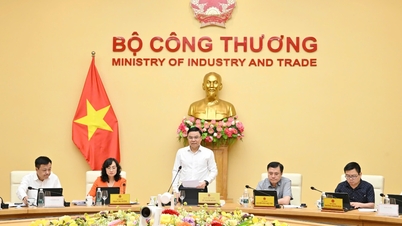
Dr. Ha Cong Tuan, Chairman of the Vietnam Association of Agricultural Economics and Rural Development: The biggest challenge facing the cassava industry today is ensuring traceability - Photo: VGP/Do Huong
From the perspective of the business community, Mr. Nghiem Minh Tien affirmed that cassava industry businesses are committed to building a transparent supply chain that meets the requirements for forest protection, environmental protection, and traceability; and at the same time, he requested that management agencies soon provide specific guidance and appropriate support mechanisms to help businesses effectively implement the new requirements.
Many important policies have been issued to guide the sustainable development of the cassava industry; including the "Sustainable Development Plan for the Cassava Industry to 2030, with a Vision to 2050". However, practical implementation still faces many limitations due to a lack of specific guidance, monitoring tools, and insufficient incentives to encourage stakeholders in the supply chain to comply with requirements for traceability, transparency, and forest protection.
Meanwhile, in recent years, although the area planted with cassava nationwide has generally decreased slightly, expansion of cultivation continues in some localities, raising concerns about the impact on forest resources. Notably, international markets are increasingly demanding legality, traceability, and non-deforestation products; a prime example being the European Union's Deforestation Regulation (EUDR) applied to sectors such as coffee, rubber, and timber. Accordingly, Vietnamese cassava products are predicted to face many challenges in the coming time.
Dr. Ha Cong Tuan, Chairman of the Association of Agricultural Economics and Rural Development Sciences, stated: "The biggest challenge facing the cassava industry today in ensuring traceability in Vietnam lies in the raw materials, both from domestic farmers and from imports."
Currently, domestic supply mainly comes from small-scale farming by individual households, consumed through traders, and lacks information about land use practices and transactions between households and traders, making traceability difficult; in many cases, impossible. Similar difficulties exist in the import supply chain: importing businesses are unaware of or lack information about the growing regions, and there is a lack of evidence of transactions.
The Vietnamese government has issued many important policies aimed at guiding the sustainable development of the cassava industry, most notably the "Sustainable Development Plan for the Cassava Industry to 2030, with a Vision to 2050," along with mechanisms to encourage production linkages and appropriate development.
However, the implementation of these policies in practice still faces many limitations, lacking specific guidance, monitoring tools, and sufficient incentives to encourage stakeholders in the supply chain to comply with requirements for traceability, transparency, and forest protection.
The government has also prioritized product traceability, emphasizing the goal that by 2026, all Vietnamese agricultural and forestry products exported abroad will be traceable. These are key factors in minimizing risks, preventing deforestation, maintaining export markets, and ensuring sustainable livelihoods for millions of cassava farmers in the future.
Do Huong
Source: https://baochinhphu.vn/chuoi-cung-ung-san-con-nhieu-thach-thuc-102260128143607621.htm





















































































Comment (0)