

Maintaining clean and beautiful streets and alleys has become a regular practice in the residential areas of Binh Khe ward, demonstrating the strong determination of the Party committee, government, mass organizations, and the majority of local people in improving the quality of life. Most notably, the renovation and upgrading of five model streets in five neighborhoods within the ward has recently been completed. Significantly, while adhering to the criteria of being bright, green, clean, and beautiful, each neighborhood proactively implemented the plan flexibly, fostering democratic participation to develop solutions tailored to local realities.

In Bac Son neighborhood, for example, in addition to expanding and resurfacing the entire road leading to the concentrated agricultural production area, the entire neighborhood unanimously chose two types of trees, betel nut trees and Yen Tu yellow apricot blossoms, to plant along both sides of this road. All the funding for this project was provided through social contributions from the people and local organizations and businesses.
Ms. Nguyen Thi Tuyet, Party Secretary and Head of Bac Son neighborhood, Binh Khe ward, said: "We have planted 700 betel nut and yellow apricot trees along the main road, and the Women's Association of the neighborhood is currently in charge of daily care and maintenance. These are native trees that will create an impressive highlight for the appearance of the residential area when they mature. The spirit of people's self-governance continues to be promoted in environmental sanitation movements, tree care, and good self-management to keep the streets and alleys clean, safe, and convenient for travel. People work together to take care of the trees, no longer littering indiscriminately; the neighborly bonds are also strengthened after these labor sessions."

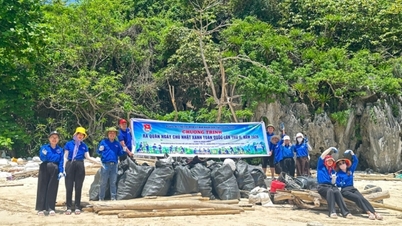
Further investigation in Dong Ha village (Dam Ha commune) revealed that for many years, the message about preserving the environment and shared landscape has truly permeated the lives of the people thanks to the harmonious coordination between the neighborhood Party branch and various associations and organizations. Twice a month, on Sunday mornings, the people enthusiastically participate in general environmental cleanup campaigns, each contributing to a cleaner and more beautiful rural landscape. Self-managed roads, overseen by the Women's Association, the Veterans' Association, and the Youth Union, are regularly and carefully maintained. Public trash cans have been installed to reduce littering.
Whether in urban or rural areas, Quang Ninh has achieved significant progress in protecting and improving environmental quality by mobilizing the participation of a large number of people. A prime example is the "Green Sunday" movement, initiated by the Women's Union at all levels, which has been consistently and continuously implemented throughout residential areas across the province, with the participation of a wide range of people. Other examples include the "civilized streets" managed by neighborhood groups and communities regarding environmental sanitation; and the streets adorned with Party and national flags, overseen by war veterans. These movements have led to the development of civilized and responsible behavior among individuals within the community. Many residential areas have united, dedicating their weekends to cleaning, caring for trees, clearing bushes, painting murals, and transforming vacant land into flower gardens.
Maintaining a "bright, green, clean, and beautiful" environment is not limited to the private grounds of each individual's home, but also extends to keeping village roads, alleys, and places of study and work clean and beautiful. To create and preserve a healthy and beautiful living space, everyone must take responsibility and work together.
Quang Ninh has set high targets for environmental protection by 2030. These include: over 99% of the urban population having access to clean water through centralized water supply systems; over 85% of the rural population using clean water that meets standards; over 99% of solid waste collection and treatment in urban areas, islands, and tourist areas, and 90% in rural areas; 100% of wastewater collection and treatment in new urban areas; and 100% of operating industrial parks and clusters having centralized wastewater treatment systems that meet environmental discharge standards. |
Source: https://baoquangninh.vn/hieu-qua-tu-mo-hinh-tu-quan-3401996.html




















































































Comment (0)