Digitizing the origin of seafood
In the context of Vietnam's fisheries sector striving for modernity, transparency, and sustainability, the application of digital technology to the management of fishing and traceability of seafood is becoming an inevitable trend. In Ha Tinh, a province with over 137 km of coastline and thousands of fishing vessels operating regularly at sea, the digital transformation in the fisheries sector is creating significant changes, contributing to improved management efficiency, increased product transparency, and meeting the requirements of international integration.

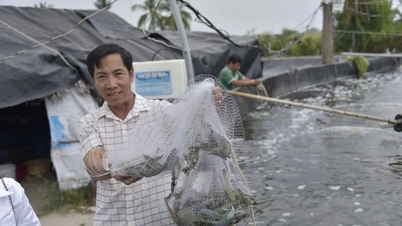
Authorities are promoting and guiding the electronic declaration and traceability of seafood products. Photo: Thanh Nga.
In previous years, the management of fishing vessels, recording catch yields, and verifying the origin of seafood were primarily done manually. Information was recorded in notebooks and on paper, making it difficult to check, compare, and retrieve information when needed. However, along with the national digital transformation process, the fisheries sector in Ha Tinh has gradually applied modern technological platforms to digitize the entire fishing chain.
One of the prominent solutions being implemented is the electronic seafood traceability system (eCDT). Through this system, all departure and arrival activities, catch volumes, and vessel journey information are updated online.
Mr. Than Quoc Te, Deputy Director of the Ha Tinh Fisheries Port Management Board, shared that after many years of propaganda, training, and practice, most fishermen inside and outside the province with fleets entering and leaving the four fishing ports of Cua Sot, Cua Nhuong, Cua Khau, and Xuan Hoi are now familiar with electronic declaration instead of traditional paper-based procedures.
At the end of each fishing trip, data on catch volume, fishing location, time spent at sea, and other relevant information are updated to the system. This helps management agencies easily monitor the fishing process and creates a comprehensive database for tracing the origin of products when they are brought to market.

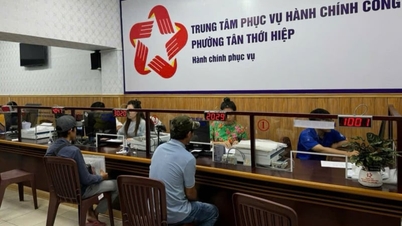
Digital transformation contributes to reducing errors in data entry. Photo: Thanh Nga.



“The application of eCDT not only saves time in processing documents but also minimizes errors in data entry. In particular, data is stored centrally and synchronized between functional agencies, creating a comprehensive digitized fisheries management ecosystem,” Mr. Te said.
Fisherman Hoang Van Vien, owner of fishing vessel TH-92148-TS, said that his vessel specializes in fishing in the waters from Thanh Hoa to Ha Tinh and regularly docks at Cua Sot port to complete procedures. Each time the vessel docks, fishermen are guided to declare information on the eCDT system. The process is quite convenient, and the information is fully updated.
Alongside the eCDT system, Ha Tinh province is also promoting the use of vessel monitoring systems (VMS) for offshore fishing vessels. These devices act as a "black box" at sea, continuously transmitting data on the vessel's location, speed, and direction of travel to a monitoring center. Thanks to VMS technology, authorities can monitor fishing vessel activity in real time, detecting early cases of signal loss, exceeding permitted boundaries, or signs of violating fishing regulations. Simultaneously, the voyage data becomes crucial evidence to prove the legal origin of seafood products.
For fishermen, installing and maintaining a VMS (Vehicle Monitoring System) is not only a mandatory requirement but also offers many practical benefits. In the event of an incident at sea, authorities can quickly locate the vessel to provide rescue assistance. Furthermore, voyage data helps ship owners manage their production operations more effectively.

Currently, all 3,890 fishing vessels in Ha Tinh province have been registered and fully updated on the National Fisheries Database. Photo: Thanh Nga.
The combination of eCDT and VMS systems is forming a closed data chain, enabling traceability of seafood from its harvesting at sea to its arrival at port and subsequent processing and consumption. This is considered a crucial foundation for building a transparent seafood brand and enhancing competitiveness in both domestic and international markets.
Participate in combating IUU fishing.
This period marks the crucial stage in Vietnam's efforts to lift the European Commission's (EC) "yellow card" regarding illegal, unreported, and unregulated (IUU) fishing. This is not only a matter of protecting marine resources but also directly impacts the country's ability to export seafood to major global markets.

The fisheries sector in Ha Tinh continues to strive towards building a synchronized digital fisheries ecosystem. Photo: Thanh Nga.



Mr. Nguyen Trong Nhat, Deputy Head of the Ha Tinh Fisheries Department, acknowledged that the application of digital transformation to the monitoring of fishing vessels and the traceability of seafood has contributed to the nationwide effort to combat IUU (Illegal, Unreported, and Unregulated) fishing. Currently, all 3,890 fishing vessels in the province have been registered and fully updated on the National Fisheries Database. 100% of offshore fishing vessels have installed vessel tracking devices; there are no fishing vessels or fishermen violating regulations on illegal fishing in foreign waters.
“In the coming time, Ha Tinh's fisheries sector will continue to aim towards building a synchronized digital fisheries ecosystem, connecting data from fishing vessels, fishing ports, processing enterprises, and management agencies. Along with improving technological infrastructure, the locality will promote the digitization of fishing vessel records, manage catch volumes in real time, and enhance traceability throughout the entire value chain,” Mr. Nhat added.
Source: https://nongnghiepmoitruong.vn/chuyen-doi-so-tao-dot-pha-trong-quan-ly-nghe-ca-d816060.html

![[Photo] Strengthening character and expertise: Intense training for artillery soldiers.](https://vphoto.vietnam.vn/thumb/1200x675/vietnam/resource/IMAGE/2026/06/30/1782815602541_lu-368-1875-4571-jpg.webp)