|
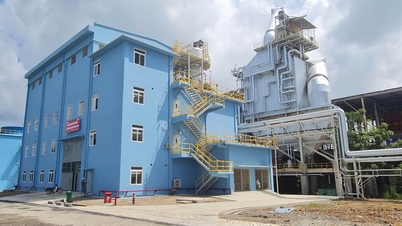
| The waste heat recovery power plant has commenced operation in Dong Lam. |
Energy optimization
From September 2025, Dong Lam Cement Joint Stock Company put into operation a power plant utilizing waste heat from the clinker production line with a capacity of 5,000 tons/day. This project has a designed capacity of 8.7MW and an average operating time of 7,800 hours/year. This is considered one of the exemplary projects demonstrating efficient energy use in Vietnam's cement industry.
The system is designed according to the Rankine steam cycle, implemented by the contractor SCKE - a joint venture between Kawasaki ( Japan ) and Conch Corporation (China). The application of Japanese quality management standards helps ensure optimal operational efficiency and reliability for the entire system.
This project helps Dong Lam save the equivalent of 30% of its annual electricity consumption, significantly reducing production costs amidst rising electricity prices and pressure on the central region's supply during the dry season. In addition, the project delivers outstanding environmental benefits by reducing CO₂ emissions and dust levels.
Previously, the factory had also implemented many environmental protection solutions such as: improving the system to utilize waste heat to dry cement grinding mills, replacing heat from the auxiliary combustion chamber to reduce DO fuel consumption; using industrial by-products as additives; and continuing research on the use of solar energy.
At the end of June 2026, Dong Lam continued to make its mark by signing an EPC contract to implement the project "Using alternative fuels to partially replace coal dust in the clinker kiln line". Gemtec Joint Stock Company is the contractor for all aspects of the project, including surveying, design, equipment supply, and construction.
Between 2020 and 2030, domestic coal reserves are projected to gradually decline and become expensive, forcing the cement industry to import up to 50-60% of its coal. Simultaneously, the 2020 Environmental Protection Law and the commitments made at COP26 place significant pressure on reducing greenhouse gas emissions, aiming for net zero emissions by 2050.
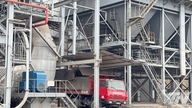
To address this problem, Dong Lam aims to replace up to 30% of its fossil fuels. The company will utilize waste products from the garment industry (leather, fabric, nylon, paper...), forestry (acacia bark, eucalyptus, sawdust...), and agriculture (rice husk ash, cashew shells...) as fuel.
Green and sustainable development
Mr. Nguyen Huu Chi, Director of the Production Engineering and Research & Development Department of Dong Lam Cement Joint Stock Company, shared that, facing major challenges regarding energy security and production costs, the technological solution of using alternative fuels to partially replace coal dust in clinker kilns is becoming an inevitable trend.
This method not only reduces dependence on traditional coal dust but also thoroughly processes non-recyclable waste products and reduces greenhouse gas emissions. This is a major step forward, providing strong impetus for the green transformation of Dong Lam in particular and the sustainable development goals of the entire cement industry in general.
This solution is currently being widely encouraged by many prestigious international organizations such as the World Commission on Environment and Development (WCED), the Basel Convention, and the European Cement Association (CEMBUREAU).
The project to use waste as an alternative fuel in clinker production is expected to provide further impetus for the green transformation of businesses and contribute to the sustainable development goals of the cement industry. This is a major step forward, not only reducing the use of fossil fuels but also contributing to the processing of waste products from the industrial, agricultural, and forestry sectors, thereby reducing environmental pollution.
The contractor for the project is Gemtec Joint Stock Company. According to the signed contract, the package includes the following items: Survey, design, supply of equipment and materials, technical services, and construction of the entire fuel receiving and processing system, with a construction schedule of 180 days. This system allows the plant to fully utilize the abundant waste products from surrounding industries, agriculture, and forestry, with a capacity of 600 tons of waste per day, as an alternative fuel in the clinker production process.
Mr. Pham Phuoc Hien Hoa, General Director of Dong Lam Cement Joint Stock Company, assessed that the project to use alternative fuels to partially replace coal dust in the clinker kiln line is another important milestone in the green transformation journey of Dong Lam cement plant.



Mastering technology and utilizing alternative fuel sources not only helps optimize energy costs but also significantly contributes to environmental protection, reduces the use of non-renewable resources, and meets the increasingly stringent emission reduction requirements mandated by the government. This also demonstrates the commitment of businesses to investing in environmentally friendly technologies and production methods, and to sustainable development.
The project is expected to contribute to enhancing the competitiveness of businesses, while also contributing to reducing greenhouse gas emissions, protecting the ozone layer, and working towards carbon neutrality and net zero emissions by 2050.
Source: https://huengaynay.vn/kinh-te/chuyen-doi-xanh-o-dong-lam-167239.html
![[Image] National conference summarizing one year of operation of the overall organizational model of the political system, the three-tiered government model.](https://vphoto.vietnam.vn/thumb/1200x675/vietnam/resource/IMAGE/2026/07/01/1782882811691_ndo_br_1-jpg.webp)