

At the foot of Tam Dinh mountain – an area with large mineral reserves (apatite, iron ore) – are three villages: Tam Dinh, Thac Day, and Khe Lech, formerly part of Son Thuy commune, now Van Ban commune. These villages are primarily inhabited by Mong ethnic people who migrated from other areas and chose this land as their permanent settlement.
Despite living in a resource-rich area, the lives of the people remain difficult. This is a major concern for the newly merged local government, which is striving to address it through solutions such as land planning for housing and production, and creating sustainable livelihoods.

Turning off the bustling National Highway 279 onto a small concrete road, we felt as if we had entered another world , with the traditional four-roofed houses of the Mong ethnic group, a common sight in the highlands of Bac Ha and Si Ma Cai.
Among the settlements clustered around Tam Dinh Mountain, Thac Day village in Tam Dinh is closest to the foot of the mountain. Later migrants followed the winding road up the mountainside, finding places where they could dig and level the land to build temporary shelters. Gradually, more solid houses were constructed. Life here flows slowly, in contrast to the hustle and bustle of the highway just a mountainside away from the village.

Mr. Vu A Sung, head of Thac Day village, said: "Most of the people in Thac Day come from Bac Ha, having migrated here since the 1990s. I was young back then, but I still clearly remember my whole family walking from Bac Ha. After many days following the rivers and streams, we arrived here and saw the gently sloping hills nestled against the majestic mountain range, with a stream in front, which was very suitable for cultivation, so the whole group decided to stop here."
The villagers sowed the rice and corn seeds they had brought from Bac Ha, then divided up the land to build makeshift shelters, intending to stay there for one or two corn seasons before migrating again. That harvest season, the rice on the hillside was heavy with grain, and the corn ears were large and plump, bringing joy to everyone. Without needing any prompting, they all agreed to settle there permanently.
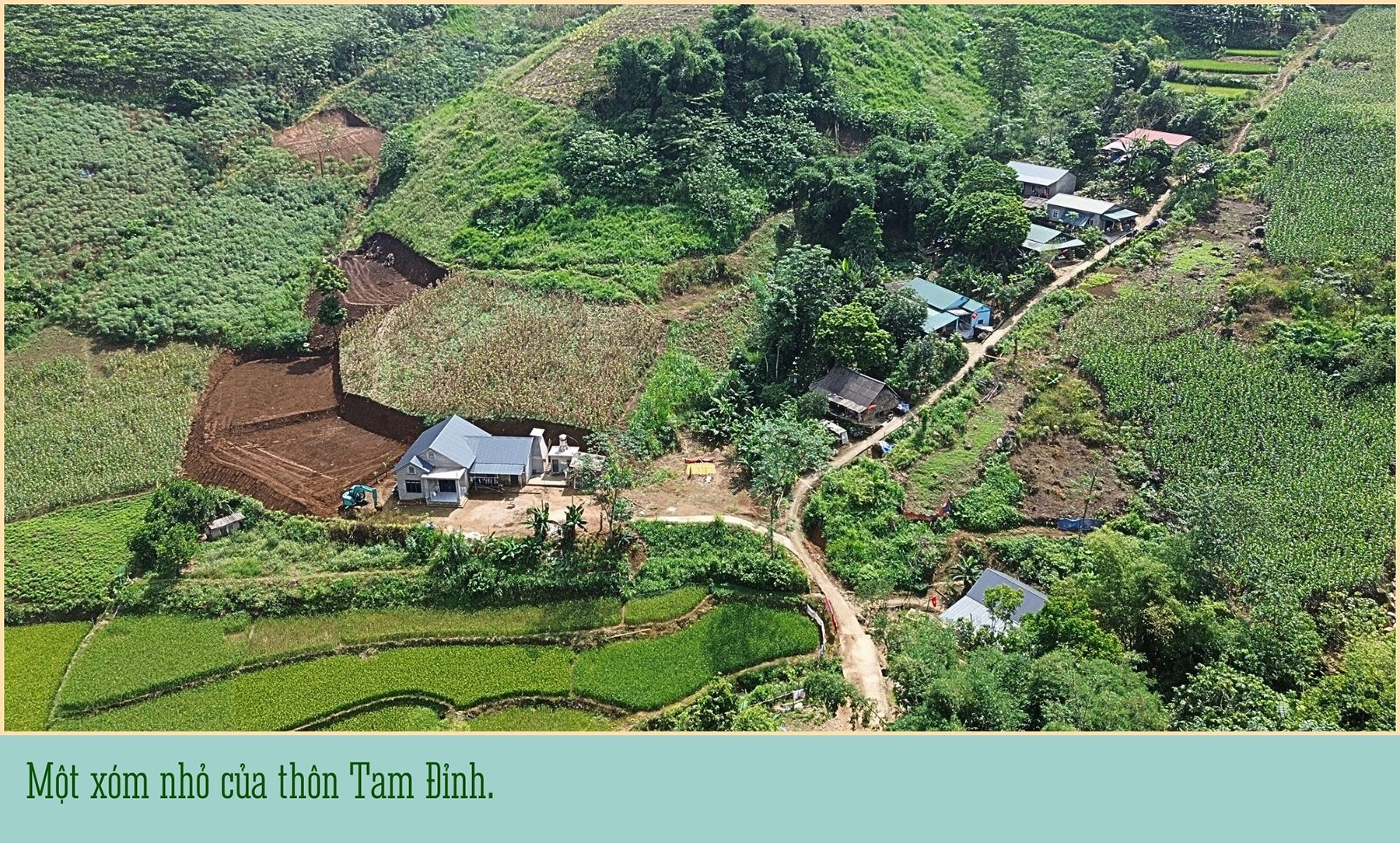
Many of Mr. Sung's relatives in Bac Ha, lacking arable land, gradually moved here to live. In those days, there was plenty of arable land; households could cultivate whatever they could reclaim. But life became increasingly difficult as more people came to live here, and there wasn't enough arable land. People wanted to expand their production, but most of this area had already been planned for iron ore and apatite mining operations.
Village head Vu A Sung shared: "Previously, mining companies allowed villagers to cultivate short-term crops, but recently they have been managing things more strictly, so villagers are no longer allowed into this area. Many households in the village have sought employment to supplement their income. Due to the lack of sustainable livelihoods, the percentage of poor and near-poor households in the village is quite high, accounting for nearly 40%."
The people in the villages of Tam Dinh and Khe Lech are not much better off, as the problem of insufficient arable land is a real challenge. Due to increasingly scarce water resources, almost no land in the entire village is suitable for rice cultivation. Although the natural land area is large, it is mainly protected forest and areas planned for mineral exploitation, making cultivation impossible.
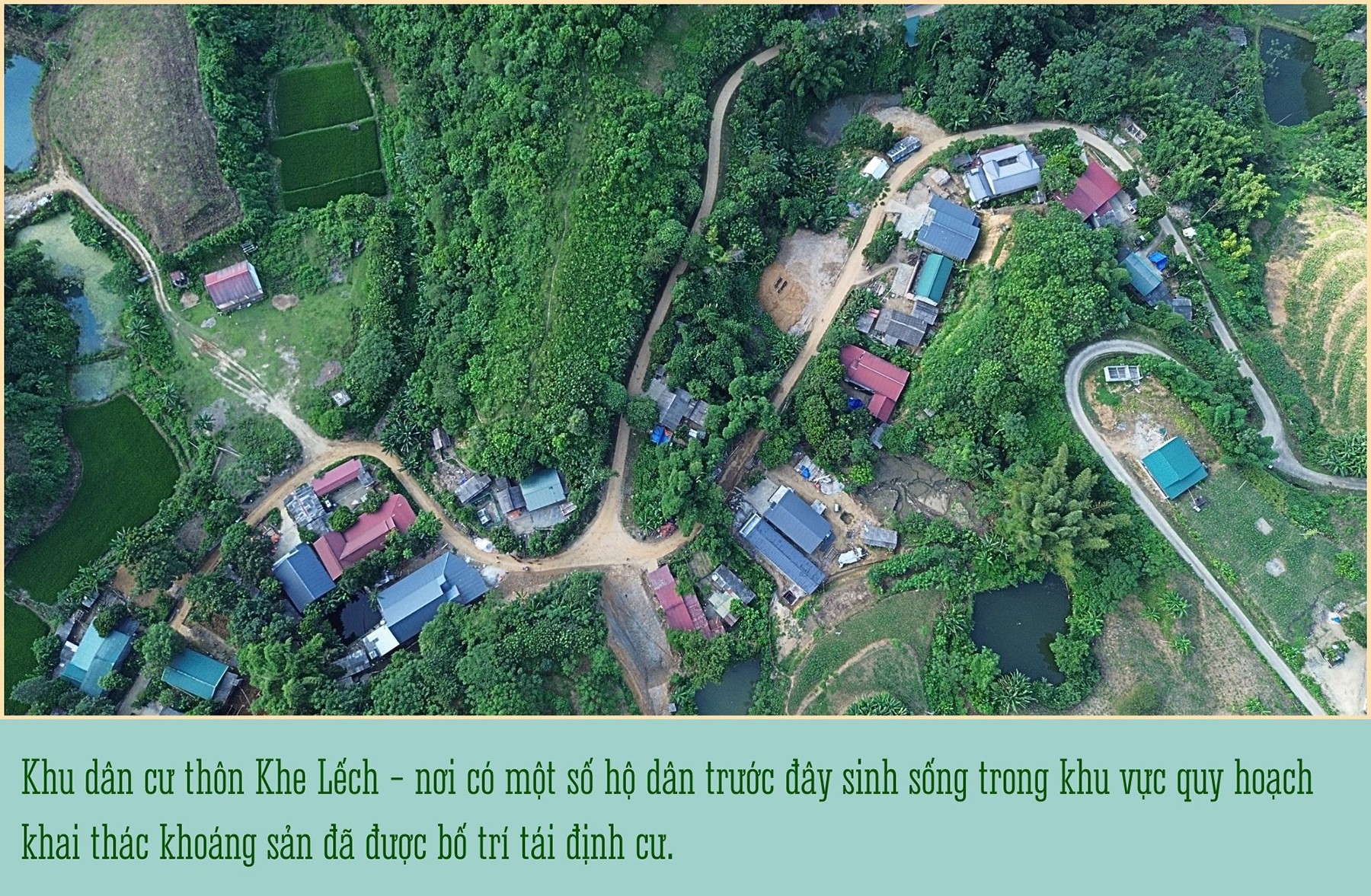
Mr. Lu Seo Tinh, who migrated here many years ago from the old Thai Giang Pho commune (now Bac Ha commune), and despite his and his wife's hard work, they can only barely make ends meet for their two young children. Mr. Tinh shared: "Our family has four people, and we only have a meager three sao (approximately 3,000 square meters) of land for farming. The land isn't fertile; growing corn or cassava doesn't even provide enough to eat. We want to find another job to earn extra income, but there are no opportunities here, only mountains and mineral resources."

Tam Dinh is one of the most mineral-rich areas in the province, with abundant reserves of apatite and iron ore. However, in contrast to the richness of the land, life for the people here is far from easy.
The Hmong people living in the three villages of Tam Dinh, Thac Day, and Khe Lech migrated from various highland communes of the province, choosing this land as their permanent settlement. However, due to harsh natural conditions, barren land, and the fact that most of their arable land is limited by steep mountainous terrain and scarce water resources, they face many difficulties in agricultural production.

Furthermore, mineral exploitation in the area has a significant impact on the lives of the local people. Although it generates revenue for the locality, this activity has not truly created sustainable livelihood opportunities for the people. A large portion of the land in the area is designated for mining, shrinking agricultural land and making the already impoverished lives of the people even more difficult.
After Son Thuy commune was merged into Van Ban commune, the new local government clearly recognized the difficulties in the lives of the people living at the foot of Tam Dinh mountain.
Mr. Vu Xuan Thuy, Chairman of the People's Committee of Van Ban commune, said: Developing the economy and stabilizing the lives of people in the three villages is one of the key tasks that the commune is focusing on addressing.
We cannot allow people living in resource-rich land to remain perpetually impoverished. Therefore, the commune is coordinating with relevant agencies to develop rational land use plans for residential and agricultural purposes, while also seeking ways to create sustainable livelihoods for the people.
Currently, Van Ban commune has implemented several practical solutions such as replanning residential and agricultural land areas to ensure that each household has sufficient land for cultivation. They are also supporting people in accessing preferential capital to develop production. In addition, they are investing in transportation infrastructure and schools to improve the quality of life.

We arrived in Tam Dinh on the day that Mr. Hau Seo Chu and Ms. Giang Thi Chu's family in Thac Day village were harvesting peanuts, a new crop they had switched to replacing their less productive cassava plantations that had depleted the soil. Mr. Hau Seo Chu said: "It's truly peanut season, a joyful season, just like the name of this crop suggests. Currently, my family has a stable income, enough to build a decent house and provide for our children's education."
"Every difficulty has a solution. When we first came here, things weren't always smooth sailing either. We hope the new commune government will always pay attention to and listen to the aspirations of the people to promptly resolve difficulties and obstacles," said Mr. Chu.
Wherever they are, the Mong ethnic people are hardworking and resilient. Their belief in a bright future has helped them overcome countless difficulties and challenges, enabling them to thrive even in the harshest environments. At the foot of Tam Dinh mountain, difficulties remain, but the unity of the government and the people is kindling new hopes.
Source: https://baolaocai.vn/chuyen-duoi-chan-nui-tam-dinh-post888171.html
![[Photo] Prime Minister Pham Minh Chinh receives the Chinese Ambassador to Vietnam](https://vphoto.vietnam.vn/thumb/1200x675/vietnam/resource/IMAGE/2026/04/05/1775397481797_ndo_br_dsc-5512-jpg.webp)


























































Comment (0)