1. Every year on June 21st, memories of my early days in the profession return vividly to me. Back then, I was just a young woman fresh out of university, carrying with me youthful dreams and a love for journalism. I boldly took my application to meet the then Editor-in-Chief of Quang Binh Newspaper, Mr. Ta Dinh Nam, to ask for a chance to prove myself.
I still remember his kind smile when he reviewed my application. After a few minutes of conversation, he said, "I'll give you a trial period, but remember, journalism is very hard work. It's even harder for women..."
At that time, the agency didn't have any staffing quotas, and the chances of being officially hired were very slim. However, with his understanding and responsibility towards young graduates, he still created opportunities for us to try out, provided us with letters of introduction to work in the field, allowed us to write articles, and even paid for our work if it was published. Perhaps he understood that, after years of hard work in university, what young people needed most was not just a job, but the opportunity to live the profession they loved. It was that nod of approval that year that marked the beginning of my journalistic journey.
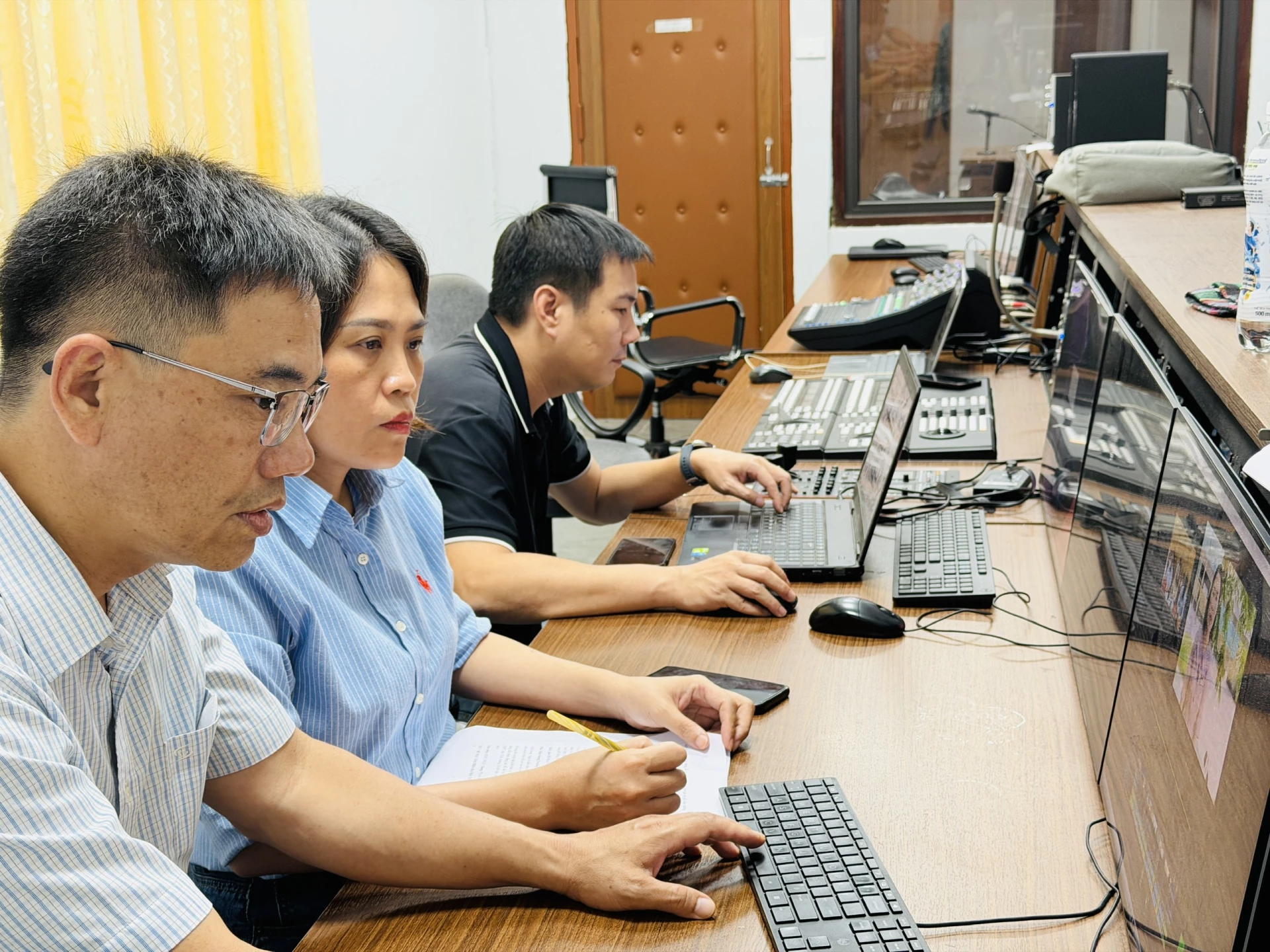 |
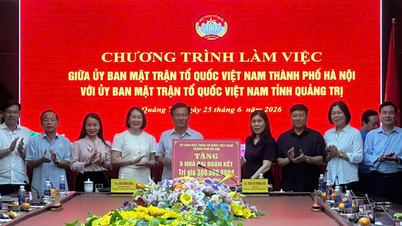
| Television program production activities at Quang Tri Newspaper and Radio & Television Station - Photo: Nh.V |
Quang Binh Newspaper was where our generation of young reporters was honed in an environment that was both strict and humane. Uncle Ta Dinh Nam was very serious about his work. Even small mistakes could hardly escape his notice. But behind that stern exterior was a compassionate and dedicated heart. He guided us on everything from how to write headlines, develop topics, approach subjects, to the conduct of a writer.
Sadly, our time working together was short. One day, he left us all behind to return to the eternal realm. But his advice about the profession, about journalistic ethics, and about responsibility for every word remains in the memories of his students like us. As the years passed, I came to understand that the greatest value a teacher leaves behind is not what they say, but how they live and inspire others.
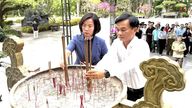
Journalism has given me the opportunity to meet many respected people. Among them are veteran journalists like Mr. Nguyen Van Dinh and Mr. Phan Van Khuyen. When I entered the profession, they had long since retired, their hair grayed with age, yet they still diligently wrote articles, poems, and were deeply concerned about current events. Each time I met them, I received sincere encouragement, frank feedback, and profound professional lessons. Sometimes, they even gave us their newly written poetry collections or a package of cookies or candy, along with a gentle smile, containing the love and affection of those who came before for the younger generation.


Now that they have passed away, their enthusiasm and passion for their profession will forever be a guiding light for journalists today.
2. Every time I think back to my early years in the profession, I remember the manual newspaper production process back then. After returning from fieldwork, I would sit for hours at my desk, writing articles on draft paper before carefully copying them onto A4 paper. If I misspelled even one word, I was ready to rewrite the entire page, just to make sure the editor had the best impression of the manuscript. When the manuscript was submitted, the heads and deputy heads of the specialized departments would meticulously correct it with red ink before sending it to the typing department. We often jokingly called the typists "superwomen," because they could read all kinds of handwriting, even the complicated red ink correction symbols of the editors.
Those memories are now a thing of the past. Modern technology has made the process of newspaper production much faster and more convenient. But whenever I recall those handwritten manuscripts, the red ink strokes, and the repeated copying, an indescribable emotion wells up inside me.
3. In recent years, journalism has faced many major changes. The merger of media organizations and the development of converged newsroom models have created multimedia media outlets. For someone like me, who grew up in print journalism, this is no small challenge.
I used to be nervous about getting used to radio and television broadcasting and completely new skills. There were times when someone with 24 years of journalistic experience like me felt like a first-year student, having to start learning from scratch. But it was during that period that I met new colleagues who were always ready to share and help. They wholeheartedly guided me through every camera angle, how to find mistakes in each frame…
Seeing my work broadcast on television and radio for the first time filled me with a very special joy. It was the feeling of reinventing myself, of learning and growing once again. It made me realize that, at any stage of life, journalists must constantly learn and adapt to change.
What I admire most throughout my career is the passion for the profession shown by my colleagues. I have witnessed many senior colleagues and young people braving the sun and rain, trekking through forests and crossing streams to capture the essence of life. Behind every news article and report lies immense effort, silent sacrifice, and a strong sense of responsibility to the profession. This positive energy has motivated me to gradually overcome my own limitations.
4. Looking back on my journey, I feel fortunate and grateful. Grateful to the teachers who inspired me, and to the colleagues who stood by me through challenging times. Grateful to the people and places that gave me stories to write my own journey. And most of all, I am grateful for the nod of approval from a passionate Editor-in-Chief years ago, who gave me my first opportunity to enter the field of journalism.

In June, sudden showers soothe the sweltering heat of summer. Amidst the chirping of cicadas, I pick up my pen again, silently grateful to life for allowing me to be a soldier on the cultural and ideological front. That happiness is as sacred as the lyrics of the late composer Quách Mộng Lân's song "March of the Cultural Soldier," which says, "The cultural soldier, brings life to life with vibrant colors… The cultural soldier is a bridge of love, bringing people closer together, a life lived to love one another."
Nh.V
Source: https://baoquangtri.vn/van-hoa/202606/chuyen-nghe-thang6-2cf46d7/
![[Photo] General Secretary and President To Lam attends the 13th National Congress of the Ho Chi Minh Communist Youth Union](https://vphoto.vietnam.vn/thumb/1200x675/vietnam/resource/IMAGE/2026/06/25/1782356968989_ndo_br_1-jpg.webp)
![[Image] Schools organize meetings and introduce teaching models to students admitted to grade 10.](https://vphoto.vietnam.vn/thumb/1200x675/vietnam/resource/IMAGE/2026/06/25/1782368077271_ndo_br_z7970052192242-1ec8daeb77a6eed1a4e9f58c564ddd3e-jpg.webp)
![[Photo] General Secretary and President To Lam receives Palestinian Ambassador Saadi Salama](https://vphoto.vietnam.vn/thumb/1200x675/vietnam/resource/IMAGE/2026/06/25/1782365384740_a1-bnd-9423-8322-jpg.webp)