


Upon arriving in Phu Hai 1 village, the first impression is the peaceful scenery with rows of betel nut trees laden with fruit. Betel nut trees in the gardens of houses, along the roadside, even planted on fences and pond banks, all reaching straight up.
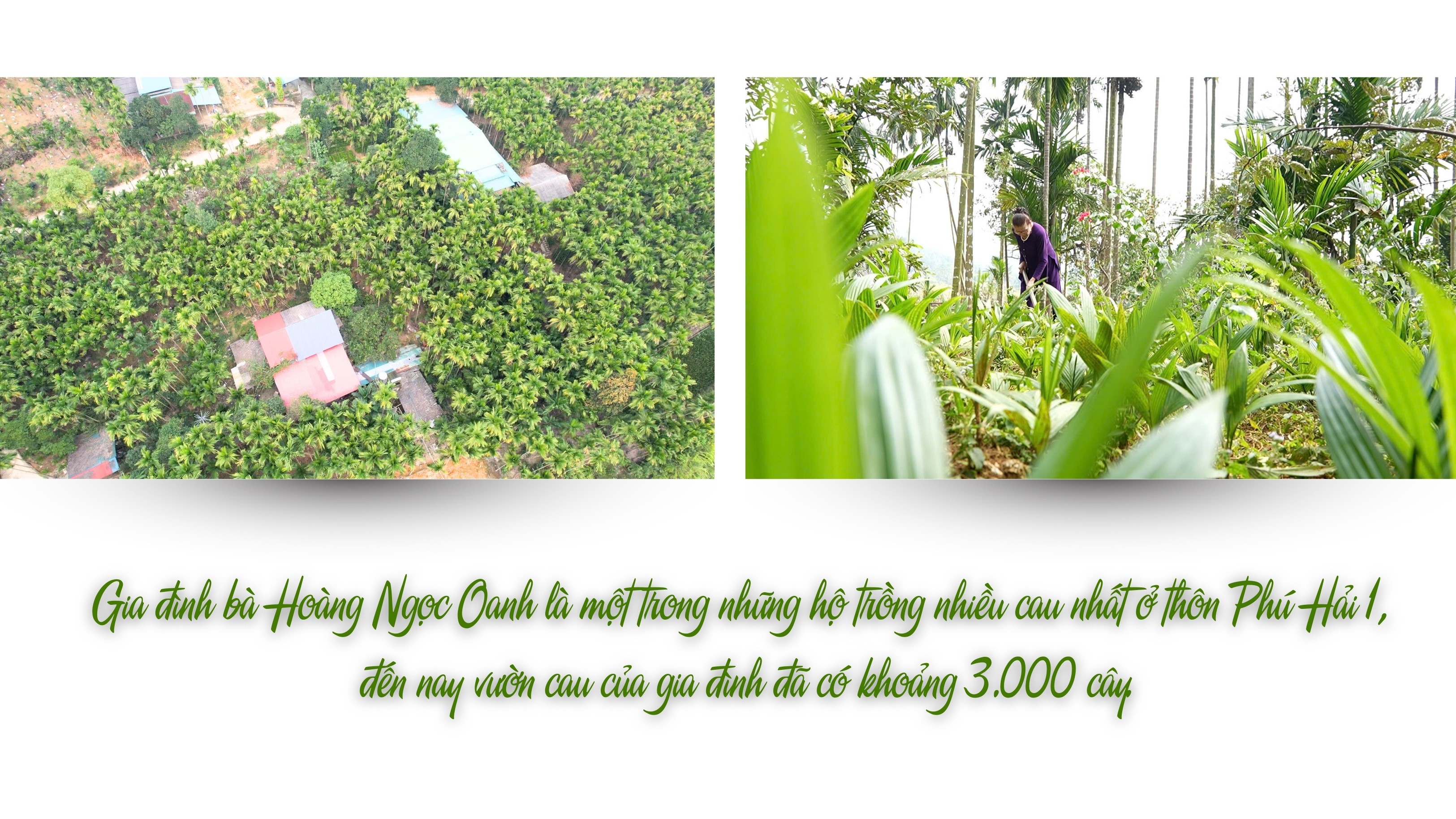
Ms. Hoang Ngoc Oanh's family is one of the households that grows the most betel nut trees in Phu Hai 1 village. Leading us on a tour of her family's betel nut garden, Ms. Oanh recounted that the first betel nut trees were brought from Hai Phong by her father-in-law when he came to build a new economic zone. At that time, betel nut trees didn't have the high economic value they do now. But because they are commemorative trees, her family still carefully tends to them, and a few original trees remain in their garden.
Ms. Oanh said: "Later, when many people came to inquire about buying betel nuts, my family started propagating them to expand the planting area. To date, our betel nut garden has about 3,000 trees."
Like many other households in the village, her family only cultivates the local betel nut variety, which produces elongated fruits and has a much higher economic value than other betel nut varieties.
Ms. Oanh recalled: "Last year, there was a time when my family sold fresh betel nuts for 78,000 VND/kg. One evening, we sold 2.5 tons of betel nuts. We were really excited at that time."
Phu Hai 1 village has 140 households, including both local residents and those who migrated from Hai Phong and Nam Dinh to develop the new economic zone. The lives of the villagers have improved significantly, partly thanks to the income from betel nut cultivation.
The two-story house of Mrs. Vu Thi Thanh's family in Phu Hai 1 village was built primarily with money earned from selling betel nuts.
Ms. Vu Thi Thanh said: "In 2024, the price of betel nuts was very high, sometimes fluctuating from 70,000 to 90,000 VND/kg. Each betel nut tree could bring in millions of VND. Thanks to this, my family feels secure in committing to this crop for the long term."
According to Ms. Thanh, growing betel nut trees is suitable for households with elderly workers because the trees yield a steady harvest for many months each year, providing a stable income like a "pension" even if prices fluctuate.
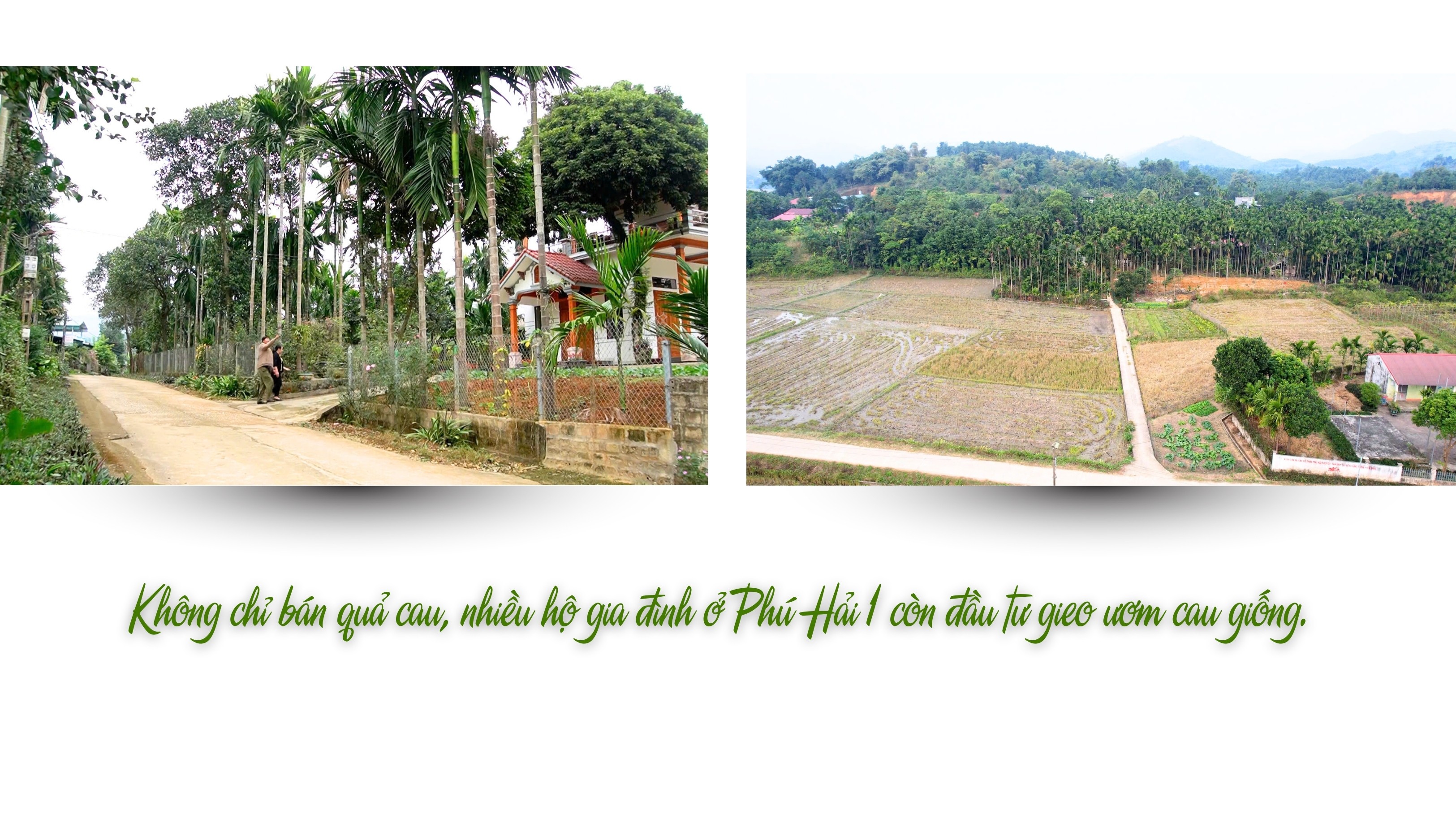
Seeing the considerable benefits from betel nut cultivation, in recent years, many households in Phu Hai 1 have not only sold betel nuts but also invested in growing betel nut seedlings to supply to people within and outside the commune, thereby gaining an additional stable source of income.

The stories of families like Mrs. Oanh and Mrs. Thanh in Phu Hai 1 village getting rich from betel nut cultivation have spread, contributing to expanding the area of betel nut cultivation in the village and commune, making this crop a strength for local economic development.
According to Mr. Pham Van Khiem, a specialist in the Economic Department of Tang Loong commune, the area planted with betel nut trees in the commune is currently concentrated mainly in the former Phu Nhuan commune area, in the villages of Phu Hai 1, Phu Hai 2, Phu Thinh 1, Phu Thinh 2, and Phu Thinh 3, with about 500 households participating. The majority of these are households who migrated from the lowlands to settle here more than 60 years ago.
Previously, betel nuts were grown on a small scale by people around their gardens for personal consumption and sale during holidays and festivals. When the price of betel nuts increased, some households boldly invested in expanding their planting area and buying more seedlings, contributing to the formation of concentrated betel nut growing regions.
Mr. Khiem assessed: Areca palm is a high-income crop that maintains productivity for many years. In addition, the tree is resistant to pests and diseases, requires little care, and is suitable for the local farming conditions.
"In reality, betel nut trees are proving to be extremely economically effective, helping many households become more prosperous. From being just a part of cultural life, the betel nut tree has now become a poverty-alleviating crop for the people here," Mr. Khiem emphasized.
However, in order for betel nut trees to truly become a sustainable cash crop that brings high income to the people, the local authorities are continuing to focus on guiding people to invest in proper cultivation techniques to improve fruit quality, while also paying attention to solving the problem of product output.
The development of betel nut growing areas should avoid being haphazard; it needs to follow a planned and in-depth approach, paying attention to market factors to prevent the situation of "bumper harvest, low prices".
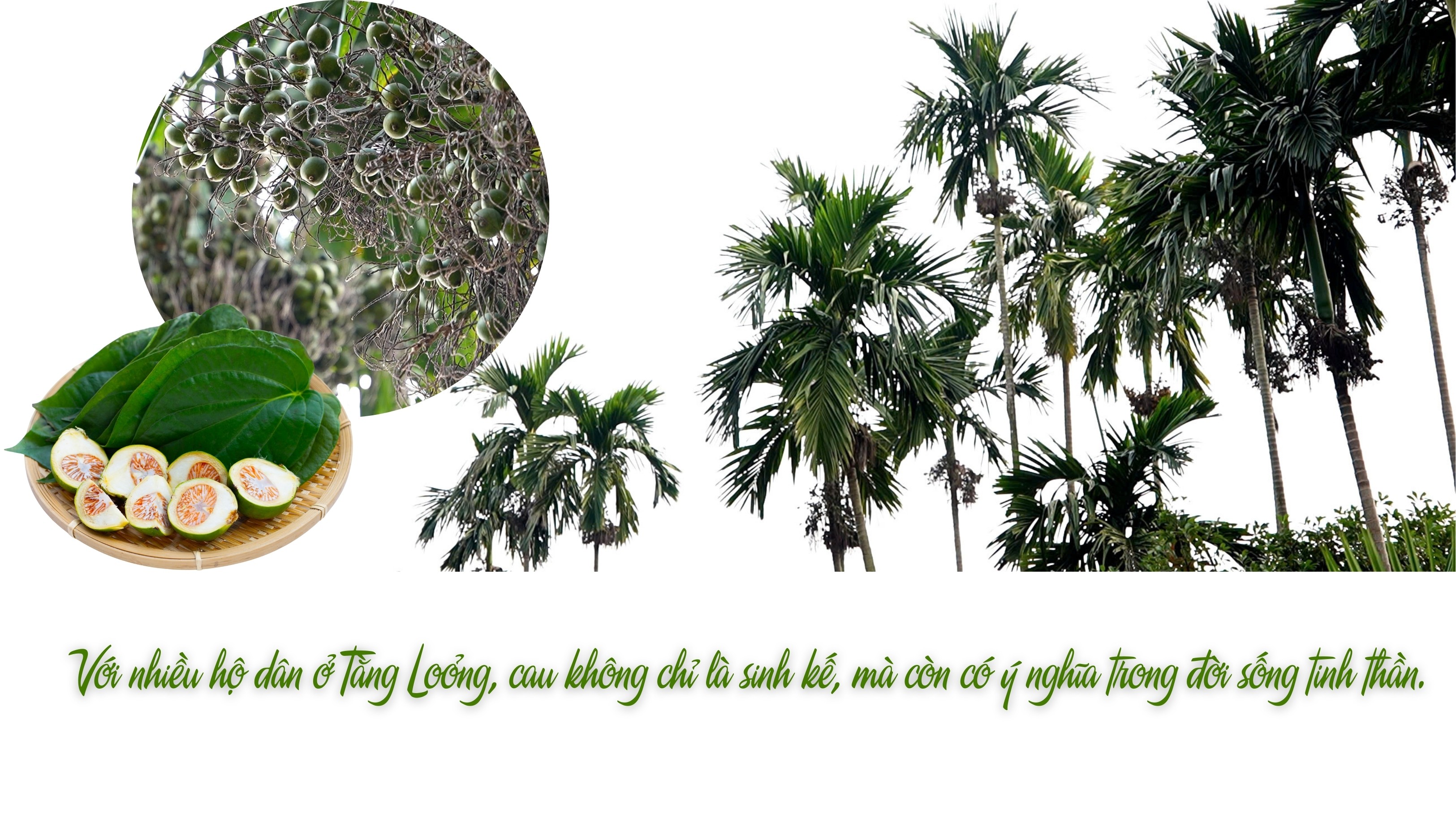
For many households in Tang Loong, betel nut trees are not only a source of livelihood but also hold significant spiritual meaning. The betel nut tree has been intertwined with their lives since the difficult days of settling in the new economic zone, serving as a "witness" to the changes in their lives. Therefore, even when betel nut prices were low, the people persevered in caring for the trees. With the guidance of the local government, the people of Tang Loong, known for its betel nut trees, now have renewed faith in a sustainable livelihood.
Presented by: Thanh Ba
Source: https://baolaocai.vn/chuyen-o-vung-cau-post890491.html














































































Comment (0)