

With its role in all aspects of socio -economic life, the amendment of the Chemical Law is expected to create opportunities for breakthroughs in Vietnam's economic growth.
Chemicals - a vital industry
According to the Department of Chemicals ( Ministry of Industry and Trade ), chemicals are present in most areas of social life. The chemical industry has created many products and plays an increasingly important role in the industrial and economic development of each country. In particular, as life becomes more developed and civilized, the role and position of the chemical industry become even more important.
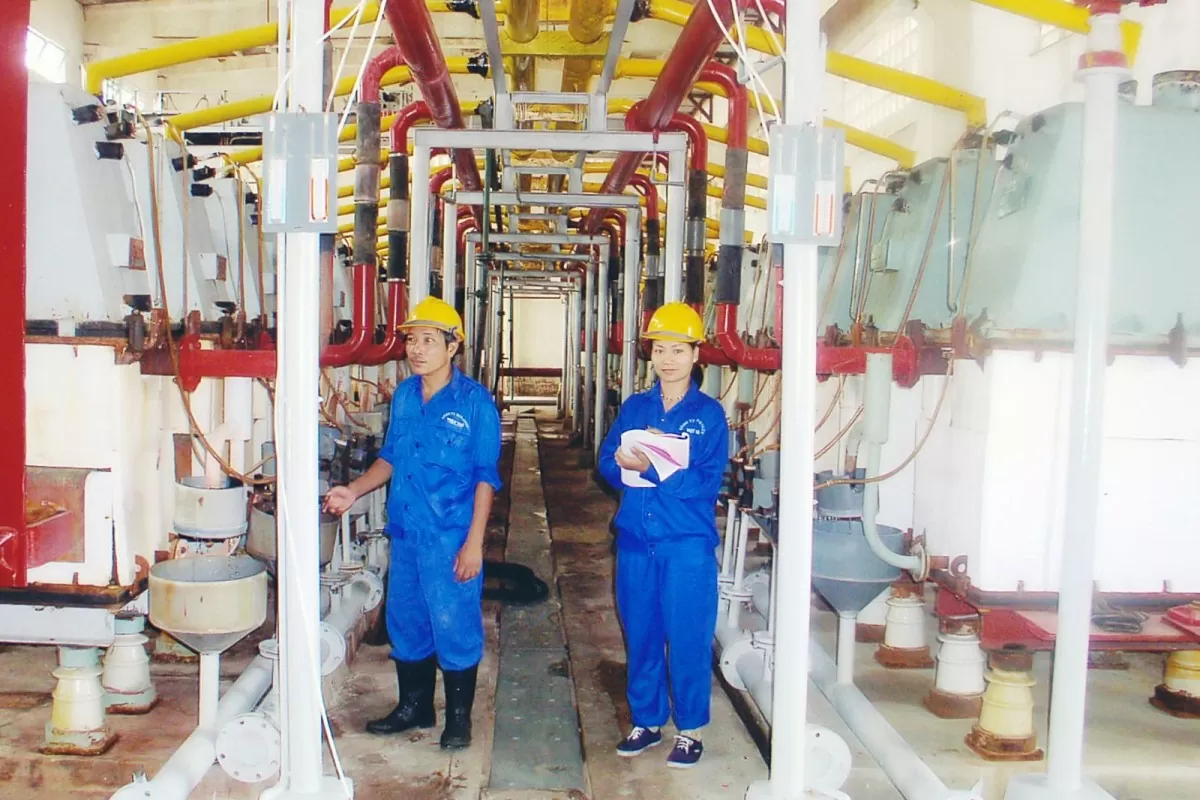 |
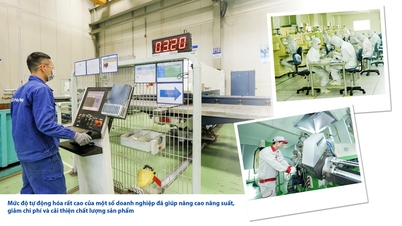
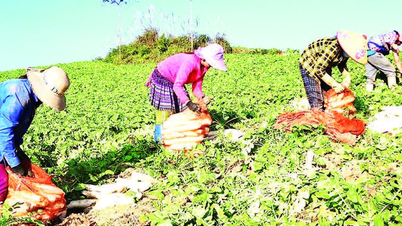
| The chemical industry has produced a wide range of products, playing an increasingly important role in the industrial and economic development of the nation. (Illustrative image) |
In Vietnam, the chemical industry has been developing since the 1950s, starting with fertilizer and consumer chemical factories in the North, built with assistance from the Soviet Union and China, aimed at supplying fertilizers and various consumer chemicals. Through various stages of development, the chemical industry has experienced significant growth, with a considerably different appearance compared to its beginnings.
Particularly since the enactment of the 2007 Chemical Law, Vietnam's chemical industry has increasingly developed and affirmed its important role, gradually modernizing, mastering technology, proactively producing raw materials and products for domestic production, and moving towards export…
According to Ms. Nguyen Thi Theu from the Chemical Industry Development Department (Chemical Department - Ministry of Industry and Trade), the chemical industry is a foundational industry, accounting for 2-5% of the total industrial GDP with a growth rate of 10-11% per year. The chemical industry employs 2.7 million people, representing 10% of the total industrial workforce. Labor productivity in the chemical industry is 1.36 times higher than the average labor productivity of the entire industrial sector.
In particular, in implementing the Party's guidelines at the 13th National Congress, chemicals have been identified as one of the fundamental industries, and developing the chemical industry is one of the key tasks and solutions to promote the socio-economic development of the country.
Therefore, it can be affirmed that chemicals play a crucial, "foundational" role in other industries, and "without the chemical industry, there would be no other industry."
Despite its crucial role, Vietnam's chemical industry has, according to economic experts, been developing below its potential. Statistical data shows that, overall, while the Vietnamese chemical industry has developed and applied many achievements, with numerous projects and production lines utilizing modern technologies, equipment, and management software, the vast majority of factories remain small-scale, with less advanced technology, a relatively high proportion of unskilled labor, and some lacking mastery of the technology. This is due to a lack of advanced science and technology, insufficient core technologies, lack of capital, the high cost of investing in modern, high-tech factories that private companies find difficult to afford, and the shortcomings and negative aspects of management, policies, and other issues that have not been thoroughly addressed.
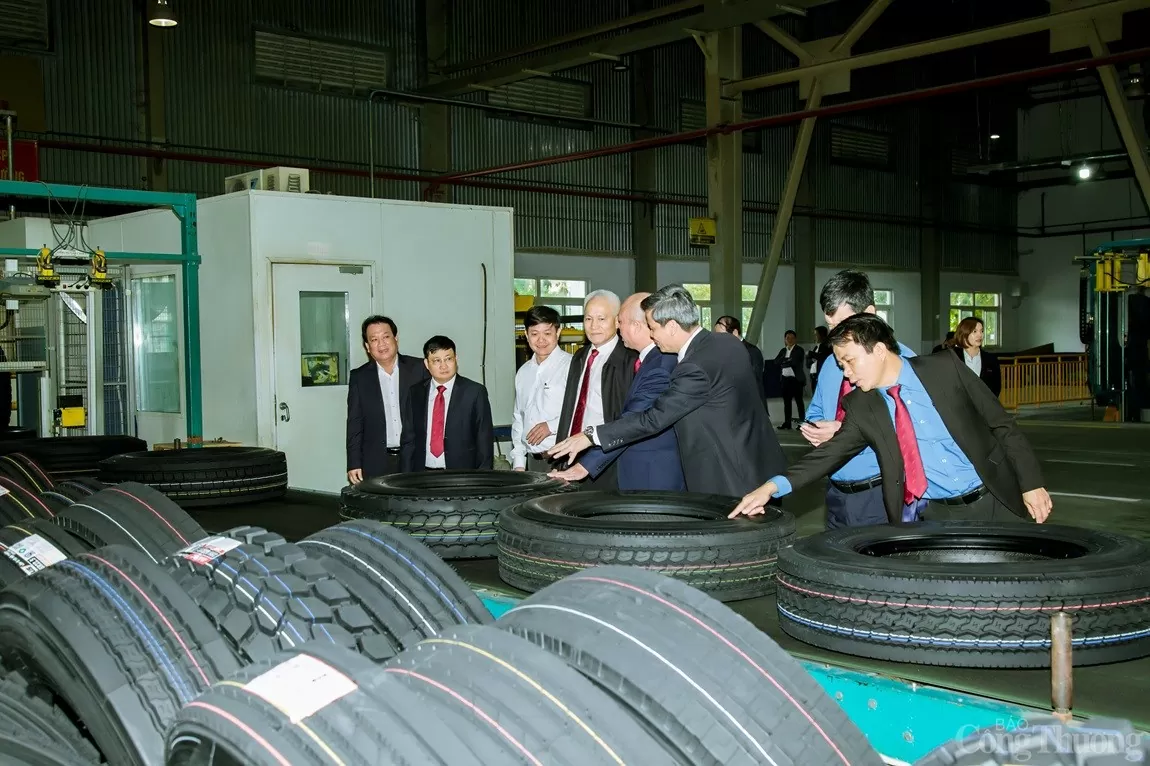 |
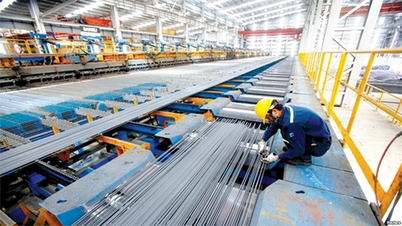
| Vietnam's chemical industry strives for an average annual growth rate of 10-11%. |
Increase the industry's contribution through the amended Chemical Law.
To promote the sustainable and environmentally friendly development of the chemical industry, in Resolution No. 124/NQ-CP dated September 3, 2020, the Government assigned the Ministry of Industry and Trade to lead the development of the Strategy for the Development of Vietnam's Chemical Industry until 2030, with a vision to 2040. This Strategy was approved by the Prime Minister in Decision No. 726/QĐ-TTg dated June 16, 2022.
The Vietnam Chemical Industry Development Strategy to 2030, with a vision to 2040, outlines the direction for developing Vietnam's chemical industry into a vital, modern foundational industry with a relatively complete structure comprising 10 sub-sectors. The strategy focuses on developing several key sub-sectors: basic chemicals, petrochemicals, technical rubber, pharmaceuticals, and fertilizers. Simultaneously, it aims to reorganize existing production facilities towards a more concentrated and large-scale approach. It also emphasizes maintaining and developing advanced technology production plants, minimizing the establishment of new facilities, and gradually eliminating small-scale production facilities that use outdated technology, have low resource efficiency, produce poor quality products, and cause environmental pollution.
In particular, to increase the contribution of the chemical industry to the economy, in implementation of Resolution No. 41/2023/NQ-UBTVQH15 dated December 18, 2023, of the Standing Committee of the National Assembly on adjusting the 2024 legislative and ordinance drafting program, the Ministry of Industry and Trade is amending the 2007 Chemical Law.
Regarding the practical basis for amending the Chemical Law, according to Mr. Phung Manh Ngoc - Director of the Chemical Department - Ministry of Industry and Trade: The Chemical Law No. 06/2007/QH12 was enacted by the 12th National Assembly in 2007 and came into effect on July 1, 2008. The promulgation of the Chemical Law is a significant milestone in the process of building and establishing an official and unified legal framework for chemical activities nationwide.
In fact, after 16 years of implementation, the Chemical Law has had a positive impact on the socio-economic development of the country. Specifically, economically, since the Chemical Law came into effect, the chemical industry has experienced strong development, forming research organizations, production and business establishments in various fields of the industry, and initially establishing several petrochemical industrial complexes and several industrial zones and clusters concentrating many chemical enterprises.
The chemical industry has maintained stable growth over the years (averaging 10-11% per year), and domestically produced chemical products have become more diverse in type, improved in quality, and are gradually approaching those in the region.
From a societal perspective, the Chemical Law and its subordinate regulations have established a relatively comprehensive system of chemical management regulations from the central to local levels. Along with the efforts of state management agencies, chemical activities have been strictly managed and are becoming increasingly orderly and systematic. Chemical safety work has been enhanced in terms of its role and quality, contributing to minimizing risks and negative impacts of chemicals on people, the environment, and property, and ensuring social security and order.
However, alongside the achievements, after 16 years of implementing the 2007 Chemical Law, certain shortcomings and limitations have emerged. Specifically, regarding general provisions, the 2007 Chemical Law does not clearly and precisely define the scope and subjects of application of management activities; it does not distinguish between chemicals and products containing chemicals; it does not specifically differentiate between chemical production activities and chemical mixing and dilution activities; and the concept of toxic chemicals is not in line with reality...
Regarding the development of the chemical industry, the 2007 Chemical Law only regulates chemicals, including substances, compounds, and mixtures of substances—essentially basic chemicals. Therefore, the regulations for chemical projects in the Law only apply to basic chemical projects.
To address these shortcomings, the amended Chemical Law, while inheriting the positive aspects of the 2007 Chemical Law, also includes new content that is consistent with current realities and socio-economic development needs, and opens up new opportunities for the chemical industry to develop and contribute to the double-digit growth target for the 2026-2030 period.
| At the 8th session of the 15th National Assembly, discussions were held in committees and in the plenary session on the draft Law on Chemicals (amended). There were 69 comments from National Assembly deputies, including 54 comments in committees, 12 comments in the plenary session, and 3 comments submitted in writing. The majority of National Assembly deputies agreed on the necessity of enacting the amended Law on Chemicals. |
Source: https://congthuong.vn/luat-hoa-chat-sua-doi-co-hoi-de-kinh-te-viet-nam-but-pha-372654.html





![[Photo] “Red Journey” 2026: Vietnamese Youth Continue Building the Bridge of Friendship Between Vietnam and China](https://vphoto.vietnam.vn/thumb/1200x675/vietnam/resource/IMAGE/2026/04/20/1776629730866_4055880775670638308-9618-4200-jpg.webp)






















































































Comment (0)